
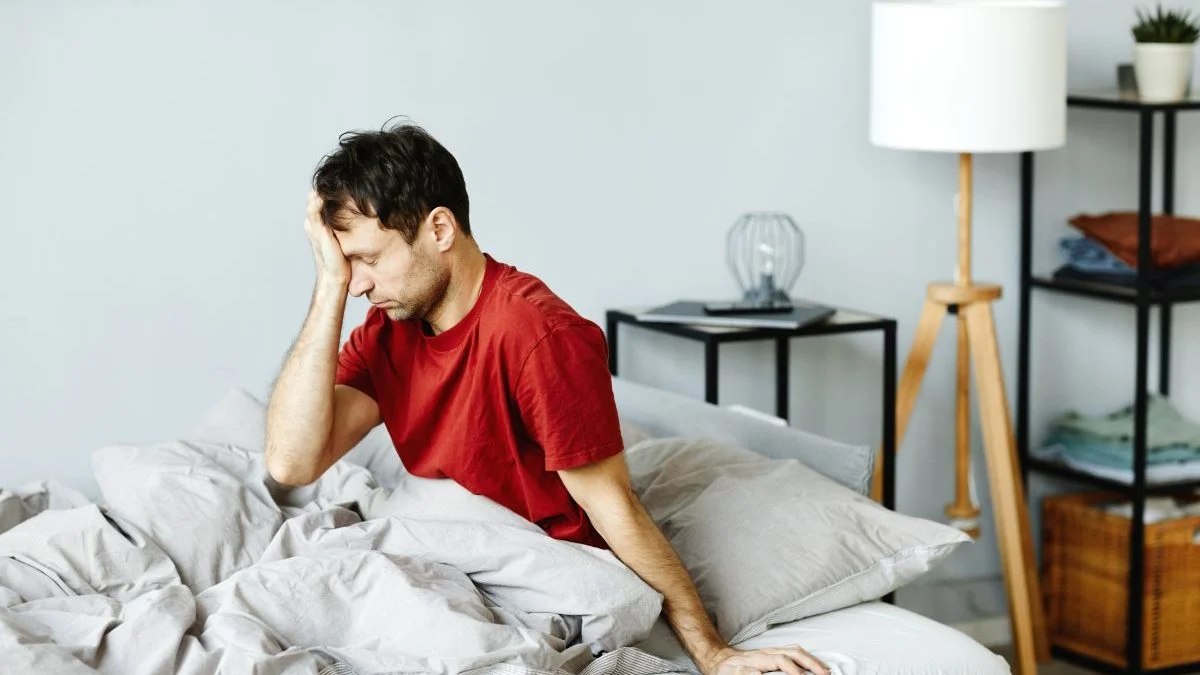
You went to bed late but luckily you’re on vacation! The opportunity to not have to get up very early the next day. But also at the risk of ruining the day by getting up at 2 p.m.
How to avoid complete disruption of your biological clock and still enjoy your free time during the day? We asked Dr. Taieb, a sleep specialist, the question.
Sleep, a crucial element for our health
“A bad night acts as stress for the body. It disrupts brain function, affects concentration, and weakens our mood.he explains first.
Fortunately, several strategies can help you limit the damage of sleeping late and waking up too late. Here they are.
Get up and take a suitable nap
Better to get up earlier and take a nap. According to Dr Taieb, napping is the most effective technique to limit the effects of too short a night. “It’s a simple tool, free and accessible to everyone… provided you respect a few rules.” he believes.
Three formats may be useful to you:
- The “flash” nap (10 min): a micro-break to release muscular and mental tension.
- The “power nap” (20 to 30 min): ideal during the lunch break, it offers cognitive recovery without post-nap drowsiness.
- Long nap (90 min): if you have the opportunity, the long nap allows you to recover a complete cycle, but can be difficult to schedule and increase the risk of inertia (waking up groggy).
Be careful, however, not to take a nap after 4 p.m. so as not to disrupt falling asleep in the evening. “The ideal is to take advantage of the moment after the meal, until 2 p.m., to rest.”
Eat light at midday
Precisely, at midday, a meal that is too large can make drowsiness worse. The ideal: a light and balanced diet, with lean proteins (eggs, chicken, legumes), vegetables and few fast sugars.
“Avoid rich or sugary foods that trigger reactive hypoglycemia. This is sure to cause a downturn“, warns the doctor.
Practice a gentle activity
Exercising helps reduce stress and prepare you for good sleep in the evening, as long as you don’t overdo it. “Exercise releases endorphins, but if it is intense, it can exhaust an already tired body. Choose walking, yoga or stretching“, recommends Dr. Taieb.
Don’t overuse coffee
It’s a common reflex: one or more coffees will wake you up. But watch out for the timing. “It takes 4 to 6 hours for the caffeine to be eliminated. Avoid drinking it after 1 p.m. if you plan to take a nap.”he recalls. One coffee in the morning and another after lunch will be enough.
Beware of alcohol
On vacation, we tend to drink more. “But be careful with alcohol“warns Dr. Taieb.”The drink tends to disrupt deep sleep.”
So drink in moderation, especially at the end of the day, so as not to ruin your night.
Keep a decompression airlock
After a lively or emotional evening, Dr. Taieb recommends keeping a decompression chamber before sleeping.
“You just need to allow yourself a few minutes of calm, before falling asleep. This allows our body to calm down, before rest”.
Prepare for the next night
This is perhaps the most underestimated point: recovering from a bad night requires good preparation for the next one. Here are the reflexes to adopt:
- Choose a room isolated from noise;
- Close the curtains or shutters;
- Choose good bedding and a quality pillow.
Remember to anticipate your return
Finally, the last advice from our expert is to think about getting back into your sleep rhythm, around ten days before the start of the school year. “It is important to resynchronize yourself, by going to bed a little earlier each evening, in order to return to work calmly” he concludes.