
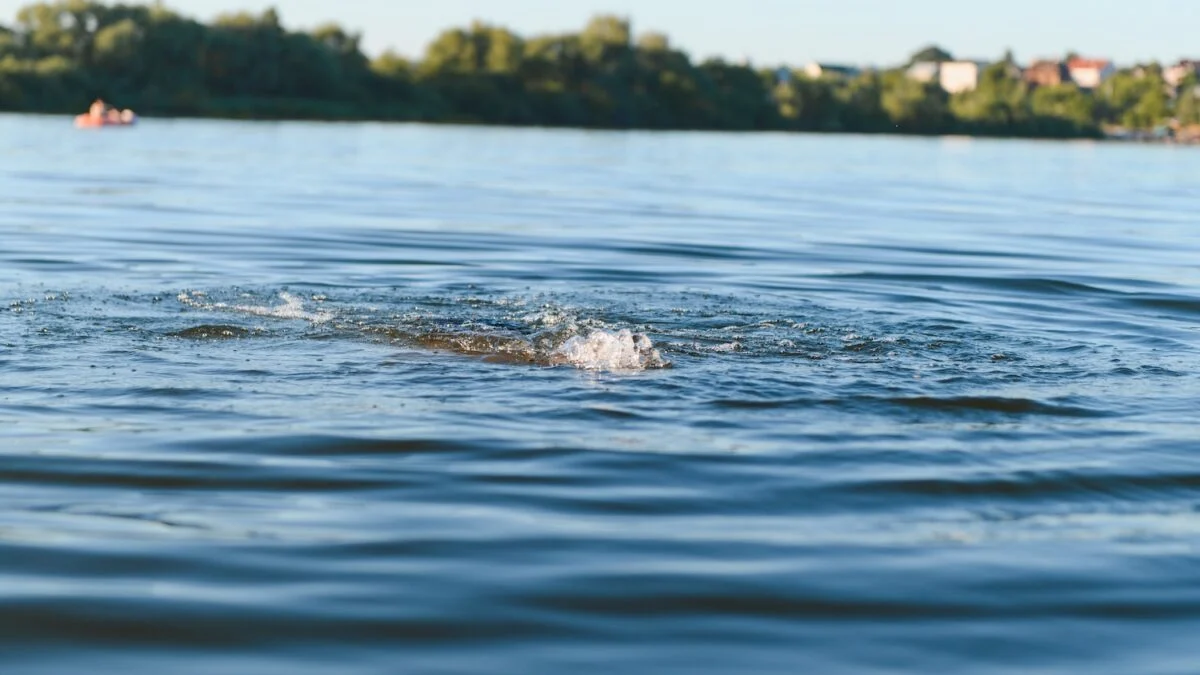
A child who escapes supervision for a few seconds, a plunge into a river, a sudden entry into cold water… Drowning does not always look like the spectacular image we have of it. It can be silent, rapid and occur even in a good swimmer. Here’s what you absolutely need to know before getting in the water.
In a few days, several drownings remind us of the brutality of the danger
Summer should be synonymous with freshness and shared moments. However, in a few days, several families were confronted with the irreparable.
In Lyon, on the night of August 13 to 14, a 23-year-old young man died after swimming in the Saône, Quai Fulchiron, despite the swimming ban. This is the fourth death by drowning recorded in the Lyon metropolis this weekaccording to Lyon Capital. The Rhône prefecture reminds that “currents, depth, submerged obstacles and water temperature can make these practices particularly dangerous..
In Haute-Savoie, the tragedy struck families in very different circumstances. On August 12, a 13-year-old boy drowned in Lake Beunaz, in Saint-Paul-en-Chablais, at a leisure center where swimming is supervised. According to
The Parisianthe teenager remained underwater for around twenty minutes before being extracted by divers. Despite attempts at resuscitation, he could not be saved.
The day before, at Vitam Parc in Neydens, a 3-year-old girl was the victim of drowning. Seriously injured, she was treated by emergency services then transported to Annecy hospital, according to The Dauphiné Libéré.
Three places, three circumstances, but the same reality:
drowning can occur very quickly, even in an environment believed to be safe.
These new tragedies occur while Public Health France has identified 274 deaths by drowning between May 1 and July 15, 2026including 37 children and adolescents. A reality which reminds us that vigilance must never weaken, even during a swim that seems perfectly ordinary.
Because danger does not always take the spectacular form that we imagine. “Drowning is not like the turbulent scenes we imagine, it is often silent and quick, especially in cases of sudden loss of consciousness.recalls Dr. Gérald Kierzek.
And it is precisely this discretion that makes it so difficult to spot.
Even a good swimmer is never safe
Facing a river or canal, the danger is often less visible than at sea. The water may seem calm. The current is not necessarily.
“More than one in two drownings occurring in rivers or canals results in death.underlines Dr Gérald Kierzek, emergency doctor and medical director of True Medical.
Below the surface there may be concrete blocks, piles, metal debris or very shallow areas. A seemingly innocuous dive can cause serious trauma. Added to this are currents, which are particularly dangerous near dams and locks.
Swimming level therefore does not constitute absolute protection. “Even good swimmers can find themselves in great difficulty.”warns the doctor.
This is why the recommendations are ultimately very simple: favor supervised swimming areas, never swim alone and avoid rivers and canals when swimming is prohibited. Diving from bridges or dams must also be banned.
For children, the rule is even stricter. A buoy or armbands never replace the presence of an attentive adult. Surveillance must be constant, active and exclusive.
Because drowning is not necessarily spectacular. This reality is essential to know: waiting to see someone calling for help or waving their arms can waste valuable time.
Hydrocution: why you should avoid diving suddenly into water
Another trap of summer: after several hours in the sun, the desire to immediately jump into cool water is almost instinctive. However, this brutal contrast between body heat and water temperature can cause a significant cardiovascular reaction.
This is what is commonly called thehydrocution. Sudden entry into cold water can lead to discomfort, loss of consciousness and, in the most severe cases, cardiac arrest.
The reflex is therefore not to go directly from prolonged exposure to the sun to sudden immersion. Dr. Kierzek recommends entering the water gradually to give the body time to adapt to the temperature difference.
Water can also hold other unpleasant surprises. In certain rivers and urban canals, microbiological pollution particularly exposes people to gastroenteritis, ear infections, urinary infections or skin irritations.
In other words, cooling off isn’t the problem. It is
where and how to do it which can transform a trivial gesture into risk-taking.
If someone is drowning, every minute counts
When the accident occurs, astonishment can take over. We cry, we seek help, we hesitate. However, the first minutes are decisive.
- First reflex: immediately alert emergency services by dialing 15 or 112;
- Second reflex: remove the victim from the water if this can be done without endangering yourself. A person in difficulty may, in panic, grab hold of the person trying to save them and drag them underwater. You must therefore never turn yourself into a second victim;
- Third reflex: start first aid procedures without delayincluding cardiopulmonary resuscitation if the person is no longer breathing.
The principle is simple: do not wait for the victim to “come to their senses” spontaneously when breathing is absent or abnormal.
And of course, the best weapon remains prevention. Dr. Kierzek sums it up with a formula that conveys the urgency of the situation: “It only takes a few minutes of inattention, even in a shallow pool, for swimming to turn into a nightmare.”
This vigilance also applies at home. Private swimming pools sometimes give a misleading impression of security because they are familiar, shallow or installed in the garden. However, Dr Kierzek points out that child drownings mainly occur in private swimming pools.
Protective barrier, ladder removed or secured, compliant cover, alarm device: equipment can reduce the risk, but it never replaces human supervision.
Because behind the figures from Public Health France, there is always the same reality: drowning can occur in a few moments, in a river that we thought was calm or in a swimming pool that we thought was safe. The best protection therefore remains that which sometimes seems the simplest: never trivialize water, even when it seems familiar, and remain constantly attentive when a child is near a pool or body of water.