
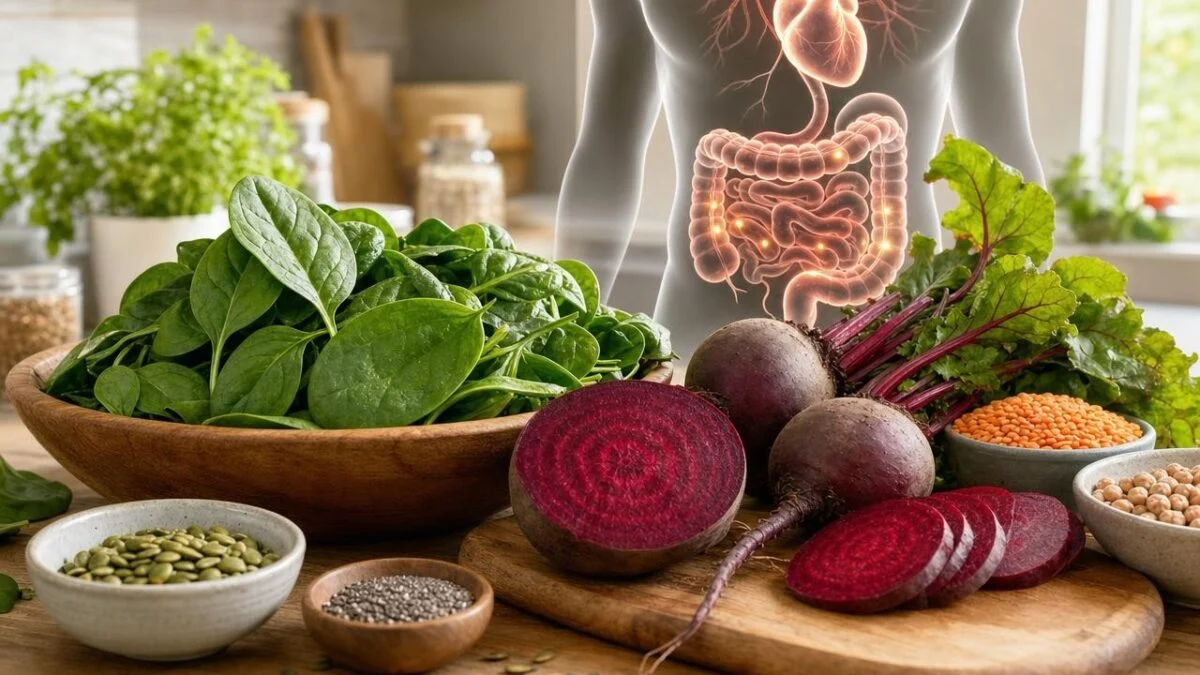
Behind a handful of spinach or a few beets there may be a more complex story than we imagine. That of a permanent dialogue between what we eat and the billions of bacteria that inhabit our intestine.
In a study published in cellresearchers from the Karolinska Institutet, with German teams, describe a hitherto little-known mechanism. Certain intestinal bacteria use nitrate present in particular in vegetables and non-heme iron, that is to say iron of plant origin, to produce molecules called dinitrosyl-iron complexesor DNIC.
These compounds are then absorbed and found in different organs, notably the liver and kidneys.
What if our microbiota transformed vegetables into protective messengers?
The researchers first sought to understand whether these molecules were actually produced by the microbiota. A decisive clue came from mice lacking intestinal bacteria: no DNIC was found in their tissues, unlike animals with a normal microbiota.
Experiments carried out on bacteria provided an additional argument. A normal strain ofEscherichia colicapable of transforming nitrate using an enzyme called nitrate reductase, produced DNIC in the presence of nitrate, especially when iron was available. A strain deprived of this enzyme did not produce it.
The microbiota would therefore not be a simple spectator of our food: it could transform some of its components into biologically active molecules.
“Our results show that gut bacteria can convert components found in food into biologically active molecules that influence important functions in the body.”explains Andrei L. Kleschyov, researcher at Karolinska Institutet and first author of the study.
This discovery gives a new dimension to a question that researchers have been asking for a long time: how can certain foods have beneficial effects well beyond the intestine?
In mice, blood pressure, blood sugar and liver improve
To go further, the scientists used a mouse model of cardiovascular and metabolic disease. The animals notably developed hypertension, vascular disorders, blood sugar abnormalities and accumulation of fats in the liver.
The researchers then increased DNIC concentrations, either by combining nitrate and iron in the diet or by directly administering synthetic DNICs.
The effects observed are particularly interesting:
blood pressure decreased, vessel function improved, blood sugar control was better, and fat accumulation in the liver decreased.
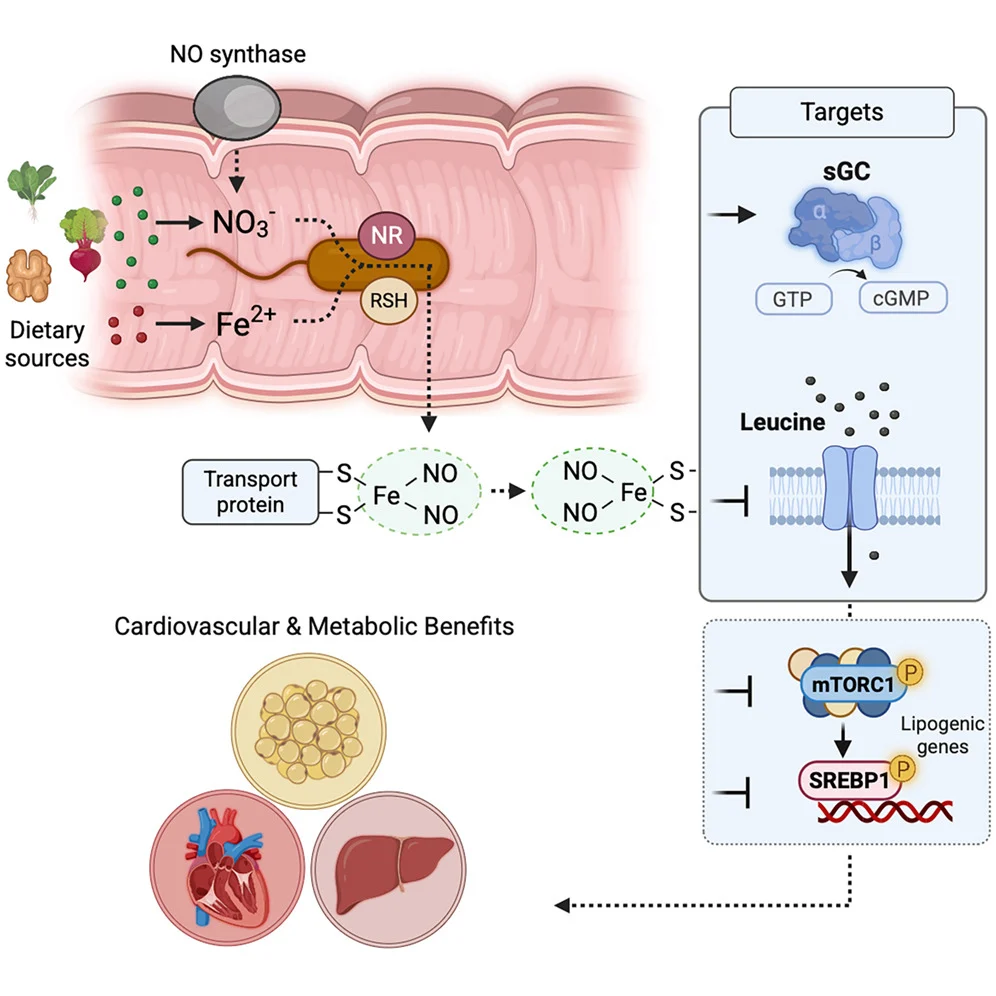 © Gut microbiota generate dinitrosyl iron complexes with cardiometabolic benefits, Cell (2026). DOI: 10.1016/j.cell.2026.07.055.
The researchers also observed a reduction in steatosis in human liver cells and in human “mini-livers” grown in the laboratory.
“Among other things, we observed a drop in blood pressure and an improvement in vascular function, better blood sugar control and a reduction in fat accumulation in the liver. The findings help explain why a diet rich in vegetables, which contain both nitrate and iron, is linked to a lower risk of several diseases.”underlines Mattias Carlström, professor of cardiorenal physiology at Karolinska Institutet and co-author of the study.
A hypothesis emerges: part of the benefits associated with a diet rich in plants could depend not only on what the foods provide directly to the body, but also on the way in which the microbiota transforms them.
An encouraging discovery, but still far from medical advice
However, we must resist the temptation to see it as a new weapon against hypertension or diabetes. The study is mainly based on experimental models – mice, bacteria, cells and human samples – and does not constitute a clinical trial in humans. We therefore do not yet know whether the consumption of spinach, beets or other foods rich in nitrate and iron actually increases DNIC in humans, nor whether this increase reduces the risk of disease.
The next step will be to develop methods to measure these molecules in humans and to understand precisely how they are produced, transported and used by the different organs.
The researchers also wish to determine whether diet or a modification of the microbiota could naturally influence their concentration.
For now, this discovery does not change dietary recommendations: rather it adds a fascinating piece to the puzzle. Between our plate and our health, there is a real ecosystem, in which our intestinal bacteria could play the role of intermediaries capable of transforming certain foods into biological signals.