
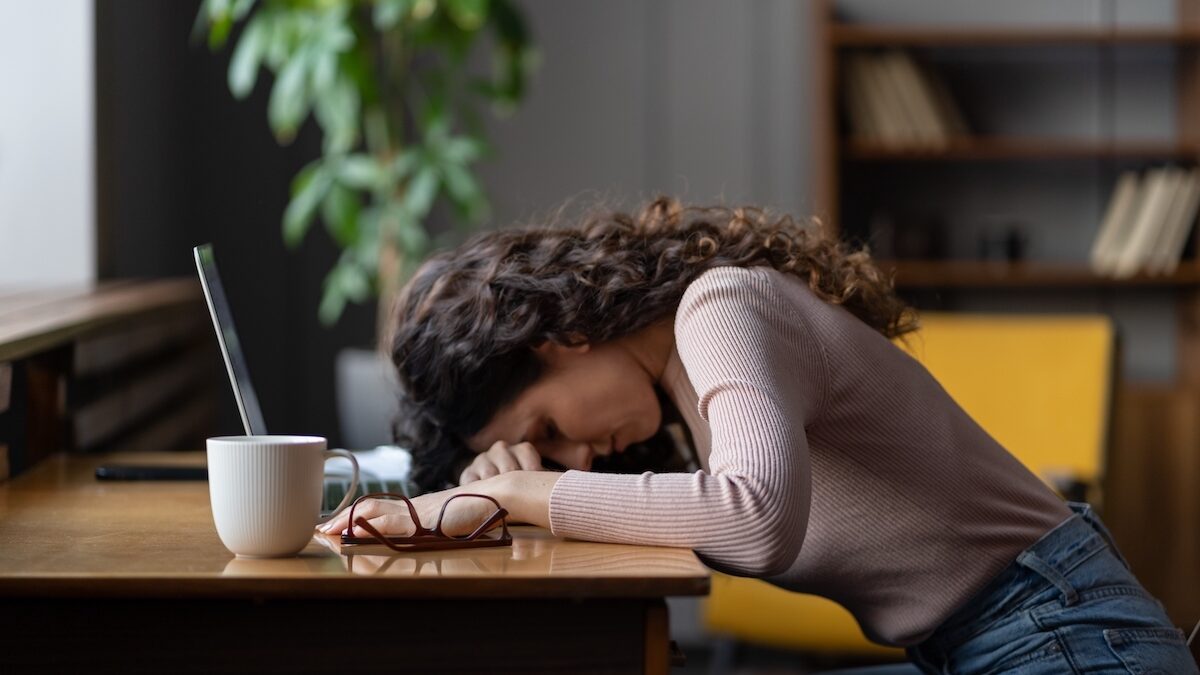
Do you sleep poorly and feel hungrier the next day? In the show “It’s much better” on RTL, broadcast on August 21, 2026, Violette Babocsay, dietitian and author of Great Guide to Nutrition and Weight Loss (Marabout), recalls that sleeping more does not guarantee weight loss, but that too little sleep can influence appetite, food cravings and body composition.
Why too short a night can whet your appetite
For Violette Babocsay, sleep is “probably one of the most underestimated factors” when we talk about weight gain. His reasoning is concrete: after too short a night, it sometimes becomes more difficult to feel full, to resist snacking or not to turn to high-energy foods.
The dietician cites two hormones often mentioned in this link between sleep and hunger: ghrelin, which stimulates the appetite, and leptin, involved in satiety. To better understand the role of ghrelin in the feeling of hunger, we must, however, avoid summarizing the entire phenomenon to this single mechanism.
The fact-check rightly calls for caution: the systematic review by Mousavi et al., published in Clinical Nutrition ESPEN in 2021, finds an effect of sleep restriction on certain indicators of appetite and food intake, but no homogeneous effect on the concentrations of ghrelin and leptin. Clearly, these hormones are possible mechanisms, not the sole or systematic explanation.
The number on the scale doesn’t tell everything
Another point highlighted by Violette Babocsay: the consequences of insufficient sleep do not only concern hunger. She emphasizes the distinction between weight and body composition, because two people can have a comparable weight with different proportions of fat mass and muscle mass.
The available data point to an association. The meta-analysis by Kohanmoo et al., published in Obesity Science & Practice in 2024, associates short sleep with a higher risk of obesity, while other work focuses on the link with sarcopenia in older people. But an association is not causation: we cannot conclude that little sleep automatically leads to more fat mass and less muscle in everyone.
This nuance matters, especially to avoid any guilt. Weight depends on many factors that can add up: pace of life, diet, physical activity, stress, mental health, treatments, pain, social context or hormonal disorders.
Still, muscle mass deserves to be preserved. As the dietician reminds us, muscle participates in metabolism, strength, autonomy and health, particularly with age. This is why sleep is one of the pillars to consider alongside diet and physical activity, without opposing them.
Simple guidelines to help your biological clock
The dietitian’s advice does not promise to change weight on its own. Rather, they aim to restore the biological clock’s bearings, when possible in daily life. Violette Babocsay offers in particular:
- Keep bedtimes and wake-ups as regular as possible, including weekends;
- Expose yourself to natural light in the morning;
- Open the shutters when you wake up;
- Walk outside early, before the hot weather;
- Have your coffee near a window if you can’t go out.
These actions are consistent with sleep hygiene recommendations, but they should not become an injunction. Night workers, parents of young children or people with professional constraints cannot always apply these guidelines. The idea is to look for a slightly more regular rhythm and more light in the morning, not to aim for a perfect routine.
What about sleep supplements?
Asked about supplements, Violette Babocsay cites melatonin as possible help in certain situations, while reminding that it is not a miracle solution.
ANSES recommends being particularly careful with melatonin-based supplements in certain populations, in particular pregnant or breastfeeding women, children and adolescents, people with chronic illnesses, mood disorders or under treatment.
It is therefore not a purchasing reflex to be trivialized.
When to consult?
Finally, the dietitian insists on finding a cause when difficulties persist: sleep apnea, pain, frequent urges to urinate at night, anxiety.
If the problems last, repeat or impact throughout the day, it is better to talk to a healthcare professional, especially in the event of significant drowsiness, marked snoring, breathing pauses observed during the night or psychological distress.