
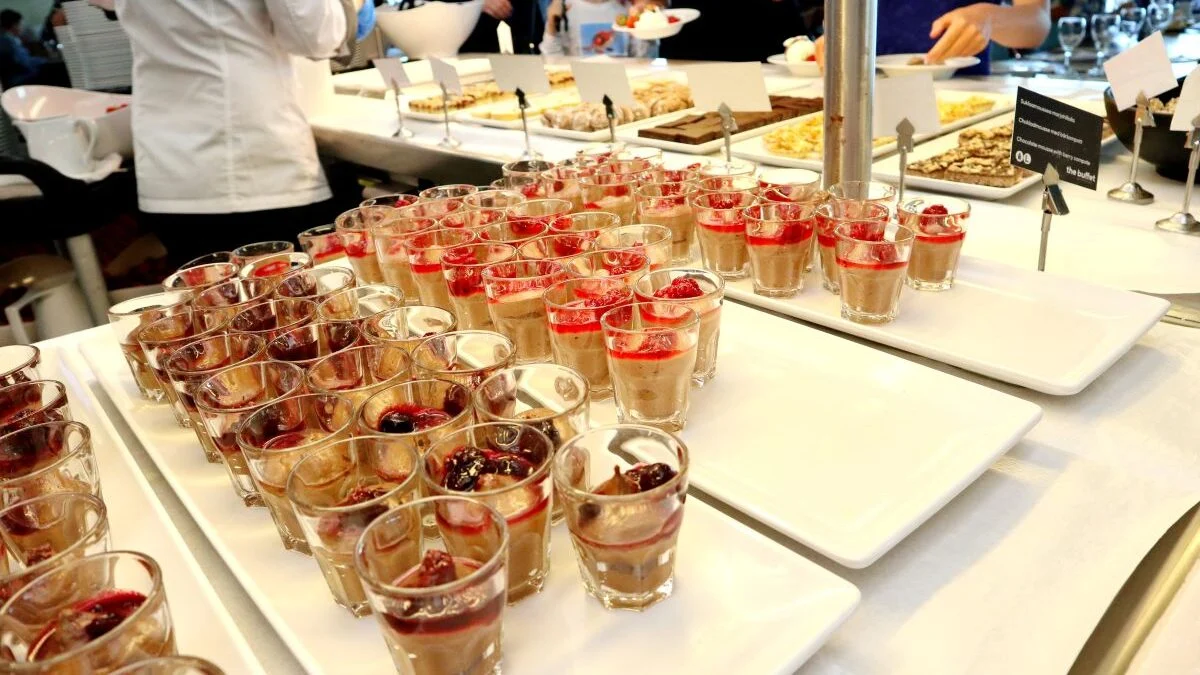
Faced with a line of dishes, trays of ice cream and sauces, many French people have the same reflex: fill their plate again and again. The all-you-can-eat buffets are full on weekends and attract all generations. We often think that this success comes mainly from the price. Except that, for a sociologist of food, the explanation lies elsewhere.
Interviewed by the daily The Dispatchsociologist Jean-Pierre Corbeau explains that these restaurants are first experienced as a space of freedom.
He speaks of a “place of transgression” in a society saturated with nutritional and ecological injunctions. What we are looking for, much more than a sweet addition, is the possibility of letting go without being judged.
All-you-can-eat buffet: a space of freedom and letting go
Jean-Pierre Corbeau describes all-you-can-eat buffets as spaces where daily pressure falls away. Between public health messages and calorie calculation, our meals are supervised. There, everyone composes their plate, comes back, tests, mixes sweet and savory. No one comments on the quantity or the mixtures. This climate without judgment creates a real letting go.
For the sociologist, this moment is akin to a little party. Customers refill, taste, forget the usual instructions for a moment. He evokes a “gentle resistance” to injunctions to eat well. Ecological concerns take a back seat to immediate pleasure: “The majority of customers put these considerations aside during meal time“, he explains.
All-you-can-eat buffet: the customer becomes an “eater-actor”
In these restaurants, everyone sets their own tempo. You can devour a dish in ten minutes or linger with your family. Jean-Pierre Corbeau describes the customer as an “eater-actor”: he chooses the quantity and order of the dishes, chaining together small portions, mixing hot and cold, sweet and savory. This autonomy transforms the meal into a more fun exploration than a simple visit to the table.
This formula attracts a diverse clientele. We meet colleagues, large family tables, but also single people who eat quickly without feeling isolated. The arrangements promote privacy: spaced tables, wide aisles where children can circulate, calm atmosphere.
All-you-can-eat buffet: abundance, prices and parenthesis in an era under pressure
There remains the question of the addition. According to Marmiton, we find in these formulas an excellent “abundance-price ratio”: for a fixed sum, the table is overflowing with possibilities. This feeling of abundance is reassuring in a context of tense purchasing power.
For Jean-Pierre Corbeau, however, this is not the main driving force. The price makes this experience of freedom accessible, it amplifies it, but the primary desire remains to regain control of one’s plate.
Questions of ecology and waste do not disappear. Jean-Pierre Corbeau observes that many clients put these concerns on the back burner before returning to them later. Once they leave the restaurant, they find prices, labels, sorting. These buffets reveal this need to breathe in a food life that has become very monitored.