
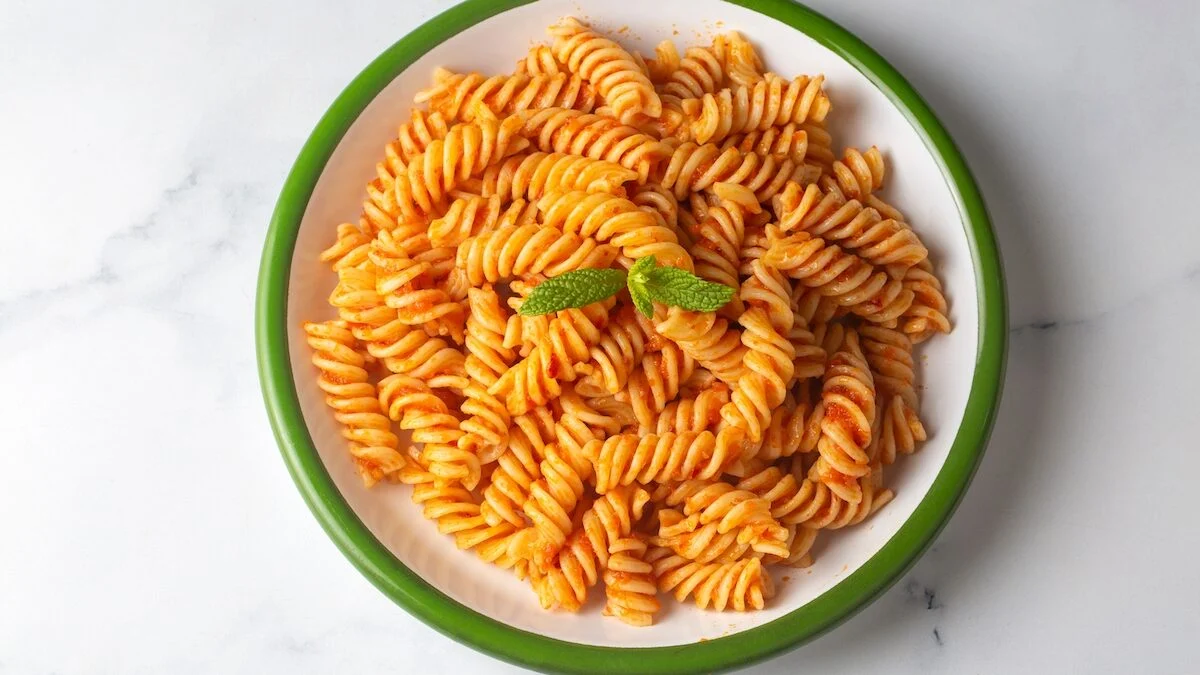
A packet in the cupboard, a few minutes in boiling water and dinner is ready. And for good reason: pasta is one of those everyday foods, easy to enhance, that we no longer even think about. In France, more than two thirds of residents eat it at least once a week, for an average consumption of 9.3 kg per person per year.
But what do we actually find in these packages? To find out, 60 Million Consumers had 36 references of penne and spaghetti analyzed, classic, organic, complete, gluten-free or even enriched with protein. The laboratories looked for heavy metals, mycotoxins, pesticide residues and also studied their nutritional profile.
And one result clearly stands out: almost eight out of ten pastes contain cadmium.
Cadmium, the main black point of the investigation
Cadmium is not an ingredient added to pasta. This heavy metal is present in the environment and can in particular be absorbed by crops. Durum wheat, used to make pasta, is one of the cereals likely to accumulate more.
In its opinion published in March 2026, ANSES had already highlighted the importance of dietary exposure to cadmium. For non-smokers, food represents the main source of exposure. Several common foods can contribute to this exposure, including cereals and products made from them.
The problem is that cadmium can build up in the body over time. It is notably considered carcinogenic, mutagenic and toxic for reproduction.
Frequent presence, but no regulatory overrun
However, there is no question of concluding that the packages tested are “dangerous”.
This is an essential nuance: the 36 references analyzed remain below the European regulatory limit mentioned in the survey, set at 0.18 mg/kg for cadmium in durum wheat grain.
What worries 60 million consumers more are the discrepancies between the references and the fact that pasta is added to the many other food sources of cadmium. In penne, the levels range from 0.009 mg/kg for Delverde to 0.066 mg/kg for Barilla whole wheat. Barilla whole wheat spaghetti reached 0.071 mg/kg, the highest concentration recorded in the entire test.
The paradox of wholemeal pasta
This is probably one of the most surprising results of the comparison.
We know that whole-grain pasta is generally nutritionally beneficial because it provides more fiber. But this part of the grain can also concentrate more cadmium.
For what ? Because the contaminant tends to accumulate in the outer husks of the grain, which are retained in complete products. This is particularly what could explain the high rates noted in certain references to whole wheat.
This obviously does not mean that you should eliminate wholemeal pasta from your diet. They maintain a significant nutritional advantage: the references tested provide approximately twice as much fiber as standard pasta, with up to 5.4 g of fiber per 100 g of pasta cooked in Naturalia wholemeal penne pasta.
Gluten-free pasta is not necessarily better
Another lesson from the test: “gluten-free” is not automatically synonymous with a better nutritional profile.
The gluten-free pastas analyzed are particularly low in fiber, with only 0.5 to 0.7 g per 100 g of cooked product. Wholemeal pasta is therefore much more interesting on this point.
Some gluten-free references have also revealed… the presence of arsenic. Not surprising, since these products are generally made from rice and corn, two raw materials likely to contain more.
And their list of ingredients is often longer: the gluten-free references in the panel notably contain an emulsifier intended to compensate for the absence of gluten and to maintain a satisfactory texture.
Pesticides: rather good news
The absence of pesticides is one of the few frankly reassuring aspects of the file.
The experts searched for no fewer than 728 active substances and metabolites. Result: around two thirds of the spaghetti and penne analyzed show no detectable residue, whatever their category.
Some references, however, do less well. Standard Panzani penne contains four residues and the quick cooking version three. Piperonyl butoxide, deltamethrin and clopyralid were notably found in certain references.
But here again, the concentrations recorded remain below the regulatory thresholds.
What about mycotoxins?
The laboratory also looked for different mycotoxins, substances produced naturally by certain molds that can develop on cereals before harvest or during storage.
Several references present contents which approach the regulatory limits, in particular for ochratoxin A and deoxynivalenol. But the results are overall less worrying than that observed for cadmium.
So, should you stop eating pasta?
No. The survey of 60 Million consumers does not show that pasta has become dangerous to consume.
Rather, it highlights a less spectacular but important reality: our diet constitutes a source of exposure to numerous contaminants, and certain common foods can regularly contribute to this.
Cadmium is present in a large majority of the references tested, but no product in the panel exceeds the regulatory limit. The most important thing is therefore not to confuse “presence of a contaminant” and “dangerous product”.
To limit your exposure to cadmium, the idea is above all to avoid concentrating your diet on the same foods and the same sources of supply. Pasta can continue to have its place in a varied diet.
And the comparison also reminds us that the choice of reference can be important: whole-grain pasta is more interesting for fiber, enriched versions for protein, while gluten-free does not necessarily offer any nutritional advantage.
Details of the 36 references tested, the results of the analyzes and the complete ranking can be found in the September 2026 issue of 60 Millions de consommateurs, available on newsstands since August 27.