
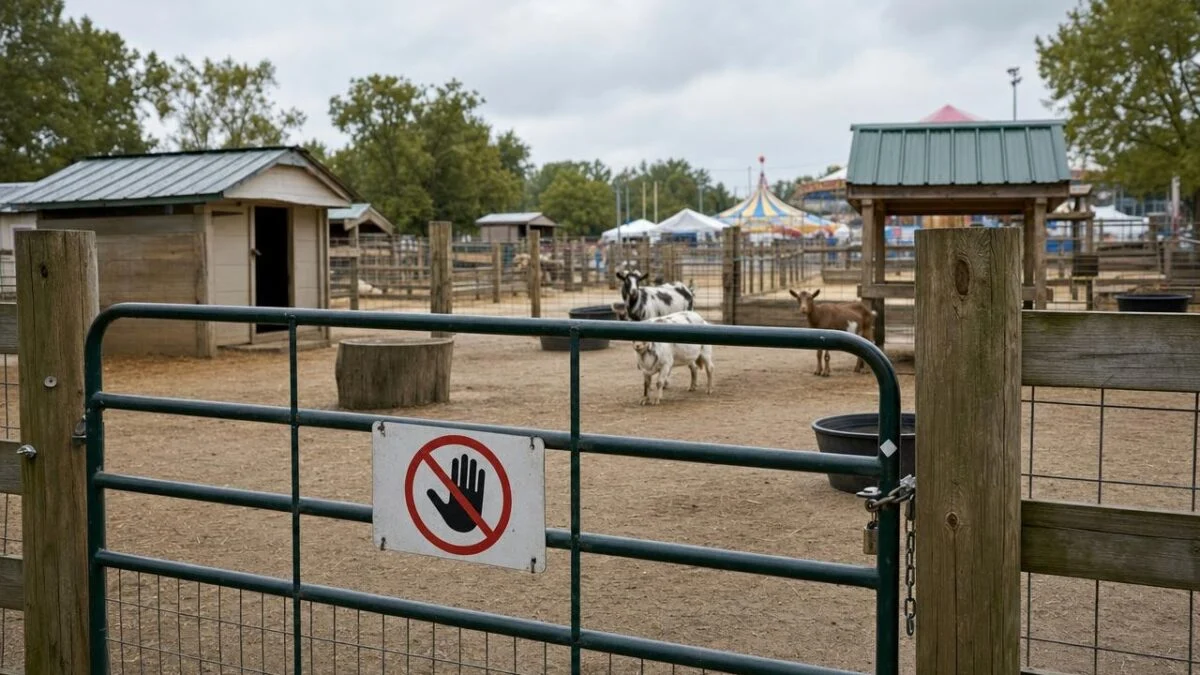
The North Carolina Department of Health and Human Services (NCDHHS) says the potential exposures may have occurred between July 28 and August 27, 2026, at the Farm Adventures location in Harmony or at multi-county events. Authorities are asking affected individuals to promptly contact their local health department to determine if preventative treatment is necessary.
Kids infected after the passage of a skunk
Farm Adventures, a mobile petting zoo in Iredell County, regularly takes its animals to events, including for children and seniors.
Four kids were identified as potentially infected. Rabies virus was confirmed in three of them by the North Carolina Public Health Laboratorywhile the fourth is considered probably infected. All four animals were euthanized.
According to the authorities, a skunk that entered their enclosure at the end of July constitutes the probable source of the contamination. No other animals on the farm are currently considered to pose a risk to visitors.
The problem is that the kids may have been in direct contact with the public while they were infectious. The authorities therefore undertook to find the people present during the various events concerned.
Why rage requires us not to wait
Rabies is rare in many Western countries, but it remains a particularly feared disease: once the first symptoms appear, it is almost always fatal. The virus is found in the saliva of infected animals and can be transmitted by a bite, a scratch or by contact of saliva with a wound or mucous membrane.
Incubation generally lasts one to two monthseven if it can be more variable. The first symptoms can then progress to severe neurological disorders, then coma and death.
This is precisely why the absence of symptoms should not be reassuring after a risky exposure. Preventive treatment is all the more effective if it is started quickly.before the disease breaks out.
People who touched or held one of the affected kids between July 28 and August 27 are urged by North Carolina authorities to contact their local health department. They will be informed if post-exposure prophylaxis is necessary and where it can be carried out.
Have you touched a suspicious animal? Here’s what to do
In the event of a bite or scratch, the first step is to
wash the wound immediately and thoroughly with soap and waterfor about 15 minutes, then disinfect it. Prompt medical treatment then makes it possible to assess the need for anti-rabies vaccination, possibly associated with immunoglobulins depending on the nature of the exposure.
In France, animal rabies is now rare and terrestrial animals have been considered free for more than 25 years, with the exception of the risk linked to bats. But any exposure to risk abroad (including in Europe) should lead to rapid consultation of an anti-rabies center.
One rule remains essential: faced with a bite, a scratch or contact of saliva with a wound after contact with a potentially infected animal, you should not wait for the first symptoms to appear to consult.