
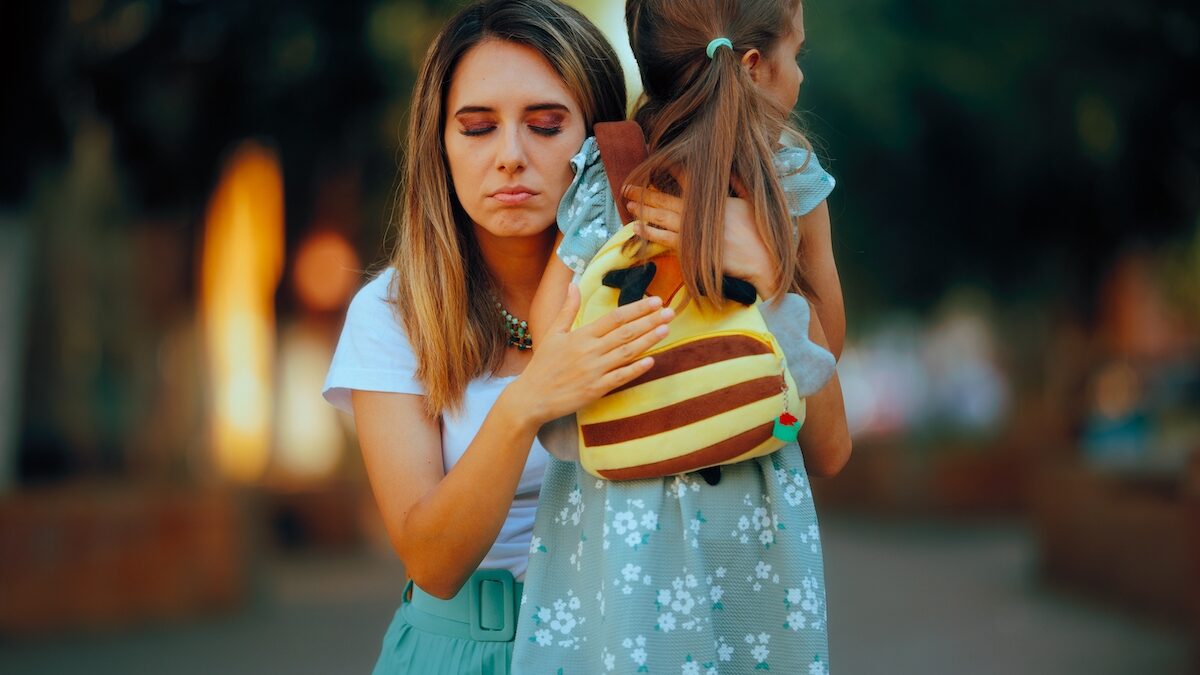
For more than 11 million school, middle and high school students, September 1 marks the return to class. But for some children, this day above all punctuates a summer disrupted by disasters: mega-fires in the South-West, storms, tornadoes, evacuations… Events which have sometimes destroyed houses, displaced families and profoundly shaken up the benchmarks.
So, how can we find our way back to school when the feeling of security has not yet completely returned?
A return to school that can be particularly difficult
“This is definitely a special return to school for the children and families affected”recognizes the rector of Bordeaux, Jean-Marc Huart, in The Parisian. In certain municipalities in Landes or Gironde, students and teachers affected by the fires are still trying to find a balance. And experienced the emergency, side by side.
For some children, the change is even more significant: when their school has been damaged or made inaccessible, they have to return to another school. New premises, new landmarks, sometimes new friends… so many changes that can add stress to an already emotionally charged period.
On site, specific measures are therefore planned, including additional school doctors, psychologists and listening units. Because behind the traditional “back to school ritual” can hide emotions that are much more difficult to manage.
After a disaster, not all children react the same way
Faced with a fire, a storm or an evacuation, a child can be afraid without developing psychological trauma.
“Not all children exposed to a fire, storm or other disaster will necessarily develop psychological trauma”recalls psychologist Amélie Boukhobza. They may nevertheless retain “a feeling of insecurity” for some time.
And in children, this insecurity does not necessarily come through words. It can manifest itself in other ways: irritability, difficulty sleeping, stomach aches, fear of leaving parents, startles at the slightest noise or even difficulty concentrating.
Some children, on the contrary, will talk incessantly about what they have experienced. Others will seem perfectly fine.
“Be careful not to conclude too quickly, one way or the other”warns the psychologist.
In other words, there is no one way to react after a traumatic event. And a reaction that may seem harmless to adults can be a way for the child to express what he or she cannot yet put into words.
Why going back to school can do good
At first glance, getting a child back into school after a difficult summer can seem brutal. However, returning to class can also have a real restorative function.
“The school reintroduces the known in a period which could have profoundly shaken up the benchmarks” replies Amélie Boukhobza
Finding schedules, teachers, friends, learning and small daily rituals gradually allows the child to return to a predictable environment. His brain can thus re-experience the experience that daily life resumes.
Returning to school also allows him to find an identity that is not limited to what he has experienced. He becomes a student again, a comrade, a child who plays, learns, laughs and finds his habits. “Which can have a real restorative function”underlines the psychologist.
But be careful: going back to school does not mean immediately being “like before”. The reconstruction time varies from one child to another. We should therefore not expect him to regain his usual abilities, sleep or concentration from the first day.
And when the school itself was affected?
The situation can be more delicate when the school site has also been damaged.
Usually, school represents a stable and safe space. If it bears traces of the disaster, the child may feel that no place is truly protected. Certain very concrete elements can then reactivate his feeling of danger: a burning smell, an alarm, work, a violent wind or even a simple change of room.
In this context, it is better not to act “as if nothing had happened”.
Children need simple, concrete explanations: what was damaged? What was repaired? Where will they be welcomed? What measures have been taken to guarantee their safety?
The goal is not to talk about the disaster all day, but to give people a sense of direction and a feeling of control.
“Children need to know they can talk about it, but no one should be forced to talk about what they saw or experienced in front of others.”insists Amélie Boukhobza.
After a disaster, psychological support does not necessarily consist of recounting the event again and again. Above all, it is about listening, answering questions, taking concrete needs into account and gradually restoring the feeling of security.
Do you necessarily need to consult a psychologist?
No. And that’s an important point. “Preventative therapy imposed on all students is neither necessary nor necessarily desirable,” believes the psychologist.
Being afraid, crying more, sleeping poorly or needing to stay close to your parents in the days following a disaster can be a normal reaction to a situation that was not normal.
For many children, these manifestations will gradually diminish when security, habits and social connections return.
On the other hand, certain signs should encourage parents to seek advice. This is particularly the case when the symptoms persist, intensify or prevent the child from living normally: significant school refusal, repeated nightmares, panic attacks, intrusive images, avoidance of anything reminiscent of the disaster, unusual withdrawal, significant aggression, recurrent physical pain or sudden drop in attention span.
We must also remain attentive to the child who seems to be doing “very well”, but who categorically refuses to be talked about what happened or who suddenly begins to want to control everything.
“The absence of tears does not necessarily mean the absence of suffering”recalls Amélie Boukhobza.
How to help your child at home?
The role of parents is also essential. After an awesome event, a child may ask the same questions over and over again. We shouldn’t be surprised.
Parents can respond in simple words, without multiplying anxiety-provoking details. It is also best to limit repeated exposure to images of the disaster broadcast on television or social media. Seeing the same images several times can maintain a feeling of danger, especially among young people.
It may also be useful to notify the teacher when certain particular reactions have appeared at home. Unusual fatigue, difficult nights or significant anxiety may allow the educational team to temporarily adapt their expectations.
Above all, it is better to avoid two extremes: acting as if nothing had happened or, conversely, organizing the entire family life around the child’s fear.
The challenge is rather to recognize what he feels while allowing him, little by little, to see that he can return to school, his classmates, his activities… and the course of his life.
After an extraordinary summer, the start of the school year will perhaps not immediately be “like any other”. But rediscovering habits, familiar faces and ordinary moments can be one of the first steps to feeling safe again.