
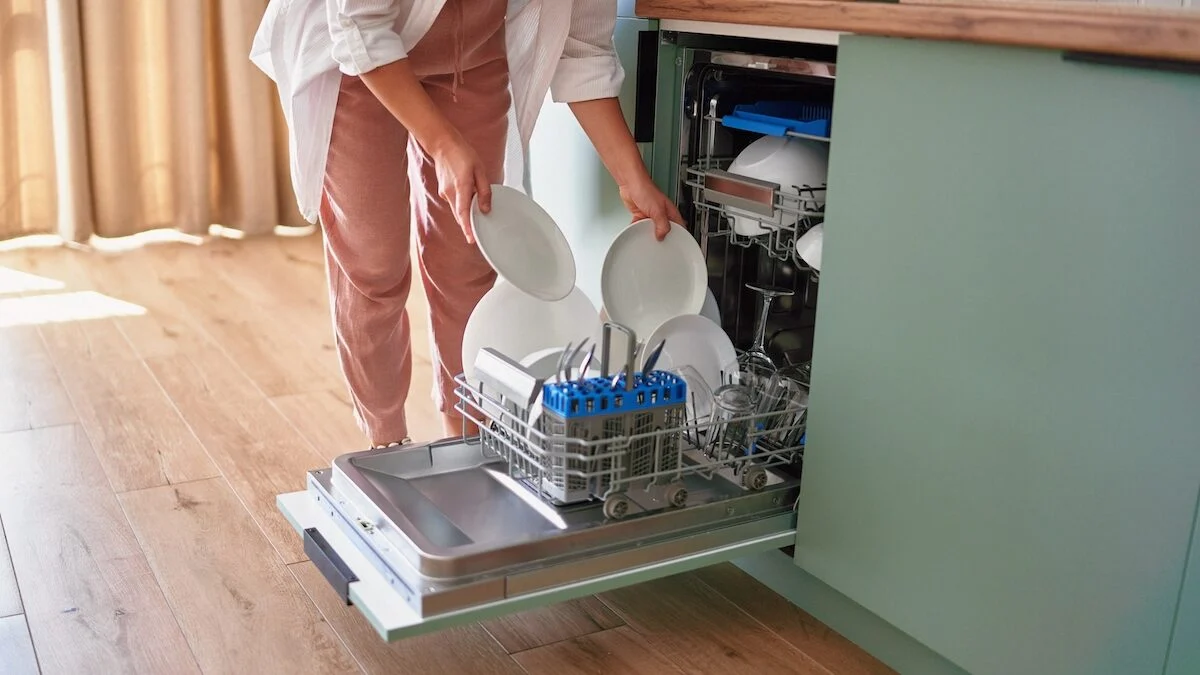
Who has never thought about doing the right thing by rinsing their plates before putting them in the dishwasher? However, this habit is not only unnecessary, but it can also affect the efficiency of your device. Experts explain why it’s best to scrape off the leftovers and let the dishwasher work.
Why rinsing your plates before the dishwasher is a mistake
In an article from HuffPostHolly Moore, founder of a cleaning company, recalls: “This is a common mistake. The important thing is to scrape the plates, so as not to leave food on them, but rinsing them is completely useless“.
Appliance repair specialist Ian Palmer-Smith says most modern dishwashers are equipped with a sensor that measures the degree of soiling and adjusts the cycle accordingly. Problem: By flushing, you are fooling the system. “So if you rinse the dishes first, the dishwasher won’t cycle as hard as it would otherwise“. Result: dishes that come out less clean.
The key role of the integrated sensor and modern cleaners
This sensor works using a light beam which analyzes the dishes. The dirtier it is, the more powerful the cycle will be. Lee Gilbert, appliance expert, confirms: “If your device was manufactured within the last 20 years, it probably has one“.
To be sure, just check its user manual. Holly Moore advises: “The user manual usually lists the features of the dishwasher, including whether it has a food sensor. Look for terms like ‘dirt sensor’, ‘auto-sensing cycle’ or ‘smart sensor technology’. Devices equipped with this technology also display “automatic” or “smart wash” cycles. “These settings indicate that the dishwasher can adjust water consumption, temperature and cycle time depending on how dirty the dishes are“, she adds.
Additionally, current products are formulated to interact with food residue. As Ian Palmer-Smith explains: “The enzymes in dishwasher cleaner attach to food, so if you pre-rinse your dishes, they have fewer attachment points“.
The right actions for an efficient everyday dishwasher
To take full advantage of the capabilities of your device, it is better to stop rinsing and concentrate on regular maintenance. Ian Palmer-Smith recommends:The dishwasher should be cleaned approximately once a month“. He details: “This includes emptying and cleaning the filter which traps food remains, before wiping it. It only takes a few minutes, but it’s essential for your dishwasher to function properly in the long run.“.
Here are the good reflexes to adopt:
- Scrape the plates instead of rinsing them;
- Choose automatic or intelligent cycle;
- Clean the filter and the tank regularly;
- Use suitable products.