
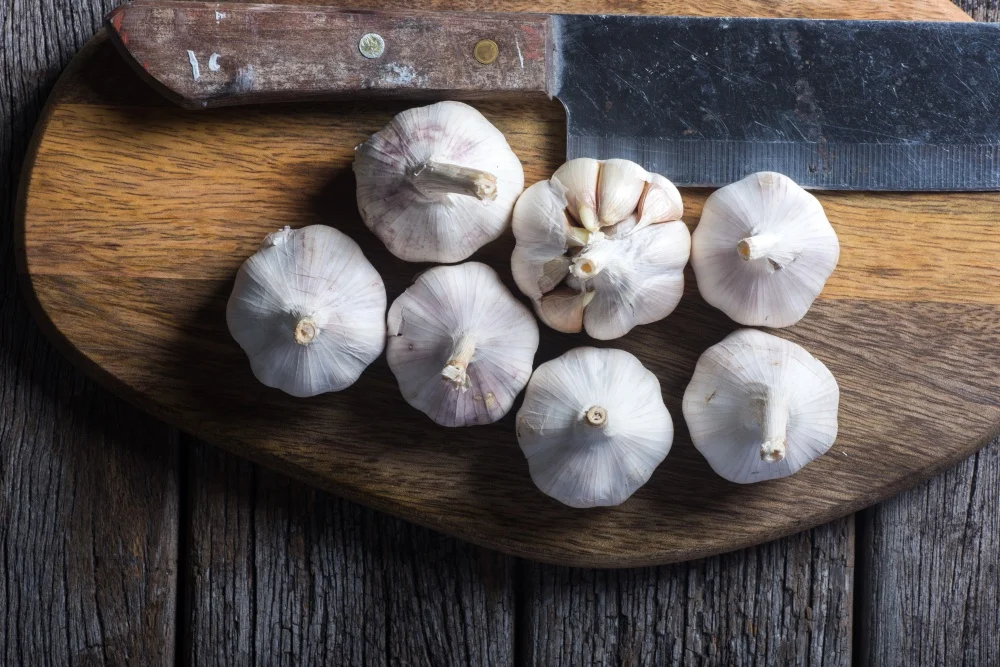
Every cook has already had this problem: after cutting garlic, the smell remains on the fingers, sometimes for hours, despite the soap. And when it settles under the nails, it’s difficult to get rid of it.
However, a simple tip is circulating on Instagram. @chef_alvar_pina advises rubbing your hands with a stainless steel spoon under cold water.
Stainless steel spoon tip, how to remove garlic smell in 30 seconds
To try the stainless steel spoon trick, start by lightly rinsing your hands with cold water to remove small garlic residues. Then take a clean stainless steel spoon and rub it all over the surface of your hands: palms, backs of the hands, spaces between the fingers and, especially, under the nails.
Let the water run slowly for 10 to 30 seconds while continuing to scrub. Then rinse your hands and dry them as usual.
Don’t have a clean spoon handy? A stainless steel faucet or sink can also be used, provided the surface is perfectly clean. The gesture seems especially interesting just after cutting the garlic, before the odorous compounds remain on the skin for too long.
This method can also be used after handling onions or fish, two foods which can also leave a stubborn odor on the fingers.
Why stainless steel can reduce the smell of garlic on your hands
If the smell clings so much to the skin, it is because of the sulfur molecules present in garlic. When a pod is crushed, alliin reacts with an enzyme called alliinase and forms allicin. This then transforms into very volatile compounds, including diallyl disulfide.
These molecules attach easily to the skin and can be lodged under the nails. This explains why simple washing up is not always enough to make this smell disappear.
Stainless steel has a thin film of chromium oxide on its surface. Chemists at Seattle Pacific University observed that certain sulfur molecules seemed to be able to cling to it. They could therefore be partly removed from the skin during contact with stainless steel.
In a small analytical work carried out by gas chromatography, the signal corresponding to diallyl disulfide decreased after contact with stainless steel. Researchers remain cautious, but this result lends credence to the explanation put forward for this cooking tip.
Stainless steel spoon or classic soap, what to do if the smell persists?
There are also objects sold specifically to reproduce this method: stainless steel soaps. Their oval shape allows them to be rubbed between the hands under water. Their principle remains the same as that of a simple spoon.
No need to run out and buy one. A spoon or even a clean stainless steel tap can be used to test the method with what you already have in the kitchen.
If the garlic smell remains despite a first attempt, you can start again for a few seconds, then wash your hands with your usual soap. The result may vary depending on the person and the quantity of garlic handled. This tip can therefore reduce the odor without necessarily making it disappear completely.