
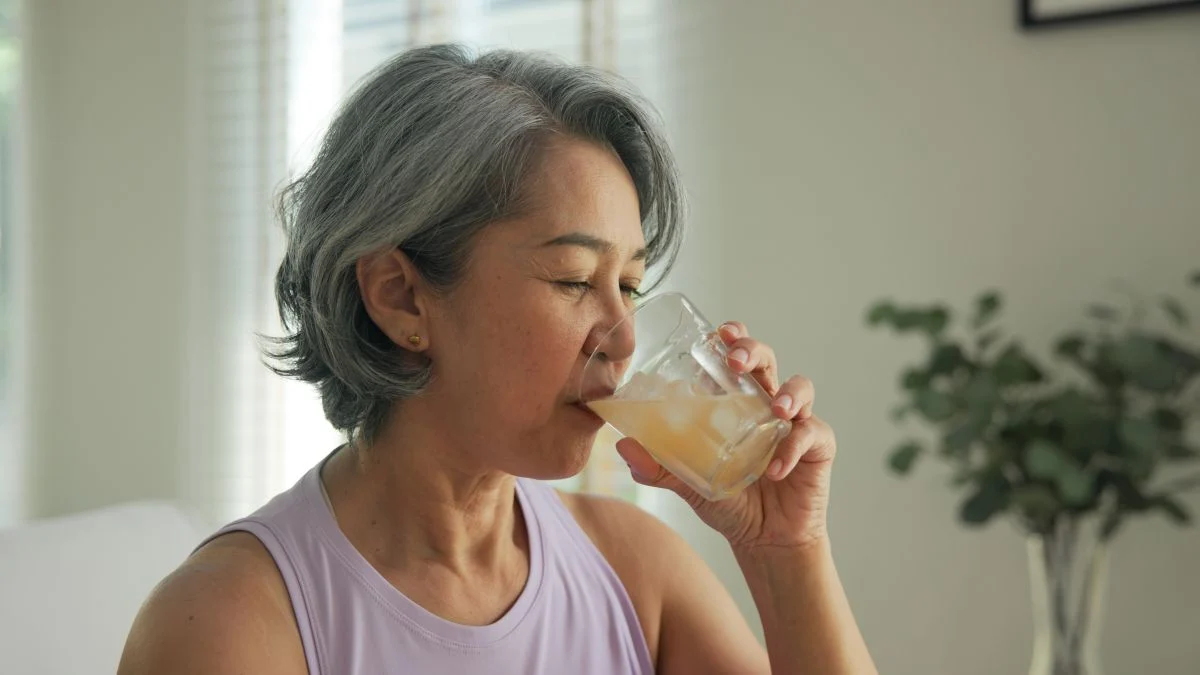
If you are looking to take care of your health by favoring so-called “functional” products, you may already be a regular consumer of kombucha. Obtained by the fermentation of green or black tea thanks to a symbiotic culture of bacteria and yeasts – the famous “mother of kombucha” also called Scoby – this sparkling and sour drink seduces with its natural image and its probiotic virtues.
However, faced with the explosion of commercial offerings, it is important to disentangle fact from fiction. What does it really contain? Is the scientific evidence there?
Positive health markers, but no effect on stress
For a long time, most research into kombucha was based solely on laboratory work. Dr Emma Short, consultant histopathologist specializing in gastrointestinal pathology interviewed by the BBCreminds him. It also specifies that before 2025, there existed “less than 10 human studies on this drink”emphasizing the need to translate these results to humans.
To address this gap, researchers from Aberystwyth University, in partnership with the Conwy Kombucha company and funded by Innovate UK, conducted an eight-week double-blind randomized controlled trial on 40 healthy participants: one group receiving a carefully controlled kombucha drink each day, and the other a placebo of flavored water.
Dr. Amanda Lloyd, principal investigator of the study, explains the process. “(My team) studies the chemical composition of the products after an intervention trial and after different processing methods. We brought in a kombucha company to provide higher quality kombucha“she explained. “We’ve really applied some of our scientific techniques to deepen our understanding of the composition, changes and evolution over time (of bioactive chemicals).”
Analyzes of urine and blood samples were conducted before and after the trial to assess the potential impact of kombucha components, such as certain polyphenols, on the human body.
The results revealed a measurable increase in compounds beneficial to the body, notably from the antioxidant polyphenols present in tea.
In contrast, the study showed no effect of kombucha on stress management during stress response testing.
Nutrition and microbiota: a true ally for the intestine
Low in calories (less than 30 kcal per bottle for only 2 to 8 grams of sugar), traditional kombucha proves to be an excellent alternative to industrial sodas. It is full of B vitamins, vitamin C, minerals and polyphenols.
“These polyphenols have the ability to neutralize free radicals and therefore limit oxidative stress, responsible for premature aging of cells. Raphaël Gruman, dietician-nutritionist, explained to True Medical.
Concerning fermentation, “the yeasts present on the mother kombucha, soaked in sugar water, will allow fermentation with a proliferation of numerous bacteria and microorganisms, valuable for the intestinal microbiota”
adds the expert. These probiotics facilitate transit and help eliminate pathogenic bacteria such as Escherichia Coli.
However, the benefits of a drink should not overshadow the overall balance. Dr Amanda Lloyd recalls: “If you want to be healthy, eat healthy. Am I getting enough protein? Are there enough carbohydrates? Is it low in salt, low in sugar? Homemade dishes or foods with very few ingredients, that’s what you should look for: as little processing as possible.”
Beware of masked alcohol and contraindications
Finally, behind its appearance as a health drink, kombucha hides a little-known reality: it naturally contains alcohol resulting from the fermentation process (between 0.5% and 2.5%). Dr Arnaud Cocaul, nutritionist, is sounding the alarm on the lack of transparency in mass distribution. “This sparkling drink, full of medical benefits, contains alcohol, and it is not specified.he laments to True Medical
“Kombucha sold in supermarkets, except that of the Germline brand, does not display a pictogram warning pregnant women“, he emphasizes.
This omission carries direct risks for certain consumers. “There are women who can legitimately think that they are doing something healthy by consuming kombucha, thinking that it is natural. In reality, they consume ethanol throughout their pregnancy, so they give alcohol to their child.”insists the doctor.
Dr. Cocaul also warns other populations at risk:
- People experiencing alcohol withdrawal : “These people should definitely not consume this type of product.“, he warns;
- Patients under drug treatment : “Kombucha can change the kinetics, that is, the absorption of the medicine they are taking“, he explains;
- People suffering from liver pathologies or tooth sensitivity (due to the acidity of the drink).
Marketing, commercial excesses and advice for choosing wisely
Faced with public enthusiasm, industrial and marketing excesses are increasing. For Dr Emma Short, caution is advised with versions that are too commercial. “The exact composition of kombucha can vary depending on the fermentation time, fermentation temperature and the microorganisms present in the scoby. Ideally, your kombucha should consist of only tea, sugar and the scoby.”
Before concluding: “Choose a traditional kombucha where the microbiota is alive. It will taste different from what you buy in a commercial soft drink.”