
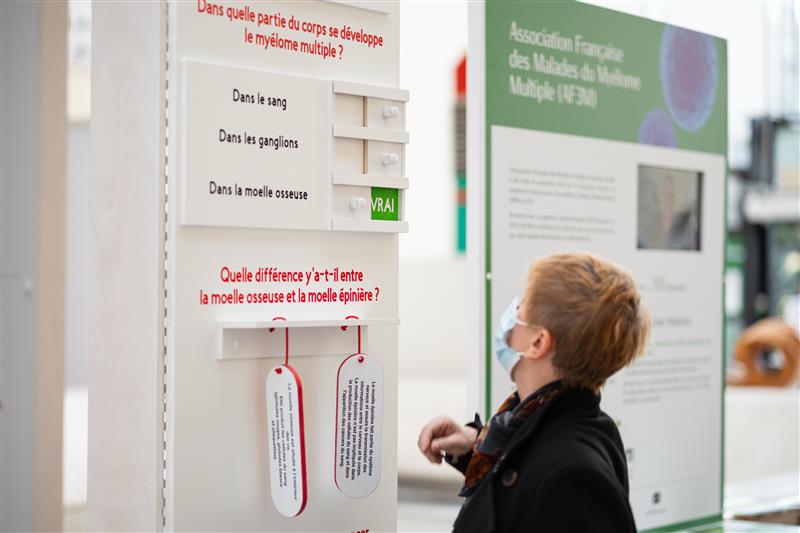
In Paris, the hall of the Saint-Louis Hospital is transformed until September 24 into an immersive journey to understand what is happening “at the heart of the blood”. Objective: to make cancers that are often summarized in one name (leukemia, lymphoma, multiple myeloma) more legible but about which we know little about the reality.
In the background, a number reminds us of what is at stake. Nearly 45,000 new cases of hematologic malignancies are estimated each year in France, according to Public Health France, INCa and Francim (Source: Public Health France, INCa, Francim, 2019, National estimates of cancer incidence and mortality in metropolitan France between 1990 and 2018 – Volume 2: Hematologic malignancies, p. 169).
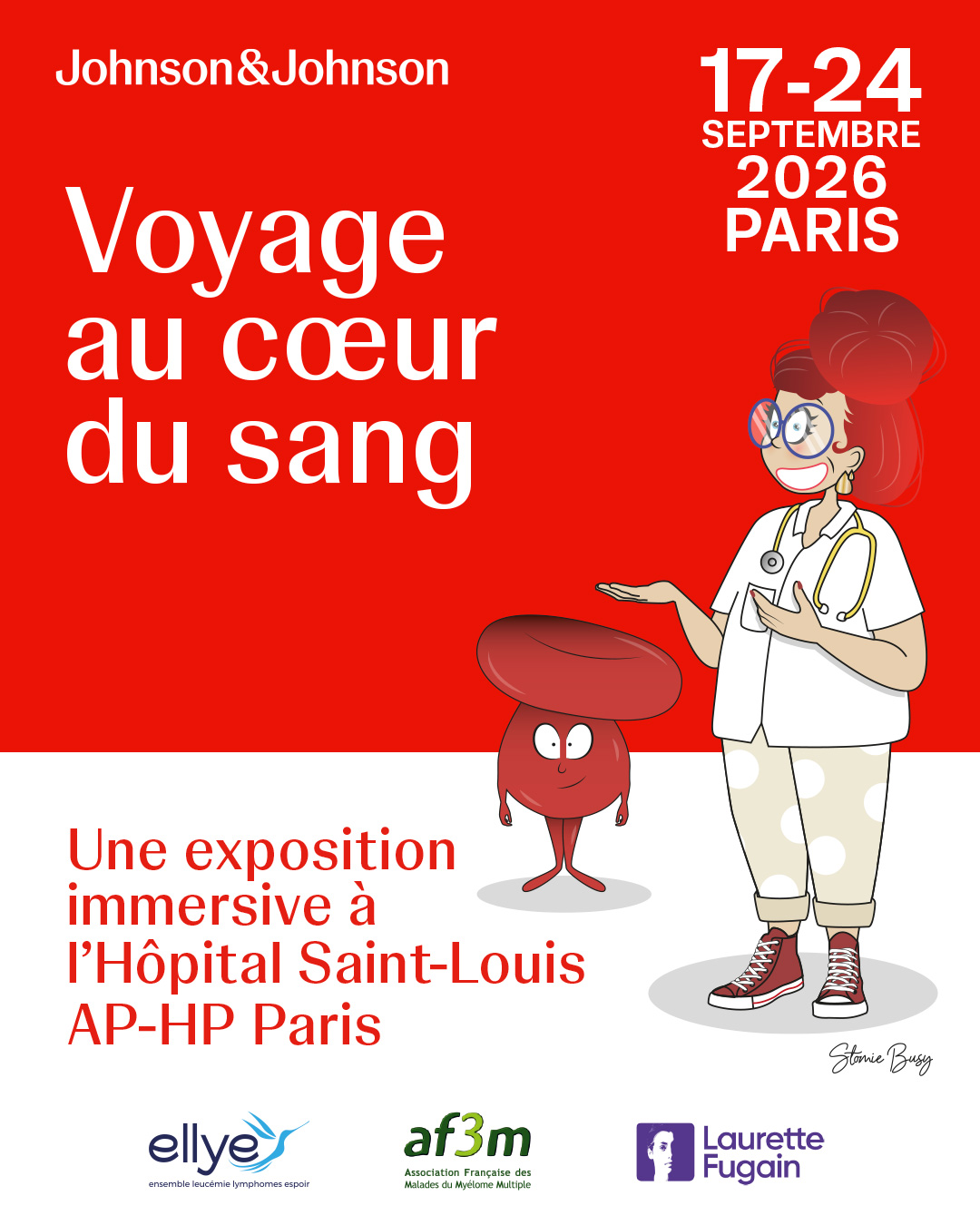
On the occasion of blood cancer awareness month, Johnson & Johnson is mobilizing through two events: its participation, as a partner, in the DEPHI ROUGE solidarity race organized on September 13 and the return of the immersive and educational exhibition “Journey to the Heart of Blood”, from September 17 to 24, 2026.
Blood cancers: common, but poorly identified
Behind the expression “blood cancers” there are three main families cited by the organizers: leukemia, lymphoma and multiple myeloma. These hematologic malignancies affect blood cells and remain unknown to the general public.
This lack of knowledge is accompanied by “preconceived ideas” and sometimes discreet symptoms, likely to delay recognition of the first signs or complicate understanding of the care pathway.
A race then an exhibition to explain to the general public
First highlight: DEPHI ROUGE
The solidarity run/walk DEPHI RED took place on September 13, 2026 around the Saint-Louis Hospital, in the 10th arrondissement. Organized by the DEPHI Medical-University Department of the Saint-Louis AP-HP Hospital, it offered two races of 5 km and 10 km as well as a 2 km solidarity walk, with a joint start at 10 a.m. Johnson & Johnson participated in the event as a partner. Around the route, an awareness village brought together patients, relatives, caregivers, associations and partners, under a simple slogan: “Every step counts“.
In this village, Johnson & Johnson, partner of the race, presented part of its immersive and educational exhibition “Journey to the heart of blood”.
Second highlight: the Journey to the Heart of Blood exhibition
This exhibition constitutes the second part of Johnson & Johnson’s mobilization. Created in 2024, this traveling exhibition made its first stop in Paris, at the Saint-Louis Hospital, before continuing its journey to Rennes and then to Lyon. It returns this year to Saint-Louis for a new stage and remains accessible free of charge from September 17 at 2 p.m. to September 24 at 6 p.m., in the main hall of the establishment.
The tour invites visitors to discover the role of blood, the functioning of blood cells and the mechanisms of the main blood cancers, through illustrations, infographics, videos, educational diagrams and testimonials. The stated objective: to make these technical concepts understandable, without medical prerequisites.
 © Red September
Highlighting progress…and life with illness
Illustrated by artist Ostomy Busy, the exhibition was created by Johnson & Johnson and co-constructed with three patient associations: ELLyE, AF3M and Laurette Fugain. Beyond the scientific explanations, the journey highlights the impact of leukemia, lymphoma and multiple myeloma on the daily lives of the people concerned, as described by these actors in the field.
The press release also emphasizes the advances in research: it mentions “considerable progress” and a “real therapeutic revolution” for blood cancers, without however detailing treatments or survival figures. For Professor Emmanuel Raffoux, head of the adult hematology department in Saint-Louis:
“Our understanding of leukemia advances every year thanks to medical research. It is important to be able to promote these advances and the hopes they represent for those affected.”.
Ultimately, the challenge is therefore twofold: better information on what blood cancers actually cover, and change the way we view these diseases that have long remained barely visible, even though they affect tens of thousands of new patients each year.