
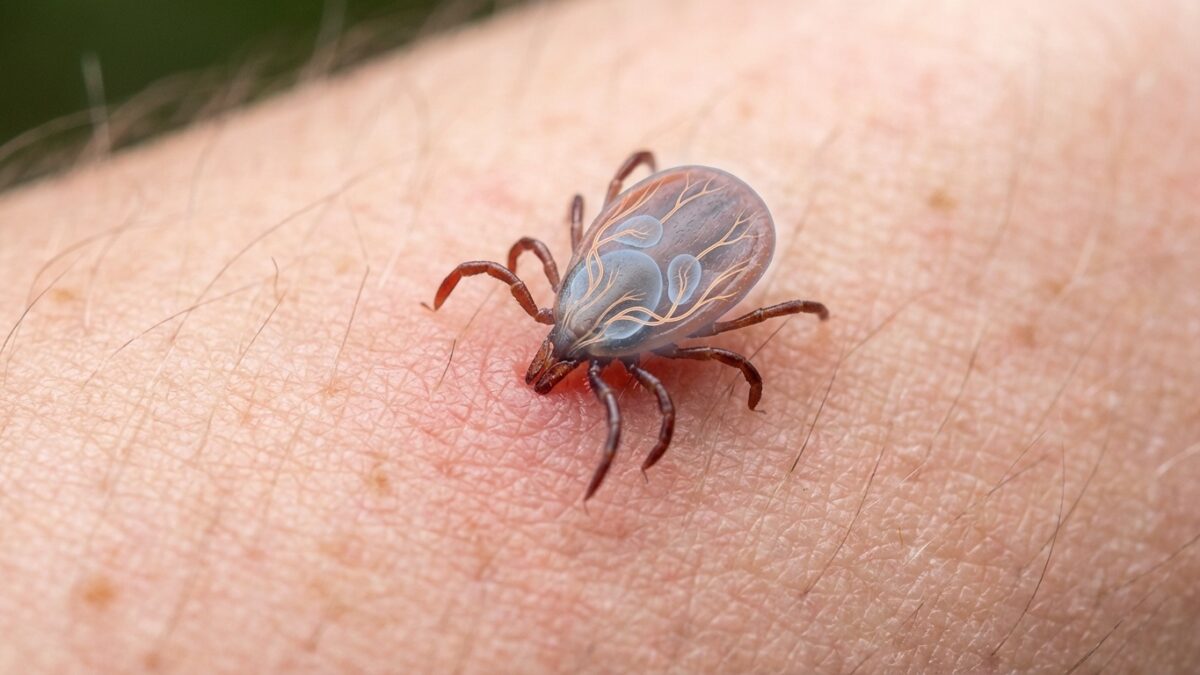
In the United States, Lyme disease is the most common tick-borne infection, with approximately 465,000 people treated each year. For 10 to 20% of them, antibiotics are not enough: overwhelming fatigue, widespread pain, brain fog and sleep problems persist for years, what is called post-treatment Lyme syndrome. Faced with these symptoms which resist everything, an American team decided to try something radically different.
At the Johns Hopkins Lyme Disease Research Center, 20 adults suffering from this post-treatment Lyme disease (PTLD) received, as part of a pilot test, two supervised sessions of
psilocybinthe active molecule of certain hallucinogenic mushrooms. Six months after the second dose, their overall symptom burden was on average 40% lower and their quality of life about 13% higher than at baseline. Reported to the tens of thousands of patients potentially affected each year, this signal intrigues doctors.
Psilocybin and Lyme disease: a new pilot trial
Albert Garcia-Romeu’s team at the Johns Hopkins Center for Psychedelic and Consciousness Research conducted an open trial without a control group. Out of 486 people pre-selected, only 20 were selected after verification of a documented diagnosis of Lyme, standard antibiotic treatment and persistent symptoms for a median of 5.7 years.
Each participant completed an eight-week program with three preparation sessions, two psilocybin sessions (15 mg at week 4, then 15 or 25 mg at week 6), and onboarding interviews. The researchers measured blood pressure, heart rate and several validated questionnaires, on the weight of symptoms (GSQ-30) and quality of life (SF-36), repeated for up to six months.
A lasting improvement but a study without a control group
The results are striking for this small group. Six months after the second dose, the measured symptom burden remained approximately 40% below the initial level. Mental and physical quality of life scores were approximately 13% higher compared to the start of the study.
On average, depression, sleep problems, fatigue and pain also decreased significantly, with reductions ranging from around 25 to 60% depending on the area. All participants completed the trial, with no serious treatment-related events. The most common adverse reactions were transient hypertension, headache or tachycardia, generally mild.
“Preliminary results support that psilocybin-assisted treatment was feasible and well tolerated in this sample. Clinical findings indicated potentially long-lasting benefits of psilocybin-assisted treatment, warranting additional research for post-treatment Lyme syndrome“, conclude the authors of the study.
Because the study was small and without a comparison group, randomized, controlled trials are needed to eliminate nonspecific effects and validate benefits. This would test whether the potential anti-inflammatory properties of psilocybin lead to biological changes and explore possible neurobiological mechanisms, such as variations in brain functional connectivity and cognitive improvements.
The researchers say future research could include the use of functional MRI and autonomic nervous system testing to assess the effect of psilocybin on brain networks related to central sensitization, pain management, and autonomic nervous system regulation. This would contribute to a better understanding of the disease and to shed light on the potential therapeutic mechanisms of psilocybin.
Long COVID and chronic fatigue syndrome: the psilocybin avenue to explore
The authors point out that post-treatment Lyme syndrome does not necessarily mean “active infection” and that this open study without placebo does not prove causality. They are preparing larger trials also including patients with long COVID and chronic fatigue syndrome (myalgic encephalomyelitis).