
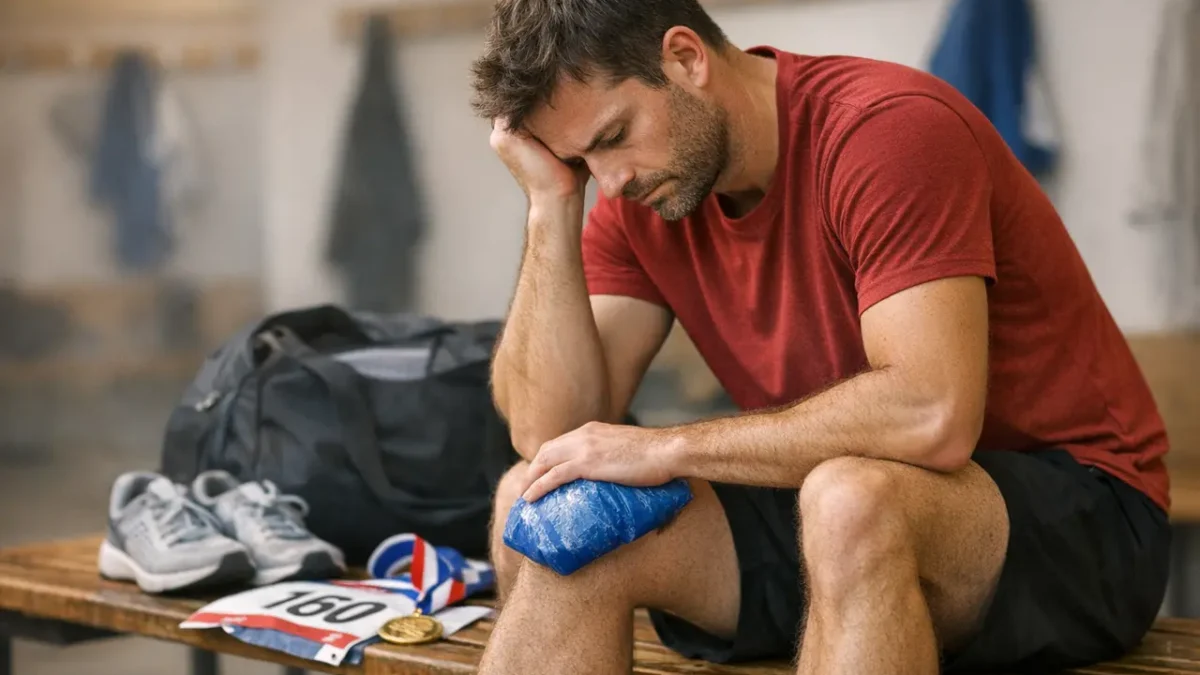
In a video published on Instagram, psychologist Claire Petin (@clairepetin_psychologue) and sports doctor Victoria Tchaikovsky (@drtchaikovski) address the forfeit imposed by a sports injury. The answer comes down to three ideas: recognizing the loss, not forcing yourself against medical advice and framing recovery to plan ahead without feeling guilty.
To give up is not to have failed
When a competition has structured weeks or months of training, the cancellation does not only affect the big day. Specialists point out that those around you can minimize it with the idea that there will be others, while the injured person can ruminate. It is precisely this discrepancy which sometimes fuels guilt.
The injury makes an appointment disappear, but also a routine, efforts, expectations and projections. Disappointment, anger or a feeling of injustice can therefore have their placewithout being interpreted as a lack of mentality. Recognizing them does not require locking oneself into them; Above all, this avoids acting as if nothing had mattered.
“Accepting does not mean no longer being disappointed.”
This sentence from the video sums up the issue well: mourning a competition does not mean erasing the objective or convincing yourself too quickly that everything is fine. It means admitting that a loss exists, then gradually coming to terms with what can no longer be changed. And that matters: missing a competition does not erase the work accomplished. A sporting break, even a frustrating one, does not necessarily mean starting from scratch; it can also protect what happens next.
It can be useful to replace the guilt-inducing question “Have I resisted enough?”, with a fairer question: “What allows me to recover without compromising my next goals?“. This nuance helps to overcome the opposition between courage and renunciation. Giving up on medical advice is not giving up: it is preserving your chances of returning in better conditions.
Why forcing can cost more than the package
The medical point is central. If a doctor advises against participation, he or she believes that the injury or physical capabilities do not yet allow a sufficiently safe recovery. Depending on the type of injury, forcing can cause worsening, recurrence or delay the return to sport. The resumption should therefore not be based solely on the date of the competition.
The available recommendations emphasize recovery adapted to the progression of the injury, pain, mobility and functional abilities. In other words, too early recovery can give the impression of saving one deadline, but weakening subsequent ones. To wait for healing before returning to sport, the safest thing to do is to rely on the professionals who monitor the injury.
The specialists also propose a concrete idea: to provide a framework for what follows. This framework does not serve to make the disappointment disappear, but to avoid total confusion after the package. It may include, with caregivers:
- THE care, rehabilitation and reassessment points ;
- Activities still possible, if compatible with the injury;
- Progressive steps before returning to training;
- A new objective, when possible, without using it to rush the recovery.
This plan must remain personalized: this is not a schedule imposed by frustration. The two experts finally point out that recovery takes into account healing, physical abilities and regained confidence in one’s body. This confidence counts, but it does not replace medical advice or functional criteria.
If sadness, anxiety or loss of direction becomes overwhelming, lasting, or prevents you from functioning normally, it is best to talk to a health professional or psychologist. Mourning the loss of a competition does not have to be done alone, especially when sporting identity, the pressure of the objective or the mental pressure linked to major sporting objectives take up too much space.