
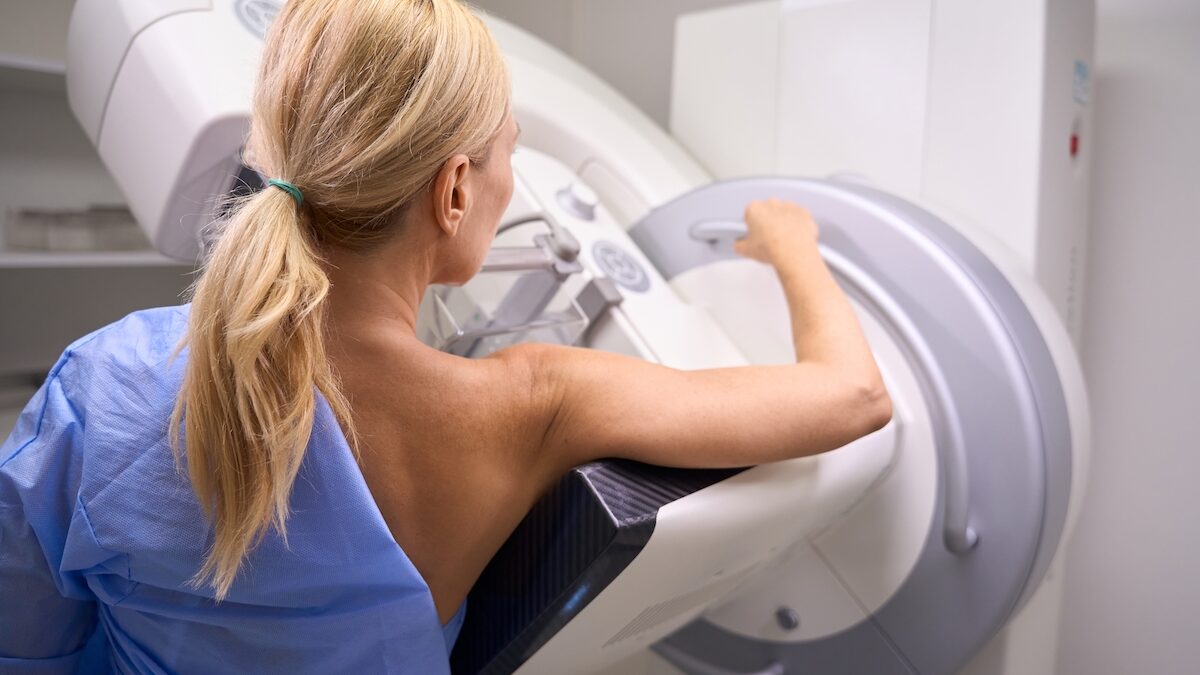
Every year, millions of women in Europe are invited to take part in organized breast cancer screening. But a significant proportion of them decline this first invitation for various reasons. However, this first missed meeting would have much more impact than you think.
Those who miss first don’t go to the others
According to a Swedish study conducted by the Karolinska Institutet and published on September 24, 2025 in the British Medical Journal (BMJ)this seemingly minor choice can have lasting consequences: missing your first mammogram would increase the risk of death from breast cancer by 40%. A figure that can be frightening, and which is not a coincidence.
Researchers followed more than 430,000 women over a period of 25 years. They found that those who declined their first appointment were much less likely to participate in subsequent screenings, more likely to have symptoms at diagnosis, and more affected by cancers detected at an advanced stage. Sometimes too late.
Result: almost 1% of non-participating women died from breast cancer compared to 0.7% of those who had participated in the first screening. A difference which corresponds to an increase in mortality of 40%.
The decisive weight of the first “mammo”
For Dr. Claire Bonneau, oncologist and senologist at the Curie Institute contacted by True Medical, this figure is credible and should alert:
“There is a very clear curve: women who miss the first screening never catch up. Those who participate initially will, overall, continue to respond to invitations. Those who consider it unnecessary, restrictive, or who do not understand the benefit, will persist in this trajectory of non-participation” she observes. “Overall, this selects a population that will regularly go for screening, and a population that does not consider it useful.”
However, in Sweden, where the study is taking place, the organization makes screening more engaging: women receive an invitation directly with a fixed appointment. In France, Health Insurance does send an “invitation”, but it is up to the patient to contact a center and reserve her own slot.. “The French system is less incentive, which can partly explain the low participation“, adds Dr. Bonneau. Which can above all explain that this rate of 40% could be even higher in our country.
Why the first mammogram changes everything
Contrary to some preconceived ideas, the objective of screening is not to prevent the appearance of cancer, but to improve the chances of survival by detecting the disease at an early stage, as the expert points out.
“This study is interesting because it shows that screening does not lead to an artificial explosion in overdiagnosis. The incidence of cancer is identical between those who participate and those who do not participate” specifies Dr. Bonneau. “On the other hand, the stage at diagnosis is very different.”
According to researchers, women who did not participate in their first screening are twice as likely to have cancer diagnosed at an advanced stage and four times more likely to have it already metastatic. However, as Dr. Bonneau reminds us,
“Metastatic breast cancer can be controlled, we can prolong survival, but we cannot cure it.”
France, a bad student of screening
In France, around 61,000 new cases of breast cancer were diagnosed in 2023. The disease remains the leading cause of cancer death among women, recalls the National Cancer Institute (INCa). Detected early, it can nevertheless be cured in 9 out of 10 cases.
The national screening program invites all women aged 50 to 74 to have a mammogram every two years. This is 100% supported. However, the participation rate peaks at 45%. Far from the 70% recommended at European level to significantly reduce mortality.
Dr. Bonneau highlights the difference with Sweden, where participation reaches 70%: “In France, we have almost half as many women participating. This explains (unsurprisingly) that we still have a high rate of cancers diagnosed at advanced stages and a poorer overall prognosis.“.
A public health issue
The Karolinska study highlights that missing the first mammogram is not an isolated act. But often the start of a trajectory of renouncing screening. This is why researchers recommend targeted interventions, from the first invitation, in order to support women and remove obstacles. Whether these are linked to fear, lack of information or logistics. For Dr. Bonneau, the message is clear. “Screening does not eliminate the risk of breast cancer, but it saves lives by greatly increasing the chances of cure”
A message of prevention to be transmitted widely, as Pink October begins.