
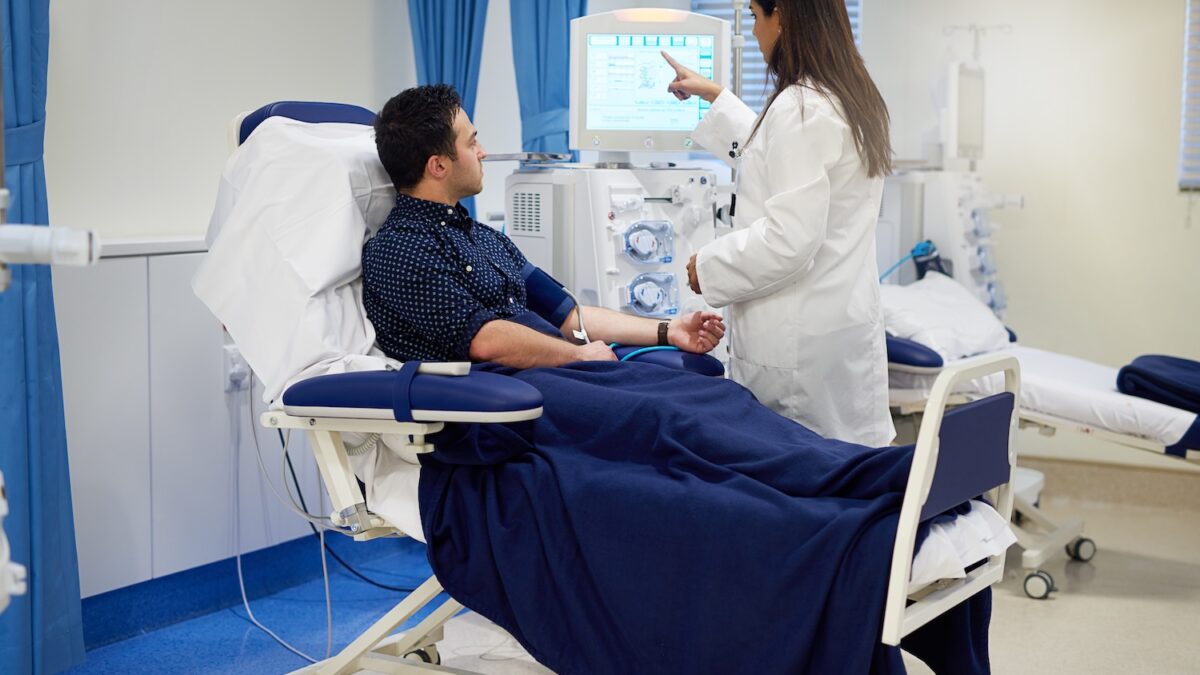
In the vocabulary of rejuvenation clinics, the expression quickly strikes: “wash your blood” to slow down aging. The question arises after the reported death of Greek singer Giorgos Mazonakis after treatment at a private rejuvenation clinic. This death does not allow, with the information available, to assert that the procedure was the cause. But it highlights a common confusion: a hospital technique useful in certain illnesses is not automatically a validated anti-aging method.
What does plasmapheresis really do?
In the blood, red blood cells, white blood cells and platelets circulate in a liquid: plasma. Plasmapheresis involves passing blood through a device capable of separating these components. Depending on the situation, plasma can be taken, removed or replaced with a suitable liquid.
In the hospital, this technique does not relate to well-being. The AP-HP describes apheresis or plasma exchange units used for specific indications. La Pitié-Salpêtrière presents plasma exchange in particular as a method for purifying harmful substances involved in certain diseases, such as antibodies or toxins. These procedures concern patients followed in specialized departments, for a well-identified pathology.
The mechanism helps to understand the appeal of anti-aging discourse: if we can remove plasma containing certain substances linked to a disease, could we also remove what would cause us to age? This is precisely where caution is required. Plausible biological logic is not proof of health benefit.
Why does this not demonstrate rejuvenation?
An essay published in 2025 in Scientific Reports studied repeated plasma collections from healthy donors. Initially, 41 participants were included; 34 completed the 18 weeks of follow-up. The researchers analyzed several biological indicators, including epigenetic markers, often presented as measures of biological aging.
Important result: researchers did not observe significant rejuvenation on the epigenetic indicators studied. Some measures have changed, but this does not confirm that the participants had become younger, nor that they will live longer or in better health.
The methodological reservation to keep in mind is simple: this protocol involved repeated plasma samples, without replacement by young plasma or albumin. It therefore does not necessarily correspond to all the commercial services which may be offered under similar titles. But he points out a major limitation: modifying a biomarker is not enough to prove a clinical benefit.
What to ask before an anti-aging offer?
“It is therefore essential to distinguish medical plasmapheresis, a validated treatment for specific indications, from unproven, risky and purely commercial practical “anti-aging” plasmapheresis.” adds Doctor Gérald Kierzek, emergency physician and medical director of True Medical.
“The first is a supervised therapeutic act. The second, often sold at exorbitant prices in private clinics, has no evidence of clinical effectiveness in rejuvenating or prolonging life; it exposes you to real risks (allergic reactions, infections, electrolyte disorders) and can even be fatal, without any demonstrated benefit.” he continues.
The death reported in Greece does not allow, with the available information, to conclude that plasmapheresis caused it. On the other hand, this event raises a very concrete question for anyone tempted by a promise of anti-aging “blood washing”.
Before accepting this type of offer, the most useful benchmark is three questions: what measurable benefit has been demonstrated in humans? Is the proposed protocol the same as that which was studied? What are the risks, contraindications and the medical framework for treatment?
Plasmapheresis has a place in medicine, within regulated indications. But to date, the available data do not allow “blood washing” to be presented as a validated method for rejuvenating a healthy person. The point of vigilance therefore remains the same: do not confuse a specialized medical procedure with a promise of longevity.