
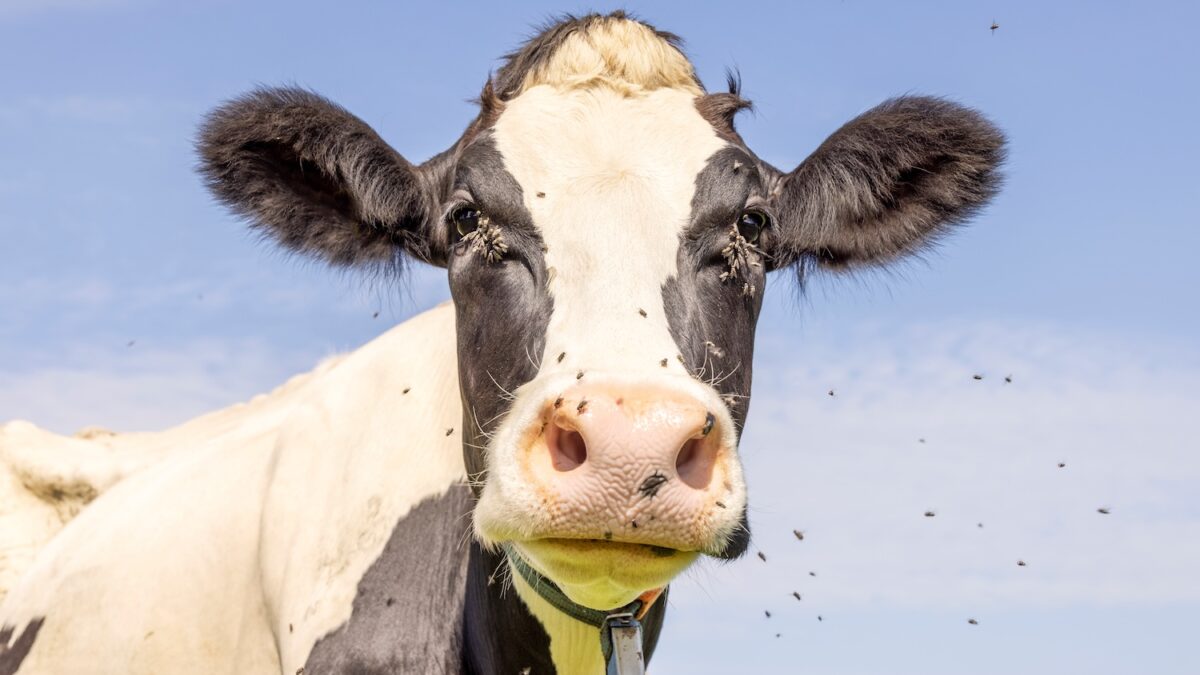
Present in 52 French departments in cattle, the Shamonda virus raises questions about its passage from animals to humans. Origin, transmission, risks and surveillance: here are the five essential points to understand this discovery.
1. What is Shamonda virus?
First identified in Nigeria in the 1960s, Shamonda virus belongs to the Orthobunyavirus genus. It mainly circulates in cattle, but can also affect sheep and goats.
In animals, it can cause fever, diarrhea, reduced milk production and, in some cases, reproductive problems. It has also been detected in horses with neurological disorders.
Until now, it was considered non-transmissible to humans. The French discovery therefore opens a new chapter in the study of this virus.
2. Since when has it been circulating in France?
The virus was detected in Europe in late July 2026, before spreading rapidly. As of October 20, it had been identified in cattle in 52 French departments, in sheep in two departments and in a horse in Hérault.
This progression would be favored in particular by climatic conditions favorable to midges which transmit the virus between animals.
Be careful, however: this animal circulation does not mean that the virus is spreading among humans.
3. How did it infect a human?
On October 7, 2026, the health authorities were informed of the infection of a severely immunocompromised patient, treated at the Hospices Civils de Lyon for serious neurological damage. He died in early October.
The cerebral complications are considered most likely linked to the infection by French authorities. Investigations are nevertheless continuing to determine precisely the role of the virus in this death.
The favored hypothesis is that of a midge bite of the Culicoides genus, in eastern France, where the virus was already circulating among animals.
But the scenario remains to be confirmed. Researchers examine the patient’s environment, their movements and possible exposure to animals and insects. They must also compare the genome of the human virus to that of circulating animal strains.
4. Should we fear an epidemic?
To date, no human-to-human transmission or health risks to the general population have been identified.
The patient’s medical context is decisive: his profound immunosuppression could make him particularly vulnerable to certain infections. This exceptional case therefore does not allow us to conclude that the virus presents the same danger to a healthy person.
According to Professor Lescure, infectious disease specialist and author of
Eepidemic (Robert Laffont, 2026), “this story moves very quickly” and he recalls that “the animal disease, known for decades in Africa, emerged in Europe in June 2026 with rapid kinetics (several countries affected simultaneously, nearly 50 French departments in a single summer season) and crossed the species barrier in a few months, leading to a first human case. The issue is not so much pathogenicity (encephalitis and congenital malformations already known in other mammals) as the speed of this barrier crossing in an environment where animal disease did not exist six months earlier, indicating an accelerated geographic expansion of the vector and viral evolution.
This first case does not necessarily mean that this virus is easily transmitted to humans or that it can spread between humans.
A first human case therefore does not mean that the virus is easily transmitted, nor that an epidemic is forming. The uncertainties justify reinforced surveillance, not a general alert.
5. What are the health authorities doing?
Public Health France coordinates active monitoring with specialists in human, animal and environmental health.
The investigations relate in particular to:
- Sequencing of the viral genome in the patient;
- Comparison with strains detected in animals;
- The study of midges likely to transmit the virus;
- Improving diagnostic methods in humans;
The search for other elements allowing us to understand this unprecedented infection.
This approach, called “One Health”, is based on an observation: human health cannot be dissociated from that of animals and their environment.
The objective now is to understand how this virus was able to infect a human and to verify whether this case remains isolated. For the general public, the message remains measured: the discovery is unusual and deserves in-depth investigations, but the available data does not highlight a collective health threat.