
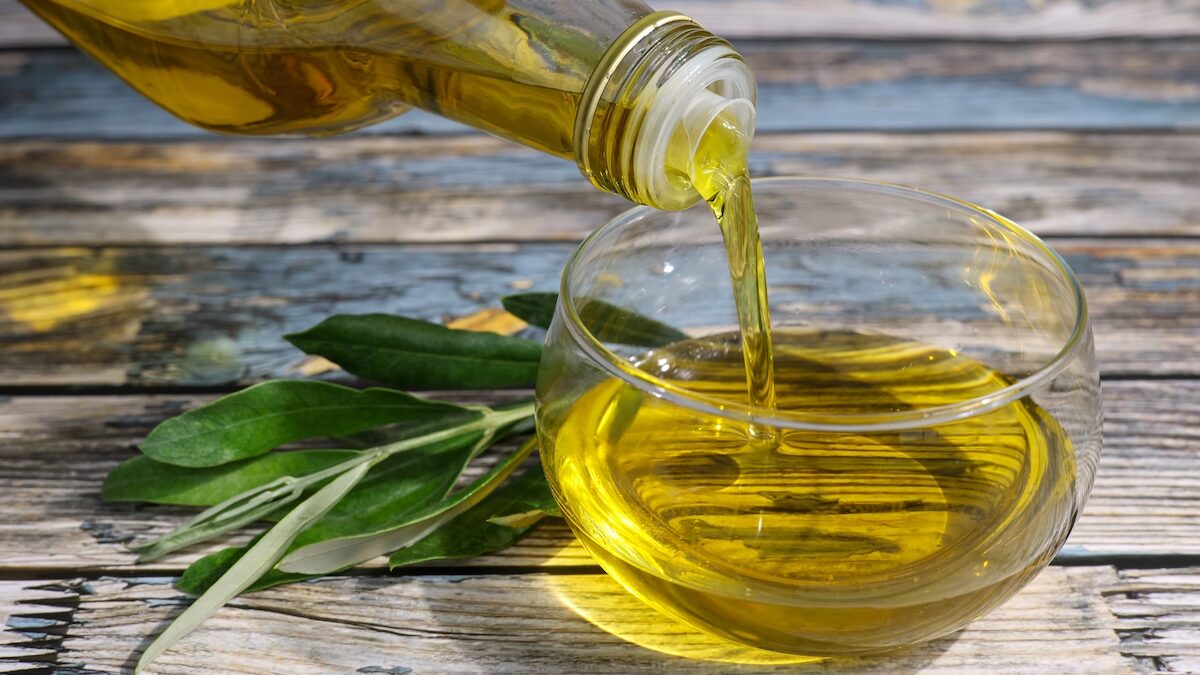
On Instagram, Dr Jean-Michel Cohen recommends choosing “extra virgin” olive oil. This is indeed the most reliable basic criterion, provided that we do not attribute excessive health effects to it.
The first criterion: the “extra virgin” label
To choose the right olive oil, the simplest reference remains the mention ” extra virgin olive oil “. This is not just a marketing argument: it is a regulated category. It designates an oil obtained directly from olives, solely by mechanical processes, and meeting defined quality criteria.
The nutritionist doctor insists on this point: according to him, extra virgin olive oil is of the most interest among common olive oils. This recommendation is consistent with official benchmarks, but it should be understood for what it is: an oil quality criterionnot an absolute guarantee on taste, freshness, price or the exact content of protective compounds.
In practice, three elements are worth checking on the bottle:
- The category : look clearly for the words “extra virgin”;
- The origin : the label must provide information on the origin and quality, according to the rules applicable to olive oil;
- Conservation : favor a well-closed bottle, protected from light and heat once opened, because the oil remains a fatty substance sensitive to oxidation.
In other words, the “best” olive oil does not exist in all circumstances. For an everyday bottle, the right choice consists above all of combining a reliable category, a legible label and suitable use.
Polyphenols, oleocanthal: interesting, but not drugs
The expert also highlights the polyphenols in extra virgin olive oil, notably oleocanthal. This is an interesting point, but one to handle with caution. Virgin and extra-virgin olive oils may contain phenolic compounds, including oleocanthal, but their quantity varies a lot
depending on the olive variety, maturity, production conditions, storage and time since harvest.
Dr. Jean-Michel Cohen explains that the action of oleocanthal resembles, much milder, that of certain anti-inflammatories, while adding an essential nuance:
“It’s obviously not a medicine.”
This warning is important. Experimental work has described ibuprofen-like activity for oleocanthal on certain inflammatory pathways. But that doesn’t mean that a spoonful of olive oil is an anti-inflammatory, or that it can replace treatment. We must therefore avoid the idea of a “natural Voltarene”: olive oil is a food, not a therapeutic alternative.
Its interest is rather understood in a food set. Extra virgin olive oil is part of the Mediterranean model, often cited among the best studied dietary models. But here again, the benefit is not based on a single bottle: it depends on the overall balance of the diet, the place of plants, nuts, whole grains, legumes and the lifestyle.
Last advice from our expert: do not reserve all the space for olive oil. For salad dressings, the account also recommends canola oil or walnut oil. This advice is in line with French recommendations: these oils provide in particular alpha-linolenic acid, a plant-based omega-3. Alternating with rapeseed oil or walnut oil can therefore usefully complement olive oil, always in small quantities as with any added fat.
The guideline to remember remains simple: choose an extra virgin olive oil for its quality, vary the seasoning oils, and do not transform a good food into a miraculous health promise. To go further, you can consult our file on the benefits of olive oil.