
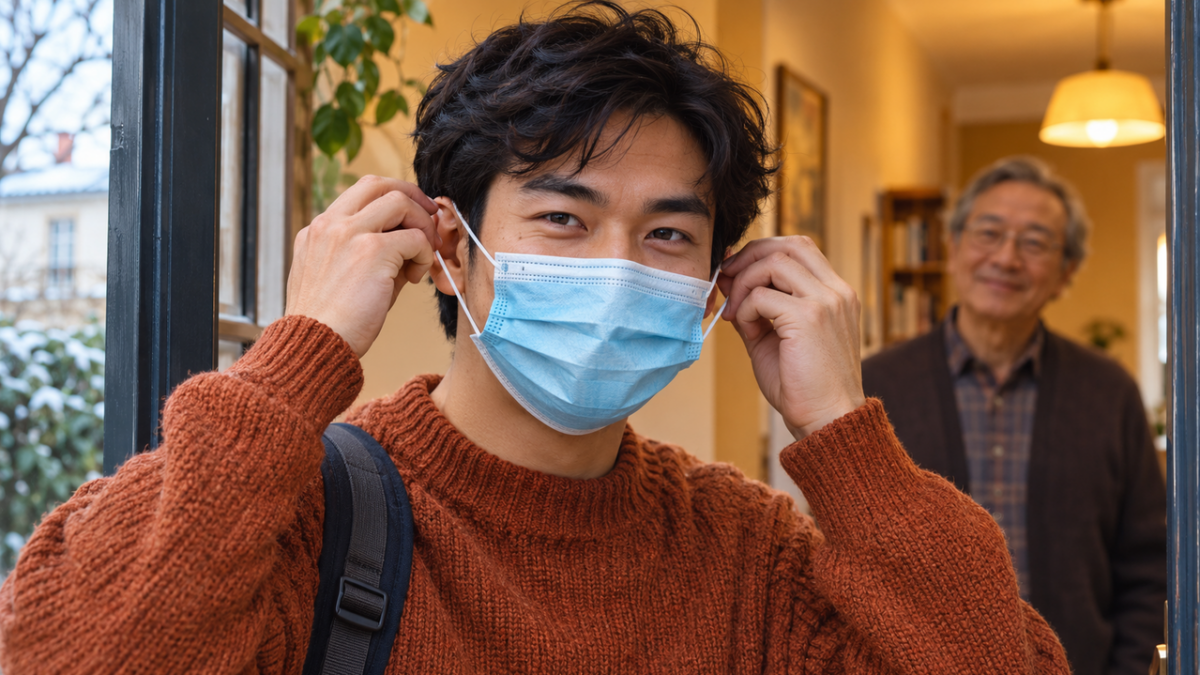
Presented by Dr Gérard Roussey during the Respidays conference, organized by Pfizer on November 4, 2026, this method recalls the essential actions to adopt from the first symptoms. From washing hands to wearing a mask, including limiting contact, it above all invites a change in reflex: when you are sick, protecting others becomes a priority.
Sometimes a cough is enough to change plans for a family visit
You had planned to have lunch with your parents. But when you wake up, your throat scratches, your nose begins to run and a cough appears. Should we cancel? Take a mask? Or consider that it is just a small cold with no consequences?
The question deserves all the more attention when the visit concerns an elderly person, an infant or a loved one whose health is already fragile. For these people, a respiratory infection that seems mild in a healthy adult can lead to more serious complications.
It is precisely in these everyday situations that Dr Gérard Roussey, general practitioner in Paris, suggests using a mnemonic device: LATOMOMACO. Presented during the Respidays conference on November 4, 2026, this device is inspired in particular by certain Japanese prevention habits, where wearing a mask when sick is part of common behavior.
The idea is simple: do not wait to know precisely the virus responsible for your symptoms before taking the right actions. Because flu, Covid-19 or other respiratory infections can be transmitted even before their origin has been identified.
LATOMOMACO: five simple actions to protect those around you
Behind this somewhat unusual name hide five complementary reflexes. Everyone intervenes at a specific time to limit the risks of transmission.
- LA as hand washing: wash your hands regularly with soap and water, especially after blowing your nose and before preparing a meal. The hands can in fact transport infectious agents and contribute to their spread;
- TO like coughing into your elbow: When coughing or sneezing, use the crook of your elbow rather than your hands. This allows you to avoid contaminating surfaces and objects that you may touch afterwards;
- MO like blowing: choose a single-use tissue. Throw it away immediately after use, then wash your hands;
- MA as a mask: If you have symptoms and must be around other people, wear a mask that covers your nose, mouth and chin. It helps to limit the projection of respiratory particles;
- CO as contacts: When you are sick, limit contact with vulnerable people. If possible, postpone visits to an infant, elderly person or immunocompromised loved one.
These five measures have a common goal: to reduce the opportunities for transmitting a virus, even when symptoms seem mild.
Should you postpone a visit at the first symptoms?
This is undoubtedly the most difficult reflex to adopt. We don’t want to disappoint loved ones, cancel a family appointment or leave an elderly person without help. However, postponing a visit by a few days can constitute a real protective measure.
A runny nose, sore throat or cough can signal the start of a respiratory infection. It is not necessary to know whether it is the flu, Covid-19 or another virus to take precautions.
When the meeting is not essential, it is therefore better to postpone it until the symptoms have disappeared or the risk of transmission has sufficiently decreased.
This attention is particularly important for the most vulnerable people. A respiratory infection can have more serious consequences in the elderly, very young children or those whose immune defenses are weakened.
If the visit is essential, mask and ventilation become essential
However, there are situations where postponing a visit is not possible. Bringing medications, running errands, or helping an addicted parent may require travel, even when experiencing symptoms.
In this case, several precautions can reduce the risks: put on your mask before entering, wash your hands thoroughly and avoid close contact when possible.
Another gesture deserves particular attention: the ventilation of rooms. The Ministry of Health recommends regularly opening windows in enclosed spaces, including in winter. Renewing indoor air helps reduce the concentration of respiratory particles likely to contain viruses.
Finally, these precautions complement the prevention measures specific to each infection. Vaccination, when recommended, remains an essential tool for reducing the risk of serious forms, particularly in the face of influenza.
Basically, LATOMOMACO recalls an idea that goes far beyond barrier gestures: when you start to be sick, taking care of yourself also means taking care of others. And sometimes the most protective gesture is simply to postpone a visit.