
In France, a government site estimates that each resident throws away 25 kilos of food per year. The CLCV consumer association mentions 61 kilos of food waste, including 19 kilos still edible, or €100 per person.
A significant part comes from fruits and vegetables which tire too quickly in the fridge or in the cupboard. Good news: a few reflexes are enough to extend their lifespan at home.
Keeping your fruits and vegetables fresh: the right place and the right reflexes
A preview summarizes these actions in 10 simple tips, designed to be applied as soon as the market returns. He emphasizes three levers: choosing the right storage location, controlling humidity and separating fruits that produce ethylene from those that are sensitive to it.
This advice is in line with the recommendations of Health Canada and the work of INRAE on climacteric fruits. Taken together, they form a daily anti-waste routine.
In practice, this first begins with the cupboard. Potatoes, onions, garlic and squash are best kept in a cool, dry, dark place, as light damages them and heat accelerates germination. INRAE reminds that potatoes that turn green can produce solanine, a toxic substance, hence the importance of isolating them in an opaque container.
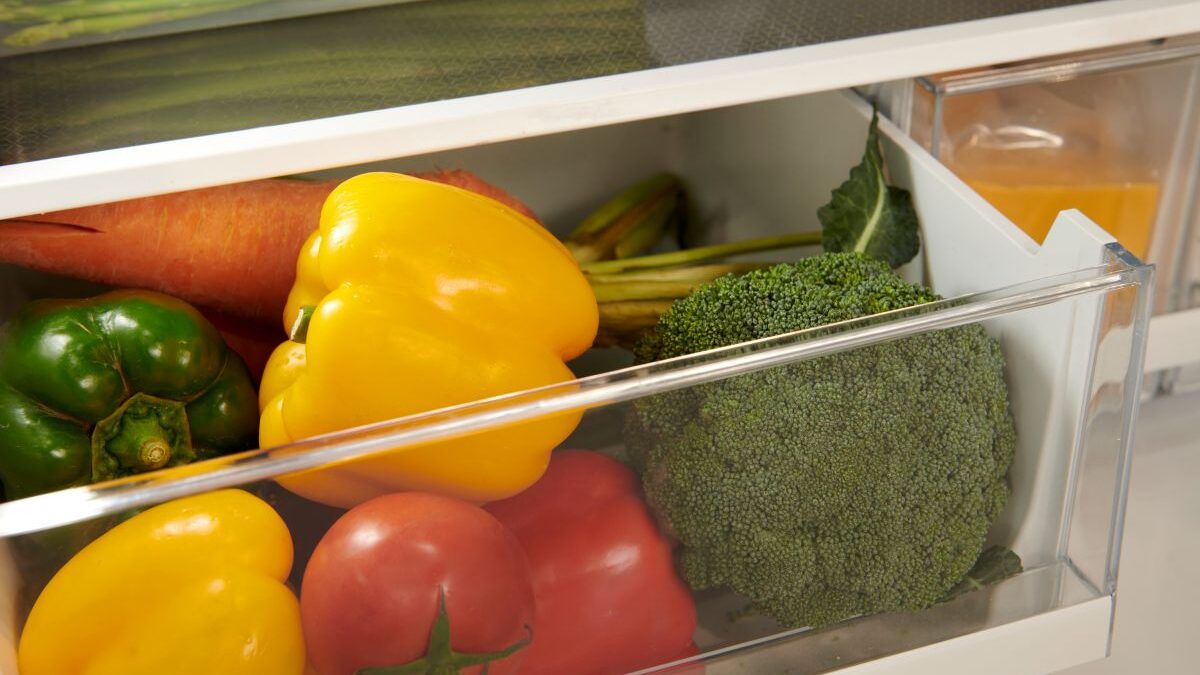
The second reflex takes place in the refrigerator. This greengrocer advises setting the temperature between 8 and 10°C to slow down ripening and not overloading the vegetable drawer. Health Canada recommends not washing most fruits and vegetables before storing them. Indeed, humidity favors mold. Mushrooms and asparagus can be stored wrapped in absorbent paper or in a paper bag.
Ethylene, climacteric fruits and special cases at home
Third pillar: manage ethylene, this gas which accelerates ripening. INRAE classifies apples, pears or bananas among climacteric fruits. These fruits are accused of making others ripen too quickly and of giving them a bitter taste. Hence the idea of storing them separately, far from the most fragile fruits and vegetables.
Another common case: tomatoes. This greengrocer recommends keeping it at room temperature to preserve its flavor. The refrigerator remains a backup solution. You can also buy less but more often, to avoid losses.
Health Canada recommends separating potatoes and onions. These are best stored each in its own container, and to keep the basil out of the cold.
Freezing and dehydration: the long-term anti-waste plan
For stocks that threaten to spoil, freezing is the key solution. Marmiton recommends blanching zucchini, eggplant or potatoes in boiling water, then cooling and drying them before putting them in bags.
These vegetables can be stored in the freezer for up to 10 months and can be cooked without defrosting. Another option is dehydration in the oven at 30 to 40°C, which allows storage for a year in airtight jars to keep fruits and vegetables fresh for longer in another form.