
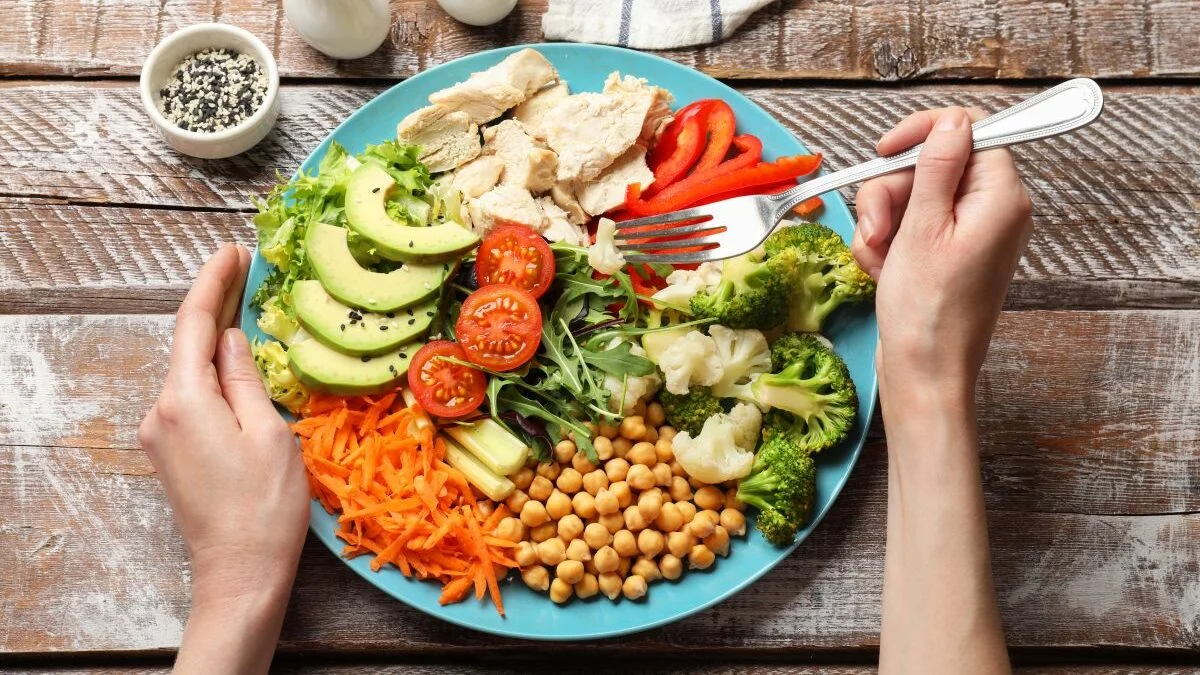
Extensive modeling conducted by the University of Bergen suggests that by changing just four dietary habits, an adult can gain up to around 4 years of life expectancy. The researchers used data from the 2019 Global Burden of Disease program and integrated it into the free Food4HealthyLife calculator, published in 2022 in the journal PLOS Medicine.
The idea is simple: measure how many years of life could be gained by switching from a classic Western diet to a more plant-based diet.
How these dietary changes affect life expectancy
At the heart of this scenario, four levers clearly stand out: more whole grains, more legumes, a small daily portion of nuts, and much less red meat and cold meats.
Marmiton summarizes these benchmarks at around 225 g of whole grains, 200 g of legumes and 25 g of nuts per day, with white bread and rice limited to 50 g and stopping red meat and cold meats.
This remains close to a realistic daily life for many households, especially if we progress step by step.
For each food group, the researchers linked the quantity consumed to the risk of cardiovascular disease, type 2 diabetes and several cancers, based on the Global Burden of Disease 2019 curves.
Why whole grains, legumes and nuts change everything
The team led by Lars Thore Fadnes then simulated, via Food4HealthyLife, what would happen if a person gradually moved from a Western diet rich in red meat and refined products towards this more plant-based model. Each food combination gives an estimated life expectancy gain, which differs depending on age, sex and starting level.
According to a European analysis inspired by this model, an 80-year-old person who adopts the most favorable scenario would gain approximately 3.3 years if it is a man and 3.5 years for a woman, or practically 4 years more life. These figures, reported by ONAV, show that interest does not only concern young adults, but also seniors who change their diets late in life.
In fact, whole grains provide more fiber and micronutrients than their refined versions, which helps stabilize blood sugar and cholesterol and limits weight gain.
Adopt these changes step by step, without a miracle diet
Legumes such as lentils, chickpeas or beans combine protein, fiber and slow starch, which provides long-term retention and reduces sugary snacking. As for nuts, a small plain handful of 25 g per day provides good quality fats beneficial for the heart, without requiring major menu changes.
The authors specify that this is a statistical modelling: these estimates do not promise anything to everyone, they reflect an average gain in years of life for large groups. The Food4HealthyLife simulator remains useful for visualizing your own scenario and choosing a few realistic changes, rather than aiming for a perfect diet that is impossible to maintain.