
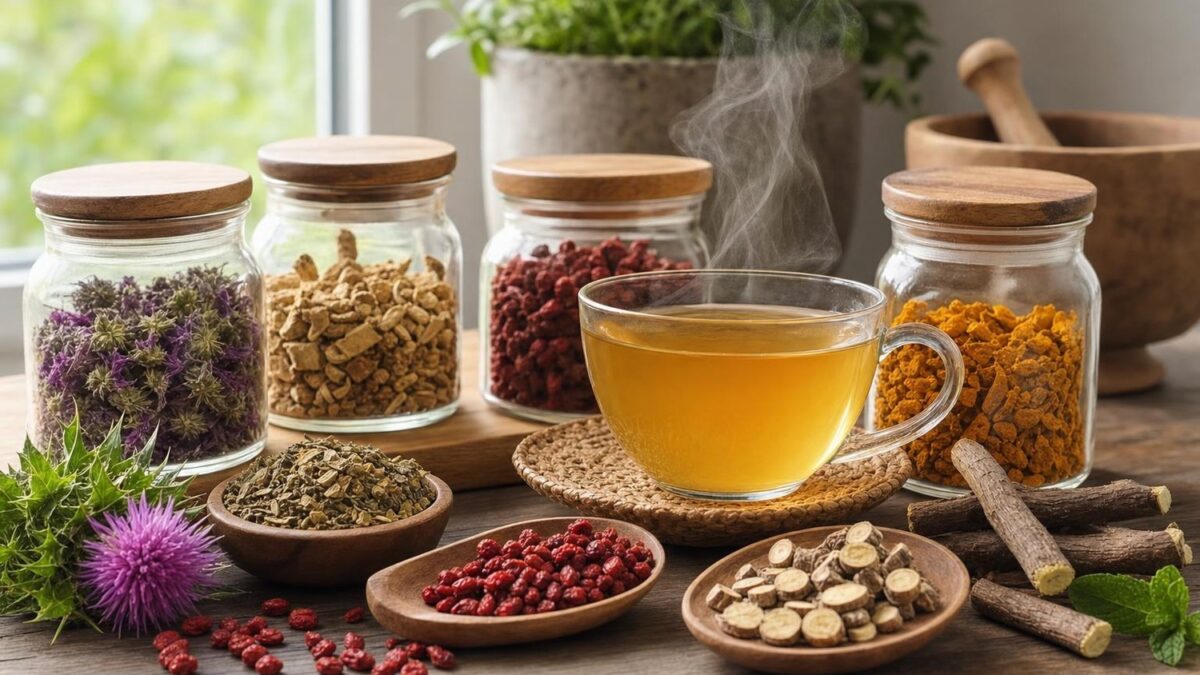
Between heavy meals, alcohol consumption and long-term medication, the liver is constantly under strain. Fortunately, different solutions full of antioxidants can support this essential organ, depending on the Times of India.
In total, five plants stand out here: milk thistle (Silybum marianum), dandelion root (Taraxacum officinale), schisandra berries (Schisandra chinensis), turmeric (Curcuma longa) and licorice root (Glycyrrhiza glabra). Coming from Mediterranean medicine, Ayurveda and traditional Chinese medicine, these plants are appreciated for their antioxidant and anti-inflammatory properties.
5 ancestral herbal teas to support the liver
Milk thistle has been used for more than 2,000 years in the Mediterranean basin to support digestive and liver disorders. According to the Times of Indiaits main active substance, silymarin, has antioxidant and anti-inflammatory properties which could help protect liver cells against certain attacks. This infusion is often consumed after meals.
Dandelion root is renowned for its tonic effects on digestion. It promotes the production of bile and stimulates urinary elimination, which explains its traditional use after particularly rich meals.
In traditional Chinese medicine, schisandra berries are nicknamed the “five-flavor fruit.” They are used to support general vitality and help the body better cope with stress. This plant is also associated with the liver’s natural detoxification mechanisms.
Turmeric, essential in Ayurveda, owes its reputation to curcumin, a compound known for its anti-inflammatory properties. Consumed as an infusion, especially with a pinch of black pepper or a squeeze of lemon, it could participate in fat metabolism.
Finally, licorice root is traditionally used for its soothing effects on certain inflammations. However, it must be consumed with caution, as excess can promote high blood pressure and electrolyte imbalances.
Between traditions and scientific data
The popularity of these herbal teas is primarily based on uses passed down from generation to generation. In Europe, dandelion was often eaten in spring, while milk thistle held an important place in Mediterranean medicinal traditions. In Asia, practitioners of traditional Chinese medicine and Ayurveda have long used schisandra, turmeric and even licorice.
Studies cited by Vinatura indicate that some of these plants may have a positive effect on certain markers of liver health. However, much of the available work has been carried out on animals or using concentrated extracts. A herbal tea cannot therefore be considered as a treatment for a liver disease such as hepatitis or cirrhosis.
How to use these herbal teas wisely?
Experts point out that the liver naturally performs its detoxification role day after day. No drink, no matter how natural, can compensate for years of excess food or alcohol consumption in a few days.
Furthermore, the medical literature reports cases of liver damage linked to certain plants or very concentrated preparations. The interest of these herbal teas therefore lies above all in their integration into a more balanced lifestyle: a varied diet, moderate alcohol consumption, regular physical activity and appropriate medical monitoring when liver disease is diagnosed.