
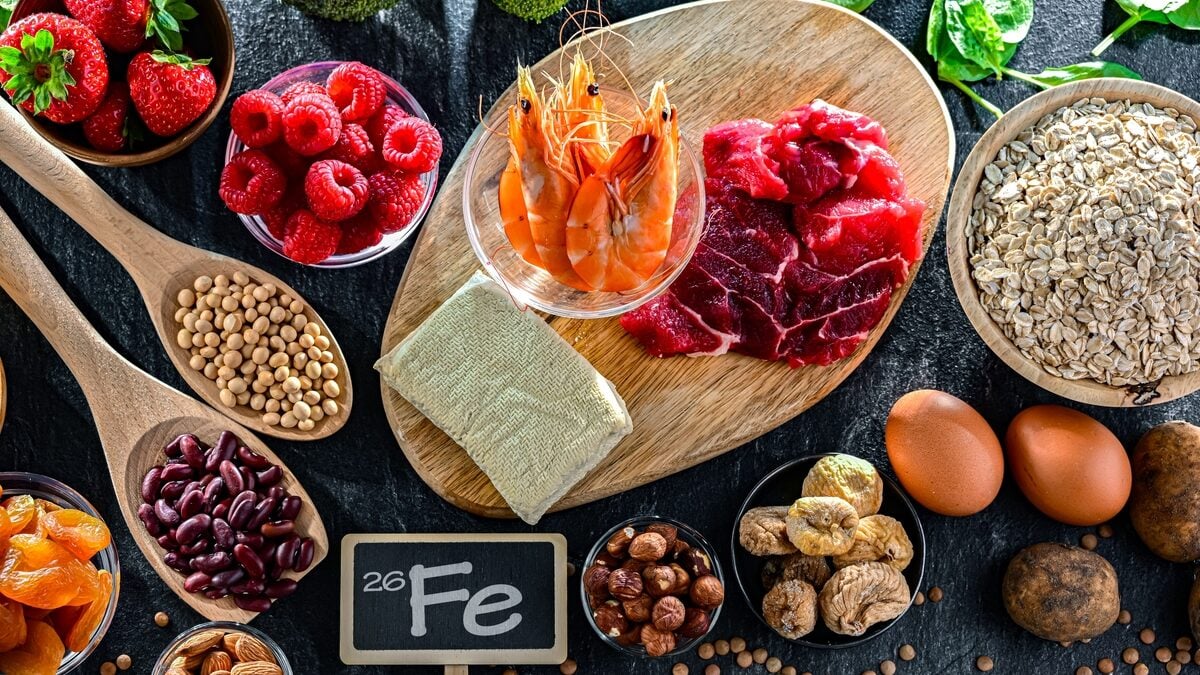
We often think that spinach is the best source of iron… However, other everyday foods can provide just as much, or even more.
“Of course, the idea is not to look for the perfect food, but to vary”, recalls Vanessa Bedjaï-Haddad, dietitian-nutritionist.
Here are all the foods rich in iron… and which overshadow spinach.
Cooked lentils
Cooked lentils are among the legumes richest in non-heme iron (i.e. of plant origin), with approximately 2.5 to 3.3 mg of iron per 100 g, according to ANSES. But their interest does not stop there: they also provide plant proteins, fiber, magnesium and folate – all nutrients which boost energy and contribute to glycemic balance.
Chickpeas or cooked beans
Cooked chickpeas contain around 1.7 to 2.2 mg of iron per 100 g, a value comparable to that of red, white or black beans. These legumes also promote the feeling of satiety thanks to their soluble fibers, which also support the proper functioning of the microbiota.
Pumpkin seeds
Pumpkin seeds are particularly concentrated in iron (8 to 12 mg of iron per 100 grams), which corresponds – for a small handful of 30 grams – to around 3 mg. But that’s not all! They also provide zinc, magnesium and unsaturated fatty acids, beneficial for immunity and cardiovascular health. Reasons enough to add it to all your salads, soups and yogurts!
Canned sardines
A standard can of sardines (around 80 to 90 grams) provides nearly 2.5 mg of iron, this time in a heme form, much better absorbed by the body. Sardines are also known for their richness in omega-3 EPA/DHA, essential for cardiovascular health, as well as vitamin D and calcium (contained in particular in the bones). They therefore constitute a superfood, to be included in your weekly menus.
Enriched cereals
Some breakfast cereals are found to be enriched with iron: depending on the brand, they can provide up to 8 mg per serving. A great alternative to spinach to prevent any iron deficiency, particularly in populations at risk such as expectant mothers, adolescents, athletes or even vegetarians. But be careful not to be tempted by just any package: the benefit is only real if the cereals are not very sweet and complete.
“On a daily basis, to promote the absorption of plant iron, simply remember to add a little vitamin C to your plate: lemon, kiwi, parsley… With these few simple actions, variety in your food choices and intakes that are naturally balanced throughout meals, your iron intake will be optimal!”, concludes Vanessa Bedjaï-Haddad.