
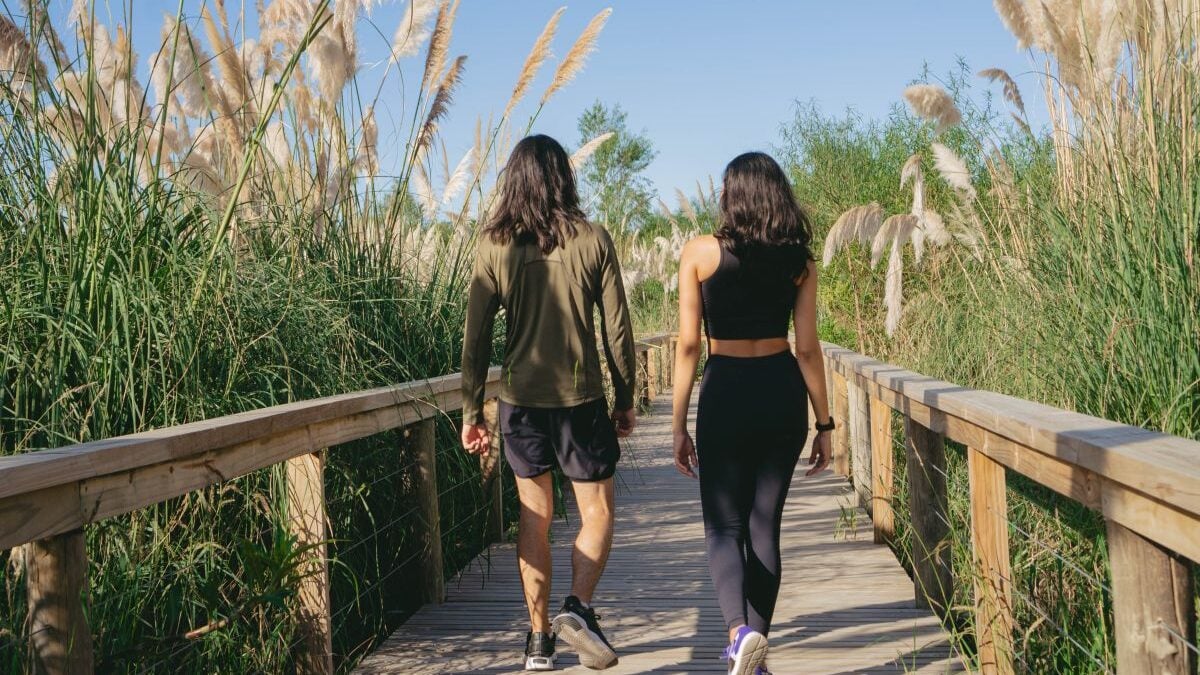
In parks and in gyms, a habit is becoming more and more surprising. Some people walk… backwards. This practice may seem surprising, but it attracts the attention of researchers.
According to theAmerican College of Sports Medicinewalking backwards increases energy expenditure by approximately 40% compared to conventional walking. Ten minutes a day are enough to challenge the body, joints and brain in another way.
Walking backwards, also called “retro walking”, consists of moving backwards with short, controlled steps. When practiced regularly, it works more on the quadriceps, hamstrings and muscles located at the back of the body.
Several studies, relayed in particular by National Geographic and published in the North American Journal of Medical Sciences Or the International Journal of Scientific and Research Publicationshighlight positive effects on balance, knee pain, weight and certain cognitive functions.
Why walking backwards for 10 minutes a day can make a difference
First advantage, this walk burns more calories. The American College of Sports Medicine estimates that it expends up to 40% more energy than traditional walking at the same speed.
Another strong point is that it is easy on the knees. Steps are shorter and more frequent, which reduces stress on the joint. This practice can therefore be interesting in the event of the onset of osteoarthritis.
It also strengthens the quadriceps, glutes and calves. This muscular work improves posture and daily stability.
Walking backwards also works on balance and proprioception, that is to say the ability to perceive the position of your body without needing to watch its movements.
A study published in 2019 in the North American Journal of Medical Sciences shows that sessions of 10 to 15 minutes, three to four times a week, improve stability more than traditional walking.
Finally, this way of walking requires constant attention. This effort stimulates the brain’s executive functions and short-term memory.
Studies confirm the benefits of walking backwards
Walking backwards also allows you to break the routine. Its unusual side often makes the sessions more fun. This is an asset for people who quickly tire of traditional walking.
This practice is also used in physiotherapy. A review published in Clinical Rehabilitation reported a reduction in pain and strengthening of the quadriceps in patients suffering from knee osteoarthritis after several weeks of supervised retro-walking.
Another study, published in 2014 in theInternational Journal of Scientific and Research Publicationslooked at pre-obese women aged 20 to 40. After six weeks of walking backwards, the participants had better cardio-respiratory fitness and weight loss. Other works, cited by National Geographicwere also based on sessions of 10 to 15 minutes, practiced three to four times a week.
How to walk backwards safely
To start, choose a clear hallway, a flat path or a treadmill equipped with grab bars. Look behind you regularly to check that the passage is clear.
Start by alternating one minute of walking backwards and one minute of walking normally, five times. When you feel more comfortable, gradually increase to ten minutes per day. If you feel pain, dizziness or loss of balance, stop the session immediately.