
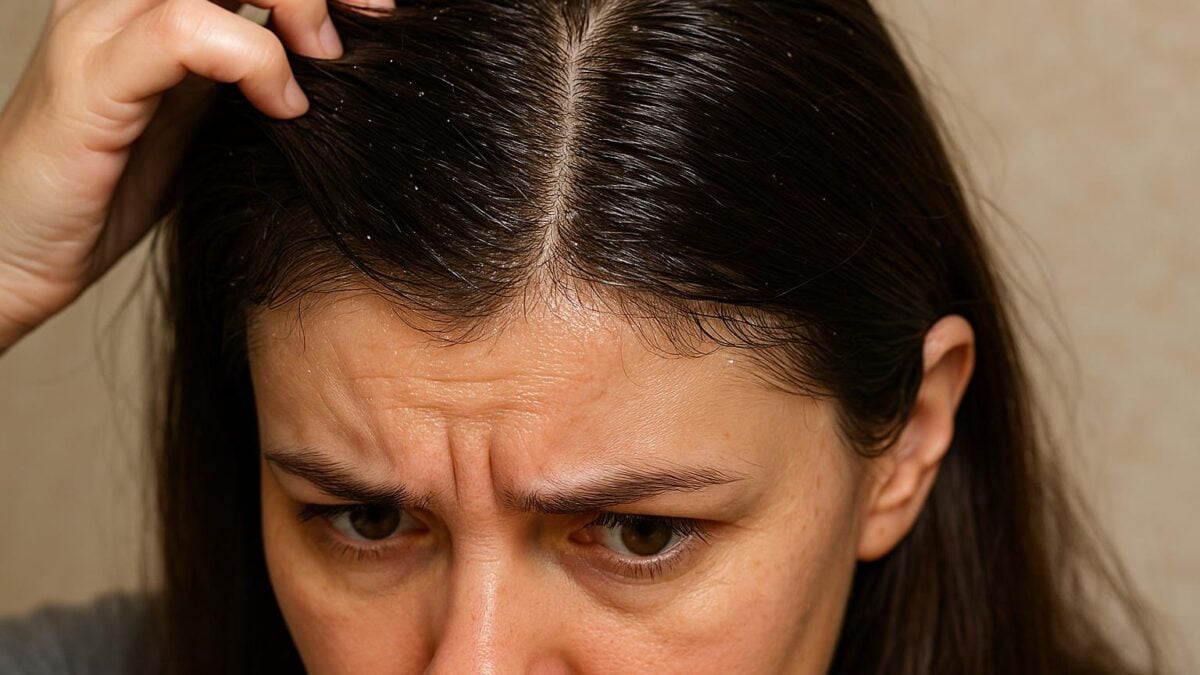
Roots that regrease too quickly, small itches that return, volume that sags… American dermatologists detail the symptoms of a saturated scalp and the essential actions to regain light, clean and balanced hair.
Why do these signs of underwashing hair appear?
When washing becomes rarer, the skin ecosystem changes. So sebum protects, yes. But in excess, it traps dirt and pollutants and can oxidize. “Although sebum acts as a natural moisturizer, it is also a powerful attractor of dirt, dust and other environmental pollutants. It is something that bacteria, fungi and yeast feed on and multiply, leading to scalp irritation“, specifies Jodi LeGerfo, dermatologist in New York.
Hadley King, also a dermatologist in New York, adds: “Oils can build up, making hair greasy and possibly even causing an unclean smell“.
As a result, the consequences appear: itching, local redness, oily dandruff.
The 8 subtle signs to spot on your scalp
No need to wait for a sore scalp to react. Here are the signs that you’re not washing your hair enough, according to dermatologists and trichologists.
-
Greasy hair and bad smell
: shiny roots, sticky feel, with a scalp scent at the end of the day; -
Itching and tenderness
: recurrent itching, areas that heat up when scratched. This terrain is conducive to local inflammation. ; - Persistent dandruff : “If you don’t wash your hair regularly, oil can build up on the scalp, and this contributes to an environment where yeast can thrive“, explains Hadley King. “This leads to seborrheic dermatitis, commonly known as dandruff.” ;
- Scalp disorders that get worse : seborrheic dermatitis, eczema or psoriasis tend to flare up when sebum stagnates.
- Visible product residue : sticky, dull hair, “stuck” roots. “Due to the accumulation of residue present on their shaft and scalp. When hair products are not rinsed out completely, they can leave behind sticky, insoluble residue” says TerraRose Puncerelli, celebrity hairstylist;
- No more hair in the brush : “A study published in 2021 found that less washing frequency was associated with an increased risk of hair loss“says Hadley King.”It is thought that a buildup of oil, dirt, products and pollutants can contribute to inflammation, which then promotes hair loss” ;
- Flat, loose hair : lack of volume, reduced movement. “Many modern hair products contain silicones and other occlusive agents that can stick to the hair and scalp. If not removed regularly, this buildup can weigh down the hair, leading to a lack of volume and movement“, specifies Jodi LeGerfo;
- The impact on self-confidence : impact on self-confidence and social bonds. “One of the most important aspects to consider is the psychological impact of clean hair; having clean hair is essential for self-esteem and social interactions“, explains Hadley King. “Hair is often considered a reflection of personal hygiene and general hygiene habits. Not washing your hair enough can lead to unpleasant odors and a general lack of cleanliness, which can negatively influence how individuals perceive themselves and how they are perceived by others“.
If several of these signals come together, it’s time to adjust the routine. The good news? A few targeted actions are often enough to restore the scalp to new condition.
What to do to wash your hair properly?
Start by improving the “quality” of the wash. Massage the scalp for at least a minute, rinse for a long time, then do a second pass to dissolve residue and pollution. This double cleansing frees the scalp and restores spring. In case of dandruff or irritation, you can use a mild shampoo or an anti-dandruff treatment. At the end, thorough rinsing is essential.
Between two washes, brush to distribute the sebum, limit occlusive styling, and favor an anti-dandruff treatment if some dandruff sets in.