
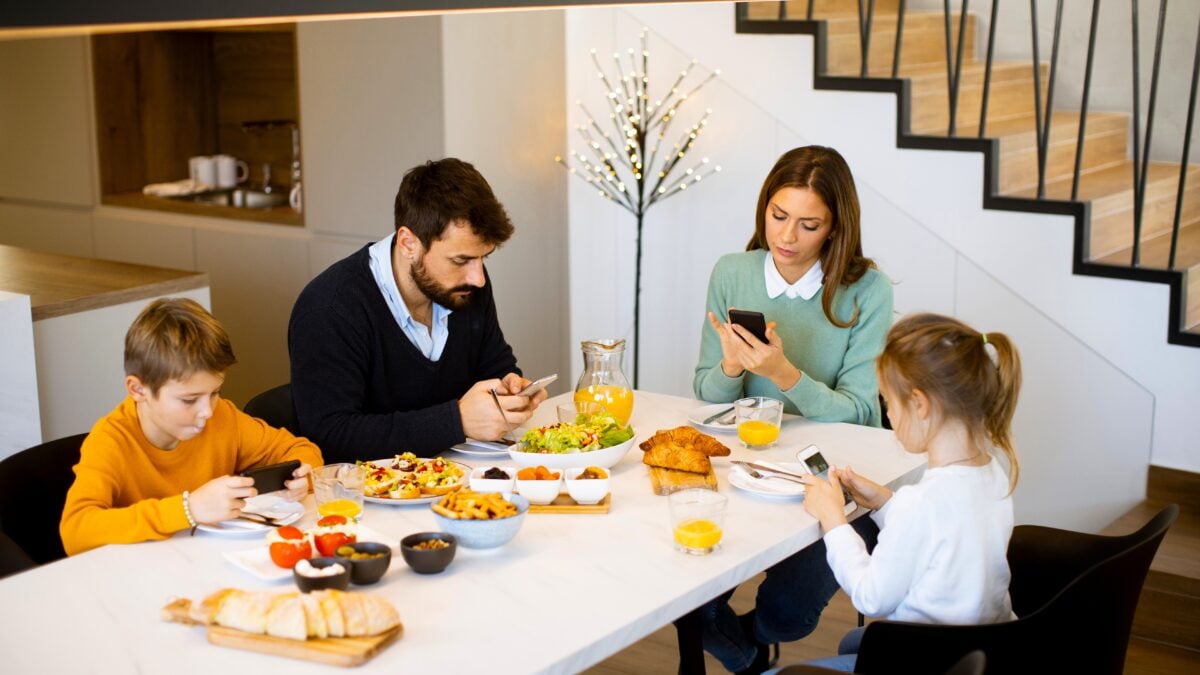
The dinner ritual is changing, and not necessarily for the better.
According to the first part of the Observatory of new dinner rituals launched by HelloFreshthe evening meal tends to become a simple functional moment, without any real time for sharing.
One in 4 French people eat with a screen in front of their eyes
Today, nearly one in two French people believe that television has eroded this ritual over the years. One in four French people now eat with their eyes glued to social networks, while 25% have lunch or dinner watching series.
72% of young people under 35 even dine in front of a series or Instagram, a figure which rises to 80% among 18-24 year olds. However, this digital distraction has a real cost for our health and our family balance.
The brain under hypnosis: the end of satiety and pleasure
Why this irrepressible need to “scroll” while eating? For dietician Claire Trommenschlager, the explanation is neurological. “Ultra-connection fuels our brain’s reward circuits by sending dopamine. Our brain is constantly stimulated, as if doped“.
This immediate satisfaction, coming from content like TikTok or Instagram Reels, makes the return to calm difficult for our brain to accept. To the point that we get bored very quickly without external stimulation.
This permanent distraction has direct consequences on our weight and our digestion. By being captivated by the screen, we are no longer connected to our food sensations.
Claire Trommenschlager emphasizes that “the visual influences satiety”. However, if our eyes are fixed on a video, the “end of hunger” signal is delayed. You end up swallowing your meal without chewing, which seriously disrupts digestion and can cause drowsiness or a feeling of heaviness after the meal.
In the long term, this lack of attention can lead to overconsumption of food, leading to overweight or obesity, as well as sleep problems if the dinner is too heavy.
Dinner, a moment of sharing that has become “digital silence”
Beyond the nutritional aspect, it is the social bond that is crumbling. If 61% of French people express the desire to have real discussions at the table, many do not succeed. Routine often weighs on discussions: 46% of respondents believe that conversations always revolve around the same subjects.
News remains the favorite subject (47%), followed by work (35%) and food (32%). Conversely, politics is the subject to avoid par excellence for 31% of French people, particularly in households with children.
“For people with family, there is no reason to keep a screen on because it cuts off dialogue, which is terrible for understanding” reminds our expert. It is therefore crucial to see the meal as a positive moment of reconnection.
Fortunately, awareness is emerging, especially among young people. Paradoxically, although they are the most exposed, 87% of those under 35 plan to transform their dinners in 2026 to give them meaning again.
How to initiate effective and lasting “weaning”?
Changing a habit established since childhood requires perseverance. The expert suggests a gradual approach for those who don’t feel capable of cutting everything out at once. You can start by reserving the screens for certain evenings or weekends, setting yourself challenges for a few days a week.
“If completely cutting out is impossible, at least try to inject some “mindfulness” into your meal: look at your plate, visualize the food and take the time to chew each bite instead of being totally absorbed by the screen.
advises the dietitian.
Finally, our expert advises co-constructing the meal as a family, from the choice of menus to the preparation. “It makes you want to enjoy the final dish together.” she concludes. In short, involving each member of the family allows you to transform the chore of cooking into a shared pleasure, thus strengthening curiosity about food from an early age.