
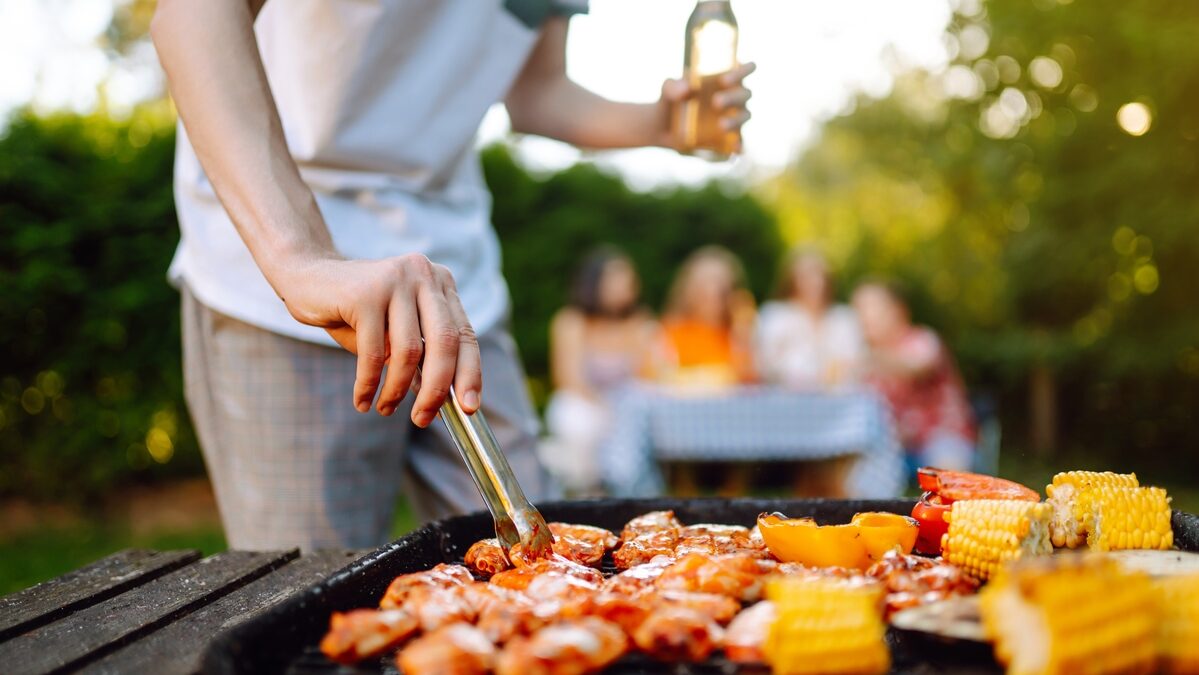
With the return of sunny days, aperitifs on the terrace and barbecues with friends are once again taking their place. But like every year, are you afraid of seeing the needle on the scale go up? “In reality, a festive meal from time to time does not cause weight gain“, recalls Julie Boët. The real traps are often hidden elsewhere…
The invisible calories of the aperitif are…
If calories can quickly accumulate during these heavy meals, it is often because they are hidden in several foods and drinks consumed throughout the evening. The aperitif is a perfect example.
“A few handfuls of chips, crackers, peanuts or olives can add up to several hundred calories before the meal even begins,” warns Julie Boët. And since these are small quantities taken in fractions, we often tend to underestimate what we eat at aperitif time.
The problem ? These foods high in fat and salt are not very satiating, make you (very) thirsty and often encourage you to drink even more alcohol.
Alcohol, the big culprit
If we had to choose the champion of hidden calories, alcohol would probably come out on top. With around 7 calories per gram, it is higher in calories than carbohydrates or proteins.
“Alcohol provides what we call empty calories. It provides energy but very few essential nutrients for the body”recalls Julie Boët.
Beyond the calories, alcohol also mobilizes the liver, which must treat it as a priority. During this time, the body uses fat less easily as an energy source, which promotes its storage.
“Alcohol can also disrupt satiety signals, stimulate the appetite and make it more difficult to regulate the quantities consumed. This is often what explains the desire to snack or refill after a few drinks,” recalls the expert.
But mocktails – often seen as a “healthy” option – aren’t a good idea either. Some contain a lot of fruit juices, syrups or sodas, and can therefore be very high in sugar. “Sparkling water with fresh fruit, citrus or aromatic herbs is often a more refreshing and less sweet alternative,”
reveals the specialist.
Barbecue: pay attention to the accompaniments!
When it comes to grilled foods, not all of them are nutritionally equal.
“Sausages, merguez and certain industrial preparations are often rich in saturated fat and salt. But poultry, fish, seafood or lean cuts of meat allow you to enjoy the barbecue with a more moderate fat intake!”, confides Julie Boët.
Barbecuing also requires little added fat. A good point for your line!
On the other hand, be careful with the accompaniments, which can quickly make the meal heavier. Sauces, chips, bread or certain salads very rich in oil can quickly add to the bill.
“Conversely, grilled vegetables, raw vegetables or mixed salads provide fiber, vitamins and promote better satiety”, indicates the nutritionist.
Take your time to better listen to your hunger
Another point often overlooked concerns the rhythm of the meal. Aperitifs can last several hours and lead to eating continuously, without triggering a real feeling of hunger.
“Conversely, taking the time to savor food, to chat and to take a few breaks often helps you better listen to your feelings of satiety,” explains Julie Boët.
Ultimately, aperitifs and grilled foods are not incompatible with a balanced diet. Calories are often hidden in drinks, snacks, sauces and portions consumed without paying attention.
“But by listening to your hunger and making a few simple choices, it is entirely possible to enjoy summer without guilt and without compromising your health goals!“, concludes the specialist.