
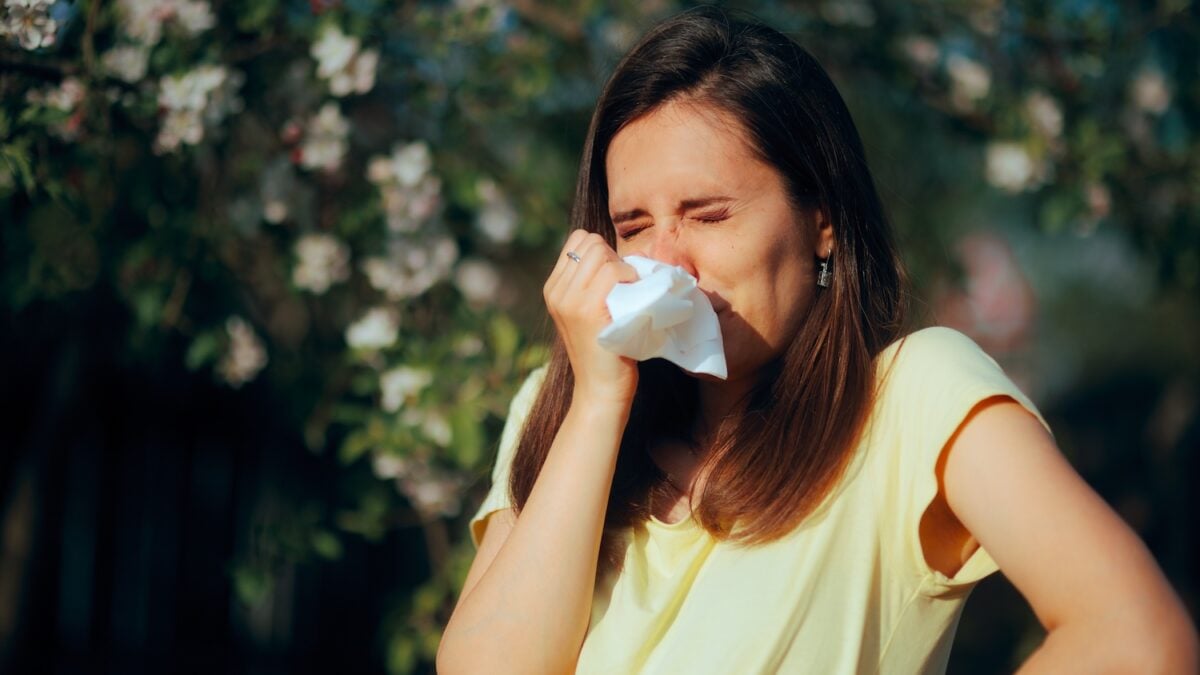
While one in two people could be allergic by 2050, researchers and clinicians gathered at the French-speaking Allergology Congress draw up a clear observation: understanding, preventing and personalizing treatments has become a collective emergency.
A silent epidemic that is changing its face
They were seen as seasonal, almost innocuous. Hay fever, a few sneezes, temporary discomfort. But in just a few decades, the landscape has changed profoundly. Allergies have become a lasting part of the daily lives of millions of patients, sometimes with unexpected violence.
Today, 25 to 30% of the world population is affectedand the projection makes you dizzy: one in two people could be allergic by 2050. In France, asthma – often of allergic origin – still causes 1,500 to 2,000 deaths per year and almost
840,000 days of hospitalization.
As a preamble to the congress, the experts set the tone: “The great silent epidemic of the 21st century challenges us to act collectively “.
Behind this formula, a very tangible clinical reality. Severe forms, such as anaphylactic shock, can be life-threatening. Food, drug or insect venom allergies are a reminder that the danger is not limited to spring pollen.
And above all, they last over time. Chronic fatigue, anxiety, dietary restriction, social isolation: quality of life is often profoundly impaired. For patients, the journey is still strewn with pitfalls. It takes on average 7 years to obtain a specialized diagnosis.
Almost natural transition: faced with this progression, the question is no longer just about treatment. It is to understand.
Understanding to prevent: the roots of a disorder
Why do some people become allergic while others do not? This question, which has long remained without a clear answer, is today at the heart of research.
Scientists describe a tangle of factors. Genetics, of course, but also early exposuresTHE
intestinal microbiotaor the rapid transformations of our environment. Pollution, urbanization, modified diet, sedentary lifestyle: our immune system seems to be losing its bearings.
Concretely, an allergy corresponds to an excessive reaction of the immune system to even mundane substances – pollen, mites, food. A disturbance which, in certain cases, can become uncontrollable.
The role of the microbiota particularly fascinates researchers. The reduction in microbial diversity, linked to our modern lifestyles, could weaken our immune tolerance. A promising avenue, but still being explored.
At the same time, climate change acts as an amplifier. Pollen seasons are lengthening, concentrations are increasing, new allergens are appearing. Even dust mites and mold are becoming more aggressive.
Faced with this complexity, a conviction is gradually emerging: we must act upstream. Prevention then becomes a major lever. Early dietary diversification, rapid treatment of atopic dermatitis, adaptation of the urban environment – even the choice of tree species -: all concrete strategies which could reduce the allergic risk from childhood.
But understanding is not enough. We still need to transform this knowledge into concrete solutions for patients.
Towards tailor-made medicine: the hope of innovations
This is perhaps where the most decisive turning point takes place. Allergology is entering an era of precision.
New diagnostic tools now make it possible to very precisely identify the allergens responsible. Next-generation biological analyzes pave the way for
personalized treatmentsadapted to the profile of each patient.
Artificial intelligence is also part of this revolution. It makes it possible to anticipate risks, assess the severity of reactions, and even optimize therapeutic protocols. A promise still under construction, but already a source of hope.
In the daily lives of patients, the transformation is also digital. Mobile applications, connected objects, personalized pollen alerts: the disease becomes more readable, more predictable. And the patient, long passive, becomes an actor in his care.
Advances are particularly notable in food allergies. Tolerance induction protocols now make it possible to gradually train the body to accept certain foods. A major development for families often forced to be constantly vigilant.
The same observation applies to drug allergies, where the challenge is twofold: securing prescriptions and avoiding erroneous diagnoses.
But this progress raises an essential question: who has access to it? Territorial and social inequalities remain strong. The lack of specialists, consultation times, and the cost of certain treatments further slow down their diffusion. Hence a clear call from professionals: make the fight against allergies a public health priority.
A collective emergency, between hope and vigilance
In Paris, the 2026 Francophone Allergology Congress does not just present scientific advances. It sets a framework, almost a manifesto. That of a discipline in motion, conscious of its progress but lucid about its limits. Because if science advances, the epidemic continues to progress.
Allergies say something about our times: a more urban, more exposed, more unbalanced world. They question our relationship to the environment, to food, to prevention. They also require us to rethink medicine: more personalized, more preventive, more accessible.
In this tension between worry and hope, a certainty emerges: the answer will not only be medical. It will be collective, political, environmental. And deeply human.