
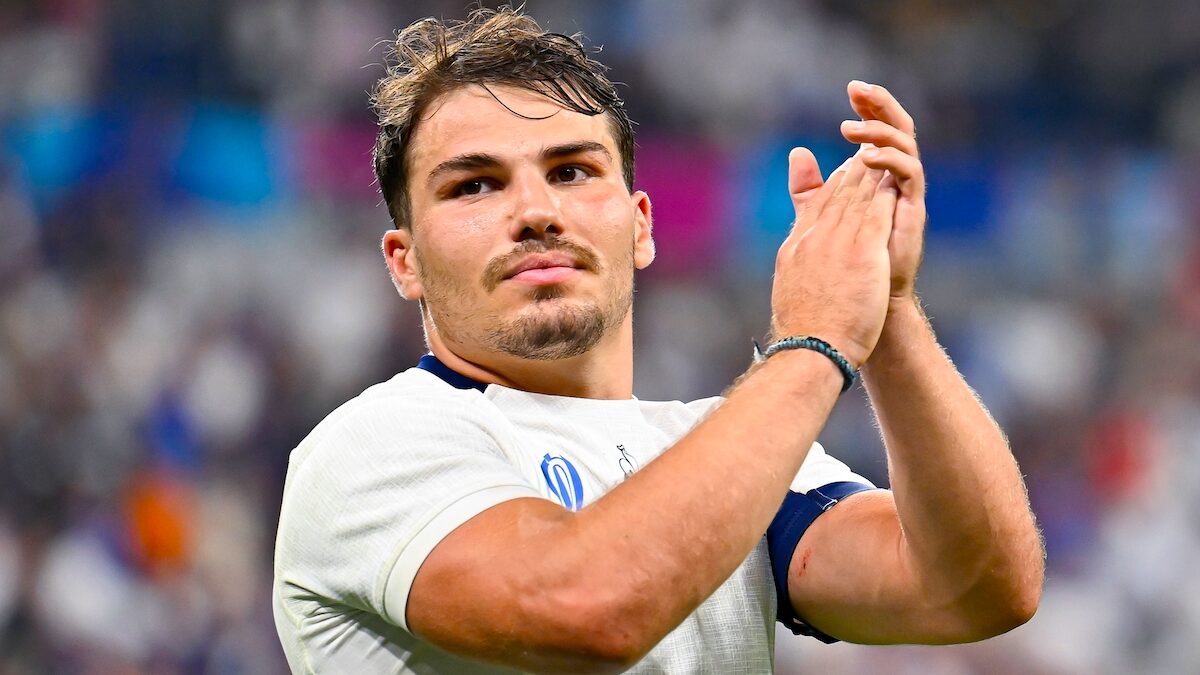
French rugby holds its breath. This Saturday, at the Stade Ernest-Wallon, Antoine Dupont will return to the pitch for the first time since that evening of March 8, when his right knee gave way against Ireland during the Six Nations Tournament. A brutal injury, a rupture of the anterior cruciate ligament (ACL), the second of his career on this same knee. For any player, an earthquake. For Dupont, a national earthquake.
A long-awaited return, carefully prepared
Eight months have passed. Eight months of rehabilitation, strength training, sometimes doubts and often patience. “I tell myself that this is already a reasonable time for the injury I suffered”he confided to The Team this summer. He still had crutches then.
Today, this return is not a whim or a bet. It is the conclusion of a process supervised by an excellent medical and physical team. Dr Maxime Feller, sports doctor contacted by True Medical, confirms this:
“Antoine Dupont is being monitored very closely by the Stade Toulousain medical staff. I am not worried. If he returns to competition, it is because on a strict medical level, his knee is stable and all the criteria have been validated.”
The signal is clear: his knee is ready to play. But will he regain his level?
A body that is coming back… but which still has to relearn
Getting back on the court after a torn ACL isn’t just about scarring or muscle strength. It is a global reconstruction of the body, often invisible to the audience, but essential for performance.
“On a biomechanical and neuromuscular level, it will take time for him to get back to his best level”explains Dr. Feller.
The body must reintegrate explosiveness, coordination, precision of support… and all these automatisms that Dupont used without even thinking about it.
Statistically, returning to sport after an ACL rupture concerns 80% of athletes, “but only 60% return to their initial level” adds the expert. This figure, often overlooked, illustrates the immense challenge that faces it. To achieve this, cost management will be decisive and everything will be scrutinized by its staff:
- Careful dosage of playing time;
- Gradual resumption of highlights;
- Monitoring knee reactions,
- Alternation between matches, rest and strengthening.
Because the other risk is well known: when a knee returns from such an injury, it is sometimes the muscles that give out.
“We can have muscle injuries or quadriceps-ischio imbalances. Little by little, he must regain his bearings”insists the sports doctor.
The mind, the other invisible adversary
Furthermore, if there is one area that is often underestimated, it is the mind. A ligament can be repaired. But confidence cannot be rebuilt with an operation.
“There will inevitably be some apprehension, he’s still a human being.”Dimitri Yachvili recently analyzed. And Antoine Dupont does not hide this apprehension even if he seems confident. “I already know the recipe and I hope it will come back to the way it was before, although you can never be sure”he said in July.
This sentence is enough to understand the complexity of the return: doubt, even discreet, is part of the process. Dr. Feller also recalls that fear of recurrence is a very common factor: “On a mental and psychological level, yes, there can be fear. But Antoine Dupont was probably very well followed by a mental trainer” he reassures.
Will we find the same “Dupont” as before?
Here again, the specialists are categorical: returning to competition is not always synonymous with returning to your best level. At least not on the first try.
“The return to competition is around eight months. But the return to the best level can take much longer”recalls Dr. Feller.
Antoine Dupont will play. It will probably shine. But its peak performance may take several more months to reappear. Although with him, you never know. Answer this Saturday evening in the Stade Toulousain match against Racing Métro 92.