
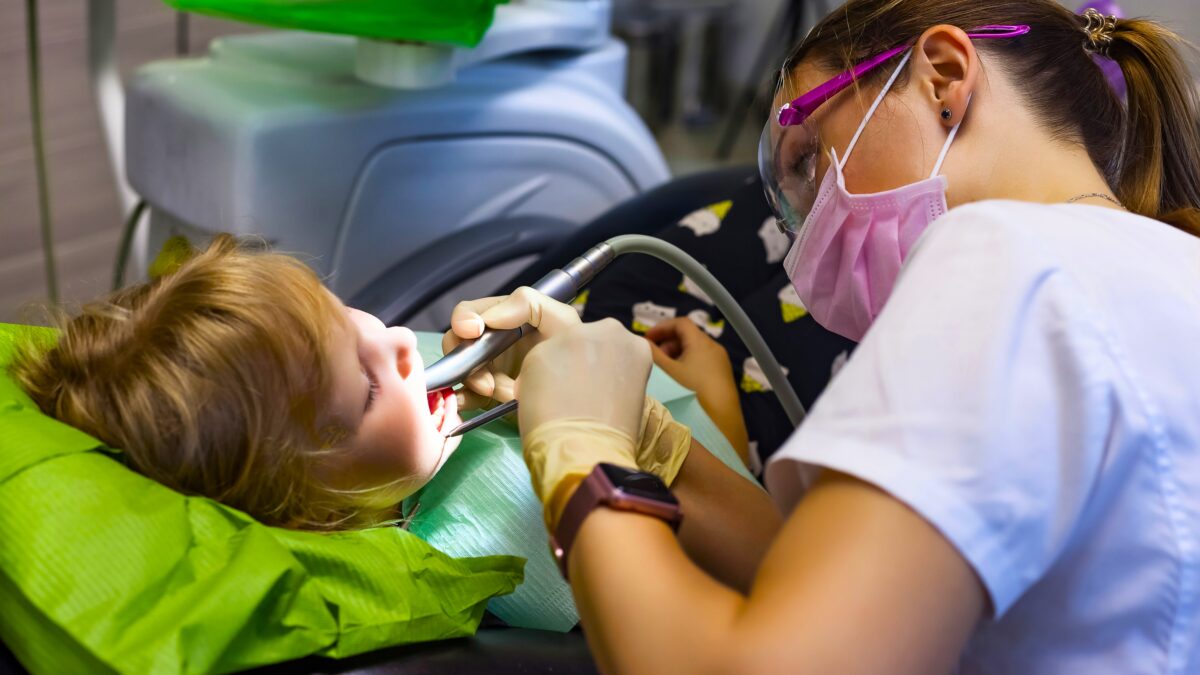
The emotion is immense in Alzira, Spain, after two successive tragedies that occurred on the same day in a private dental clinic.
This Thursday, November 20, two little girls aged 4 and 6 were urgently admitted to the hospital. And this, only a few hours apart, after a consultation with the same dentist. The oldest, victim of cardiorespiratory arrest, died in the evening.
According to The Parisianthe 6-year-old girl was transported around 5 p.m., while the 4-year-old child was hospitalized earlier in the afternoon, presenting “fever, vomiting and drowsiness”. Spanish authorities immediately opened an investigation.
Two consultations in the morning, two hospitalizations in the afternoon
The two little girls were seen in the morning in a private dental clinic in Alzira. According to local media, the meetings took place without apparent incident. The eldest had received dental treatment to treat cavities and extract baby teeth.
The owner of the practice assures that it was not an operation, but admits to having used a “sedative” intravenously to locally anesthetize the child, who left the clinic “in perfect health”.
But given the temporal proximity between the administration of the sedative and the serious symptoms subsequently observed, the hypothesis of a defective product is now being examined. The dentist herself confirms “that an investigation was underway into a batch of defective anesthetic“.
A very strict framework of use for anesthetics
In a context like this, investigators seek to understand precisely what type of sedation was administered. In France, the regulations are very clear.
“Anesthetic batches are traced by the manufacturers. To obtain these products, dental practices must order them by prescription, and each batch benefits from full traceability. assures Dr. Christophe Lequart, dentist and spokesperson for the French Union for Oral Health.
In addition, private dental practices are not authorized to practice certain techniques. “In a dental office, we do not practice intravenous injection. Anesthetics are injected almost exclusively into the gum. reminds our expert.
However, according to El Paísthe Spanish clinic in question was “not qualified to administer intravenous sedation“, information which could weigh heavily in the investigation. The authorities will have to determine whether this prohibited procedure was carried out.
When is an intravenous injection recommended for dental care?
In the event that the intravenous line is really the cause, Dr. Lequart reminds us of the usual context of this practice.
“In France, the only situation where an intravenous injection can be performed is that of general anesthesia, for example during the extraction of wisdom teeth. We then speak of neuroleptanalgesia: it is a general anesthesia, but less deep than traditional anesthesia, which allows for faster awakening.”
Such an action only takes place in a hospital environment. “With this technique, you can have your wisdom teeth extracted in the morning and go home at noon. But this type of gesture is only carried out in a clinic, in other words in a public or private health establishment.“.
A complex investigation still far from over
The other girl, aged 4, was transferred to pediatric intensive care in Valencia. Her condition has not been released in detail and it is unclear whether she received the same anesthetic.
A central question remains: did the cabinet carry out an act that it had no right to carry out? The investigation will have to determine the exact nature of the sedative, the way in which it was administered and whether a defective batch is really to blame.
Our expert finally reminds that pediatric practice follows very strict rules. “In children, general anesthesia may be indicated in cases of disability leading to refusal of care, or in phobic children – or even adults – with a large number of cavities.
Before concluding: “In any case, this type of injection is never carried out in a dental office: it must be carried out in a hospital setting, public or private..