
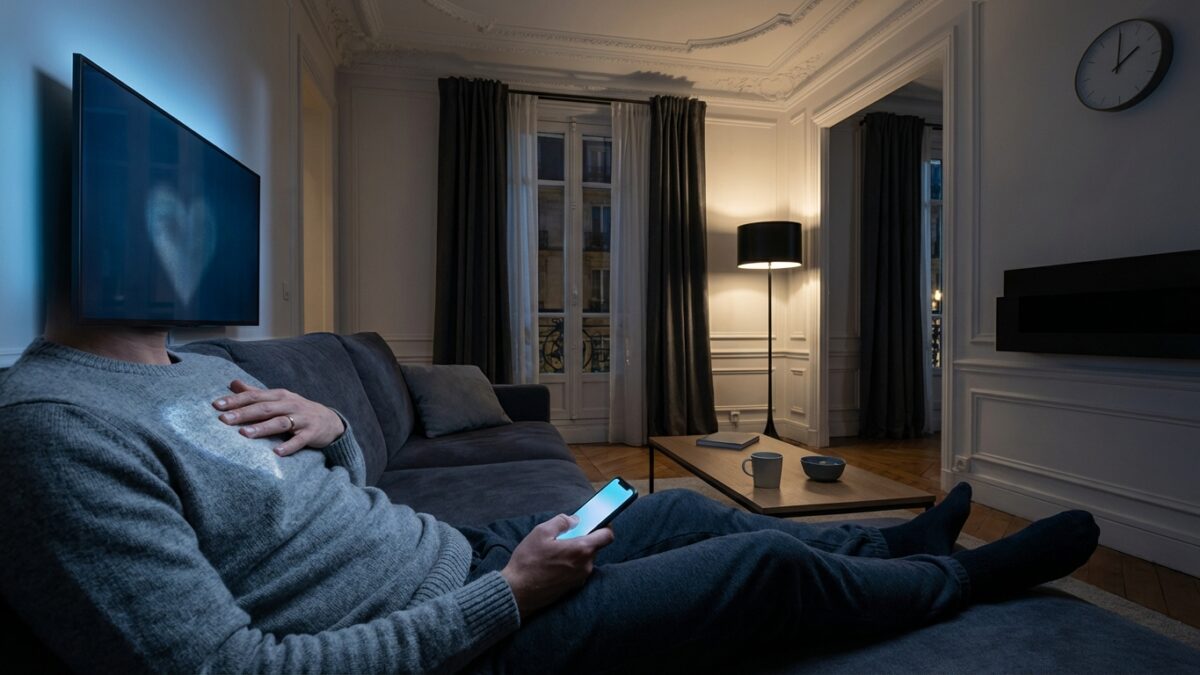
Staying up late to finish a series or work in peace is part of the daily life of many night birds. But a large British study suggests that this pace could be accompanied by a cardiovascular risk higher than in people who are active more in the morning. Without talking about an inevitability, the researchers point out a signal to be taken seriously.
Night owls, evening chronotype: what the large British study shows
The scientists analyzed data from 322,000 adults aged 39 to 74, followed for around 14 years in the UK Biobank cohort. Objective: compare heart health according to
evening chronotypemorning or intermediate, via the score Life’s Essential 8 from the American Heart Association, which assesses diet, activity, sleep, smoking, weight, blood pressure, cholesterol and blood sugar.
Nearly 8% of participants reported being “night owls,” going to bed late, around 2 a.m., and being more active in the evening. Those who considered themselves “morning people”, active from the start of the day and going to bed early, around 9 p.m., made up around 24% of the sample. Around 67% of participants were classified as having an “intermediate” chronotype, recognizing themselves as neither morning nor nocturnal.
Compared to the intermediate group, people who identified themselves as clearly evening people represented 8% of the sample and had a 79% higher prevalence of poor cardiac scores (less than 50 out of 100). Their risk of heart attack or stroke during follow-up was also 16% higher. Morning people had 5% fewer bad scores than the average.
The authors point out that the link remains moderate for each individual, even if it matters a lot at the population level. The study remains observational, it does not prove that staying up late directly causes the disease. “It’s not like night owls are doomed,” said researcher Sina Kianersi of Brigham Hospital and Harvard Medical School, who led the study.
Why the evening chronotype weighs on the heart, especially in women
Why such excess risk? THE night birds accumulate unfavorable behaviors more often: smoking, insufficient sleep, late meals, less physical activity… The detailed analysis shows that exposure to nicotine explains around a third of the excess risk, lack of sleep a significant part, as does excessively high blood sugar, being overweight and a poor quality diet.
“People who have a shifted circadian rhythm often suffer from this shift, meaning that their internal body clock does not match the natural day-night cycle or their usual daily schedules.”says Sina Kianersi, DVM and lead author of the study, a researcher in the Department of Sleep Disorders and Circadian Rhythms at Brigham and Women’s Hospital and Harvard Medical School, both in Boston. “These people are more likely to engage in cardiovascular health risk behaviors, such as poorer diet quality, smoking, and insufficient or irregular sleep.”.
In women, the link between
evening chronotype and poor cardiac score stands out even more clearly than in men, even if heart attacks and strokes are not necessarily more frequent. Mental load, nights cut short by children or work can accentuate this gap. “Evening people are not inherently less healthy, but they face challenges that make it especially important for them to adopt a healthy lifestyle” explained Kristen Knutson, quoted by the American Heart Association.
How to limit cardiovascular risk when you are a night owl
Researchers estimate that 75% of the link between evening profile and cardiovascular disease passes through risk factors measured by Life’s Essential 8. In other words, by stopping nicotine, ensuring more regular sleep, eating less late and doing a little daily physical activity, a
night owl can greatly ease the burden on one’s heart.
Finally, the authors suggest that individual chronotype should be taken into account to determine the appropriate timing of interventions or treatments. “Certain medications or treatments are more effective when taken at a specific time in the circadian rhythms, and this time varies depending on the chronotype (morning, intermediate or evening).”she explained. “Targeted programs for people who tend to stay up late could help them improve their lifestyle habits and reduce their risk of cardiovascular disease.”.