
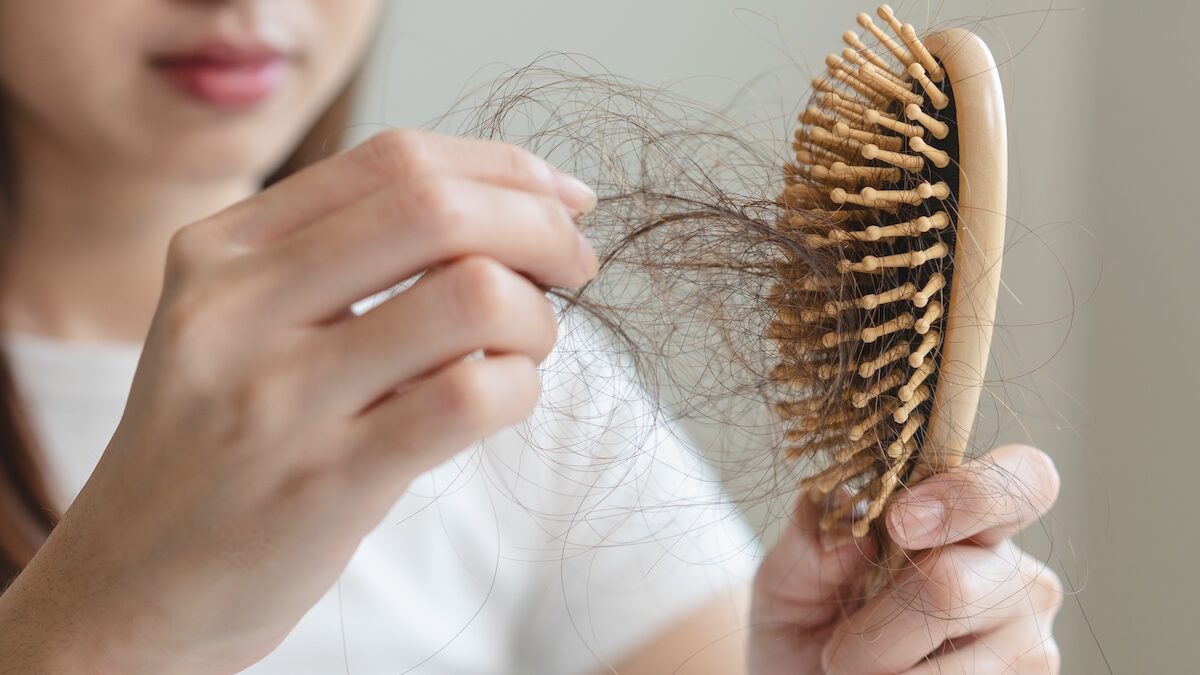
Menopause, chronic stress, fatigue, hormonal changes or hairstyles that are too tight… Hair loss no longer only concerns a few isolated profiles. Today, many women notice thinner hair, a widening part or less dense temples in their forties. Before considering heavy medical treatments or a hair transplant, many turn to a gentler solution: red light therapy.
Long reserved for specialized practices, this LED technology is now available at home via helmets, headbands or high-tech brushes. Their promise? Stimulate the scalp to restart growth and limit hair loss. But not all devices are equal. Several dermatologists and beauty specialists today agree on a few models considered particularly serious.
Why red light can help hair grow back
Hair photobiomodulation is based on the use of red light, generally around 630 to 660 nm, associated with near infrared. The objective: to awaken the activity of the hair follicles.
Concretely, this light acts directly on the mitochondria of the cells, the true energy centers of the follicle. Result: ATP production increases, follicles come out of their dormant phase and the hair growth cycle is prolonged. Scientific studies also suggest an improvement in blood microcirculation and a reduction in scalp inflammation.
Work published in the journal Clinical, Cosmetic and Investigational Dermatology observed an increase in hair density ranging from +17 to +62% after several months of regular use.
This technology seems particularly interesting in the case of:
- Early androgenetic alopecia;
- Hormonal drop linked to menopause;
- Diffuse loss of density after stress or fatigue;
- Traction alopecia caused by hairstyles that are too tight.
The most credible red light therapy devices
CurrentBody Skin LED Hair Regrowth Device
This LED helmet is among the market references. Lightweight and easy to use, it can only be worn for a few minutes per session. Several users report a visible reduction in hair loss after three months of regular use, with approximately five weekly 10-minute sessions.
Its main advantage: a quick and easy routine to integrate into daily life.
HairMax LaserBand 82
Designed to target balding areas of the forehead and gulfs, this flexible headband moves gradually over the scalp. The sessions are short and the format appeals to people who do not want to wear a full helmet.
This is an interesting option for the beginnings of localized alopecia.
iRestore Essential Laser Hair Growth System
More enveloping, this headset works in hands-free mode at home. Its design covers the entire scalp, which allows for even treatment. Despite a larger format, it remains simple to use and appreciated for its comfort.
HigherDose Red Light Hat
Halfway between beauty and discretion, this LED cap allows you to follow your sessions without attracting attention. The concept particularly appeals to those looking for an easy-to-wear solution during everyday tasks.
Laduora DUO 4-in-1
This device combines several technologies: red light, scalp massage and microcurrents. The goal is to stimulate circulation while providing a relaxing feeling. Its compact format appeals to women who prefer a multifunction and portable device.
Foreo Luna 4 Hair
More accessible in terms of price, this device can be used as an intelligent massage brush for the scalp. It can complement a routine already in place, particularly with recognized treatments such as minoxidil. Its gentle approach is well suited to people new to hair LED.
How to properly use hair light therapy
As is often the case with hair loss treatments, regularity remains essential. Specialists generally recommend:
- 3 to 4 sessions per week;
- Sessions of 20 to 30 minutes depending on the device;
- Continued use for several months.
The first results can appear after 4 to 8 weeks, but a clearer improvement in density often takes between 3 and 6 months.
Red light therapy does not regrow hair that has been missing for years, but it can help strengthen follicles that are still active. Above all, it is part of a global strategy: balanced diet, stress management, appropriate care and, if necessary, dermatological monitoring.