
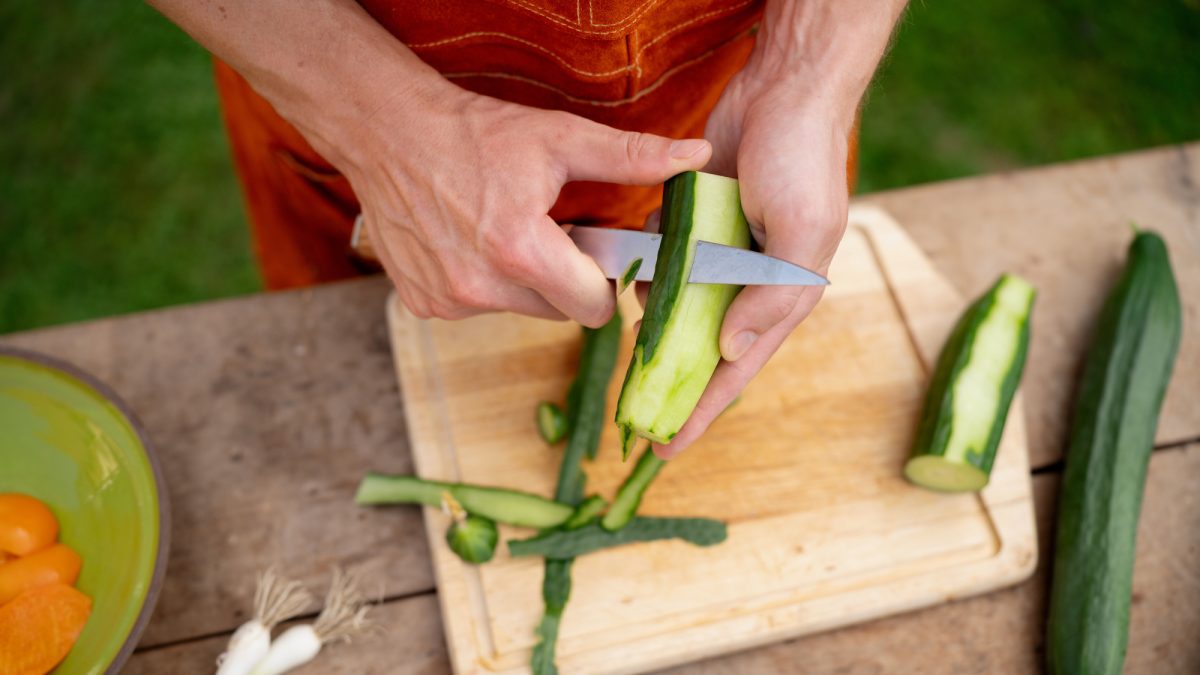
Did you know? To fully benefit from the nutrients they contain, certain vegetables should not be peeled. Here is the list, validated by our dietitian-nutritionist.
With the return of sunny days, are you enjoying colorful salads and vitamin-packed starters? Warning: although the preparation of vegetable-based dishes is strongly recommended, not all of them should be peeled, warns Julie Boët, dietitian-nutritionist.
The skin of vegetables, a detail not to be overlooked
By habit or by preference, many of us peel our zucchini, cucumbers and other carrots. However, this reflex is anything but a healthy gesture: the skins of vegetables contain many essential nutrients.
“Fibers, antioxidants, vitamins, minerals… it is often in the outer shell that the most valuable nutrients are concentrated. Of course, this requires favoring organic or sustainable agriculture products to limit pesticide residues. confides Julie Boët, before continuing: “The skin is particularly rich in insoluble fiber, which regulates intestinal transit, promotes satiety, and contributes to good metabolic health. There are also water-soluble vitamins such as vitamin C and powerful antioxidants, which protect against chronic diseases.”
So many good reasons to put aside your favorite thrifter.
The 4 vegetables not to peel
When thick, tough, or difficult to digest, some vegetable skins need to be removed. This is particularly the case for turnips, squash, celeriac or artichokes. But which ones should you keep? Here are our expert’s answers.
-
The carrot: “The skin concentrates antioxidants such as beta-carotene, beneficial for the skin and vision. A simple brushing is enough to clean it”;
-
Cucumber: “Its skin contains silica (good for the skin) and vitamin K. Removing it means losing a large part of its nutritional value”;
-
Eggplant: “Purple skin contains nasunin, an antioxidant that protects brain cells”;
-
Zucchini: “Very fine, its skin is rich in chlorophyll and lutein, an antioxidant that protects vision.”
But other foods are also affected:
- The potato: “Its skin contains iron, potassium, and fiber. If it is organic, there is no need to remove it: washed well, it reinforces the nutritional density of the dish”;
- The pear: “Like the apple, its skin is rich in fiber and phenolic compounds, beneficial for the heart”;
-
The grape: “The skin (especially that of black grapes) is rich in resveratrol, a powerful antioxidant with anti-aging and cardiovascular effects”;
- The apple: “Its skin contains up to 4 times more quercetin (an antioxidant) than the flesh. It is also rich in pectin, a fiber that regulates cholesterol.”
Practical advice from the expert? “Clean your fruits and vegetables well with clean water, or even with a little baking soda to remove residue. By keeping the skin on, you optimize the nutritional density of your plate while reducing food waste.
she concludes.
she concludes.