
Asthma is a common disease that can cause whistling and shortness of breath, sometimes severe. Treatments include the use of inhalers, which disseminate the drug directly in the lungs. Asthma attacks most often occur at night or early in the morning. This is partly due to the cooler air at night (night crises) and exposure to mites and allergens (crises in the morning). But circadian rhythms could also play a role. This is what English researchers suggest, who were interested in the impact of circadian rhythms on the reliability of asthma diagnostics and the effectiveness of treatments. For this, they based themselves on routine asthma tests.
How to diagnose asthma?
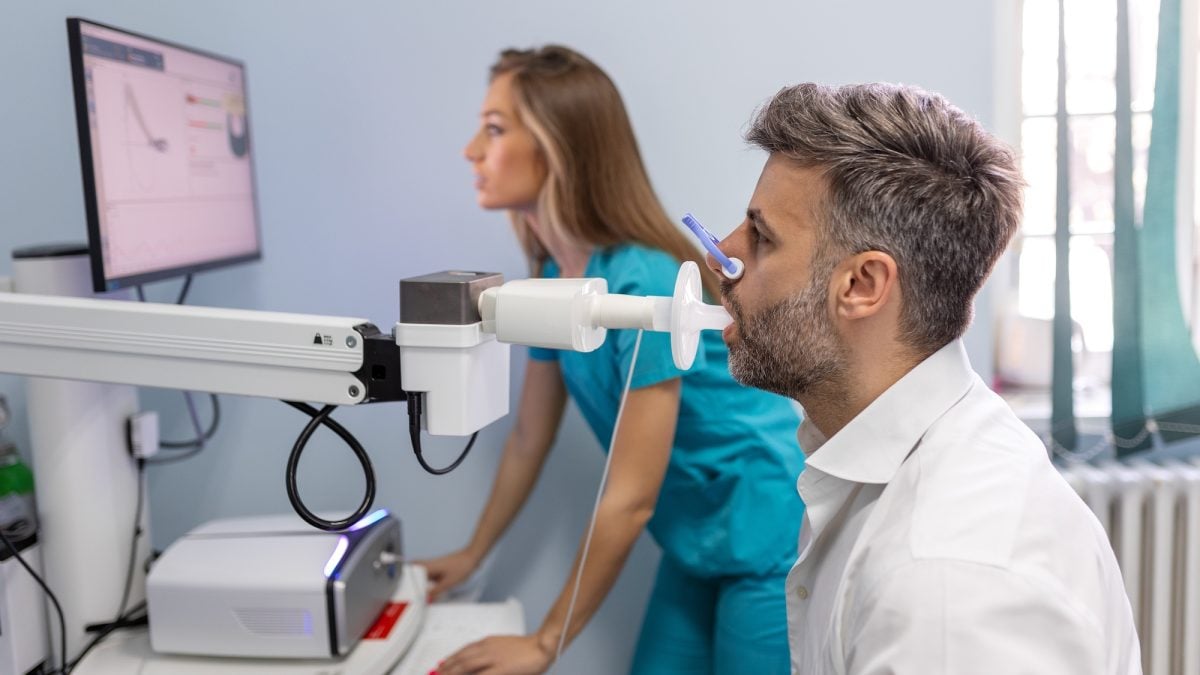
When a doctor suspects an asthma in a patient, he prescribes a Spirometry test, also called the respiratory functional exploration (EFR). This test is to inspire deeply, then to expire strong and quickly as long as possible in a tube in order to assess the pulmonary function. The patient must then use a inhaler containing a medication that quickly expands the bronchi to help him breathe better.
We consider the test as positive when breathing is better after using the inhaler. This means that the airways were narrower or closer before using the drug. A positive test confirms the diagnosis of asthma.
A possible underestimation of positive diagnostics
In a study published in the journal Thoraxresearchers say that the reliability of these diagnostic tests decreases over the day. Based on the health data of 1,600 patients subject to respiratory tests for suspicion of asthma, between 2016 and 2023, they found that the reliability of these tests was maximum at 8:30 am, then it dropped by 8% then, each hour spent of the day. In other words, the chances of obtaining a positive test, suggesting that the patient could suffer from asthma, decreased by 8% per hour.
“”This discovery could have a significant impact on the diagnosis of asthma. Performing the morning test would give a more reliable representation of the patient’s response to the drug than doing so in the afternoon, which is important to confirm a diagnosis like that of the asthma”Said Dr. Ben Knox-Brown, principal of the study.
Researchers also discovered that patients tested in autumn were 33 % less likely to have a positive result compared to those tested in winter.
Different reactions to diagnostic tests and treatments depending on the time of day
For Dr. Akhilesh Jha, co-author of the study, this difference is linked to a combination of factors. “” “Our body works on natural rhythms, on 24 -hour cycles. This is called the biological clock“He explains. Before adding:”Throughout the day, hormone levels in our body fluctuate and our immune system works differently, for example. Each of these factors can influence the reaction to the pulmonary function test ”.
Previous studies had shown that the time of day or the season had an influence on our health and our response to treatments. For example, we know that the response to vaccines varies depending on whether they are administered in the morning or in the afternoon.
“” “The results of our study corroborate this idea and should be taken into account when interpreting the results of these frequently practiced tests ”conclude the researchers.