
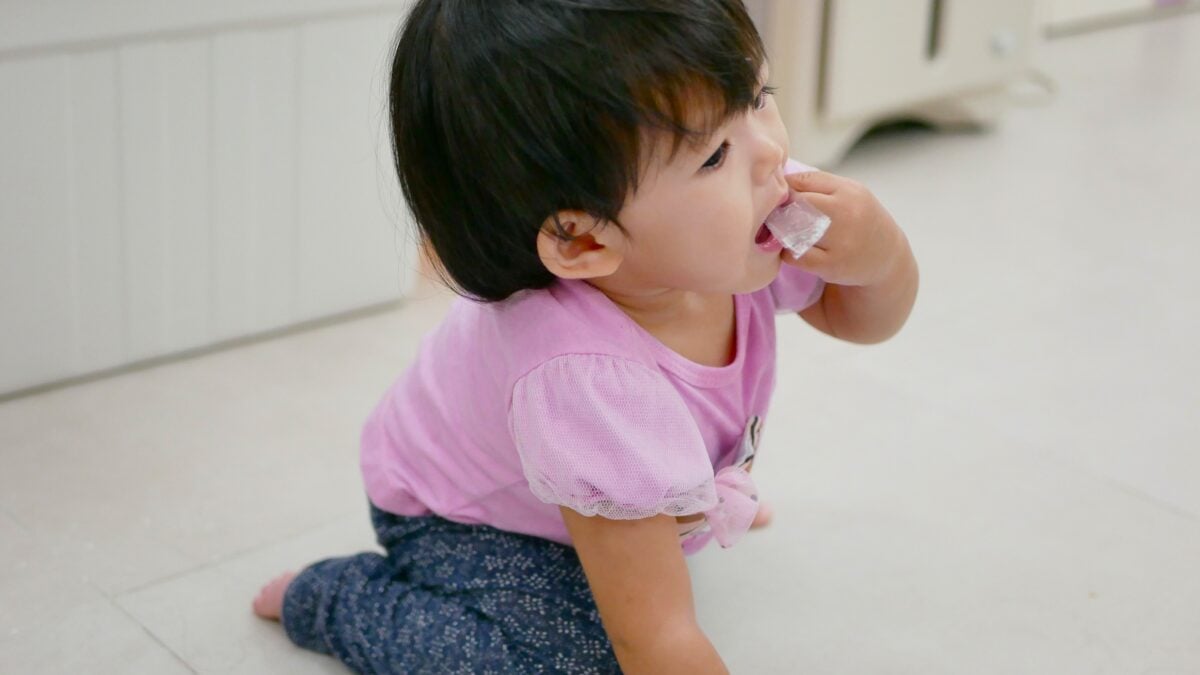
When she saw her baby devour handfuls of sand, gnaw the furniture and then nibble his bed, Jess Harry understood that this was not a normal phase of his development. Indeed, Junior, 21 months old, swallows inedible objects, sometimes toxic, and requires constant supervision.
A disorder that appeared very young, in his son
The first alerts appeared in early childhood. Junior licked the scratch of his sensory books, then began to ingest sand, cardboard, the carpet, and even the bars of his bed, the young woman reported to the BBC.
After suffering lead poisoning from a gnawed door frame, Jess finally got answers: it was pica, a rare eating disorder. A diagnosis… but not really solutions.
Pica in children: a grueling daily life and constant monitoring
Jess therefore juggles between worry and vigilance. His son cannot be left alone. After eating his wooden bed, she installed a metal travel cot model for him.
The young mother describes an extraordinary situation: “Even when nothing is at hand, he finds something“. She watches him tirelessly. “He can never be left alone.”.
She confides her exhaustion, but also her loneliness in the face of a little-known disorder: “People don’t understand. When someone invites me to the park, I prefer to make up excuses, it’s easier to stay at home. It’s exhausting, but at least he’s safe.”
Pica in children, a disorder that can be serious
Consulted on this case, Dr Gérald Kierzek, emergency doctor and medical director of True Medical, provides us with some insight.
“Pica in children is defined by repeated and compulsive ingestion of non-food or non-nutritive substances over more than a month. Before 2 or 3 years of age, putting objects in the mouth is part of natural exploration. Beyond that, the behavior becomes abnormal, especially when it involves earth, sand, chalk, cardboard or potentially toxic materials. Risks include infections, poisoning, growth delays and digestive complications such as obstructions.”
In adults, it is a sometimes serious psychiatric disorder
Dr. Gérald Kierzek further clarifies the contours of this disorder in adults. “It is a psychiatric eating disorder characterized by the repeated ingestion of inedible substances – metal, glass, earth, plastic, etc. – for at least one month, outside of any cultural or ritual context.”
The causes are multiple. “It is found in patients suffering from psychiatric disorders such as schizophrenia, mental retardation or autism, but also in cases of nutritional iron or zinc deficiencies, pregnancy or acute stress.
He recalls that children, people with developmental disabilities, but also adults in precarious situations are the most exposed. “It also happens that this behavior is used in prison or detention centers to cause hospitalization and temporarily escape the judicial system.
The consequences can be life-saving. “Ingestion of sharp or large objects can cause perforation of the digestive tract, internal bleeding or intestinal obstruction, sometimes fatal.” adds the doctor. Other dangers are linked to toxic substances, such as in batteries or solvents.
Growing up with a pica: how to help a child not put themselves in danger
“In very young children, pica often involves geophagia (earth, sand, chalk), but can also lead to coprophagia or the ingestion of hard objects. Physical complications are common, with vomiting, abdominal pain, parasitic infections, heavy metal poisoning or malnutrition. warns our expert.
Support is based on three pillars: securing the environment, correcting deficiencies, and initiating psychological monitoring. For parents, one of the most difficult realities remains emotional and logistical exhaustion. Jess testifies to this with rare frankness: despite his efforts, there is no guarantee that Junior will not find a new object to snack on.