
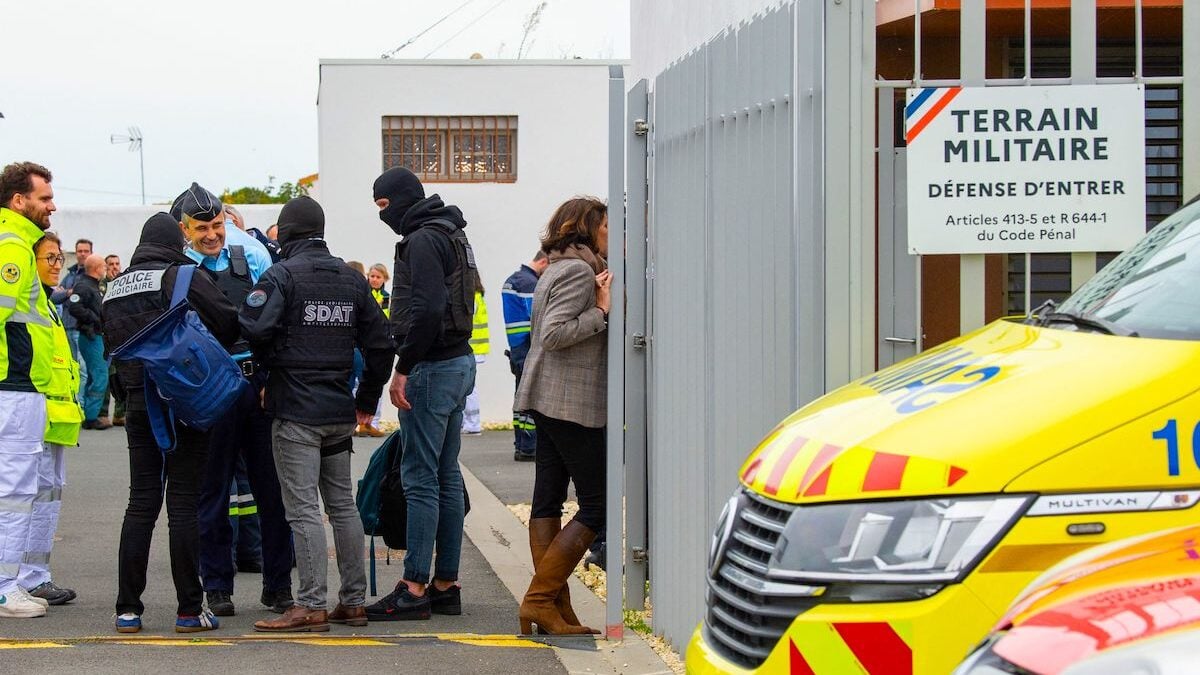
The two seriously injured victims are now out of danger. But two days after the incident, the investigation into the attack that occurred on Wednesday on the island of Oléron continues to reveal the disturbing profile of the suspect. A 35-year-old man, marginal and polydrug addict. According to the first psychiatric assessment, his discernment was impaired, but not abolished at the time of the events. A decisive nuance on the criminal level.
A deadly journey with no proven terrorist motive to date
Remember that that day, the suspect deliberately hit several pedestrians and cyclists, injuring seven people, two of them seriously. The man, unknown to the intelligence services, shouted “Allahu Akbar!” during his arrest, after setting his car on fire. On board, investigators also discovered a gas cylinder and a 35 cm knife blade, confirming the premeditation of his action.
Despite everything, the La Rochelle public prosecutor’s office ruled out the terrorist trail, due to lack of an established link with an organization, and retained the classification as assassination attempts.
A solitary conversion and a fragile psychological state
But who was he? During his press conference on Thursday, November 6, public prosecutor Arnaud Laraize described a man “under the influence of cannabis” and subject to “personality disorders”.
Recently converted to Islam “alone and via social networks”, after having previously turned to Catholicism, the suspect declared having “followed the orders of Allah”.
He also claimed to “hear voices” and expressed his desire to be interned. So can we think he is “crazy” or responsible for these acts?
Psychiatric expertise, the border between madness and guilt
Contacted recently (on the trial of Lola’s murderer), Dr Laurent Layet, court expert and author of In the Land of Shadows – journey to the heart of madnessexplained to us the interest of psychiatric expertise. “Before the trial, we are interested in discernment, that is to say the ability to understand and want one’s actions.”
The work of the experts is then meticulous: clinical diagnosis, interviews, rereading of the medical file… everything is examined.
For justice, there are three levels of discernment:
- Discernment intact – full responsibility;
- Impaired discernment – diminished responsibility;
- Abolition of discernment – total irresponsibility and compulsory internment.
But contrary to popular belief, mental illness does not always exclude liability.
“The heart of our work, explained Dr. Layet,
it is to determine whether the illness was already present at the time of the events, and especially whether it has a direct link with the act.”
“You can be schizophrenic and delusional, but rob a bank without it being related to your disorder“, he illustrates. And to remind: “The craziest crimes are not necessarily committed by crazy people.”
Marginal but a priori responsible
In the case of Oléron, the experts therefore retained the second category: alteration, and not abolition. The investigators favor the thesis of a psychotic delirium against a background of narcotics, but without link to a mental illness at the time of the facts. “In this case, the person remains judged, but the sentence can be reduced”
explained the psychiatrist.
This drama, however, illustrates the difficulty in disentangling the causes of an isolated act: psychiatric disorder, religious drift and marginality are closely intertwined.
It now remains for justice to decide: to what extent did this alteration of discernment influence his actions, and where does the illness end and responsibility begin? Only continued investigation will be able to refine the profile.