
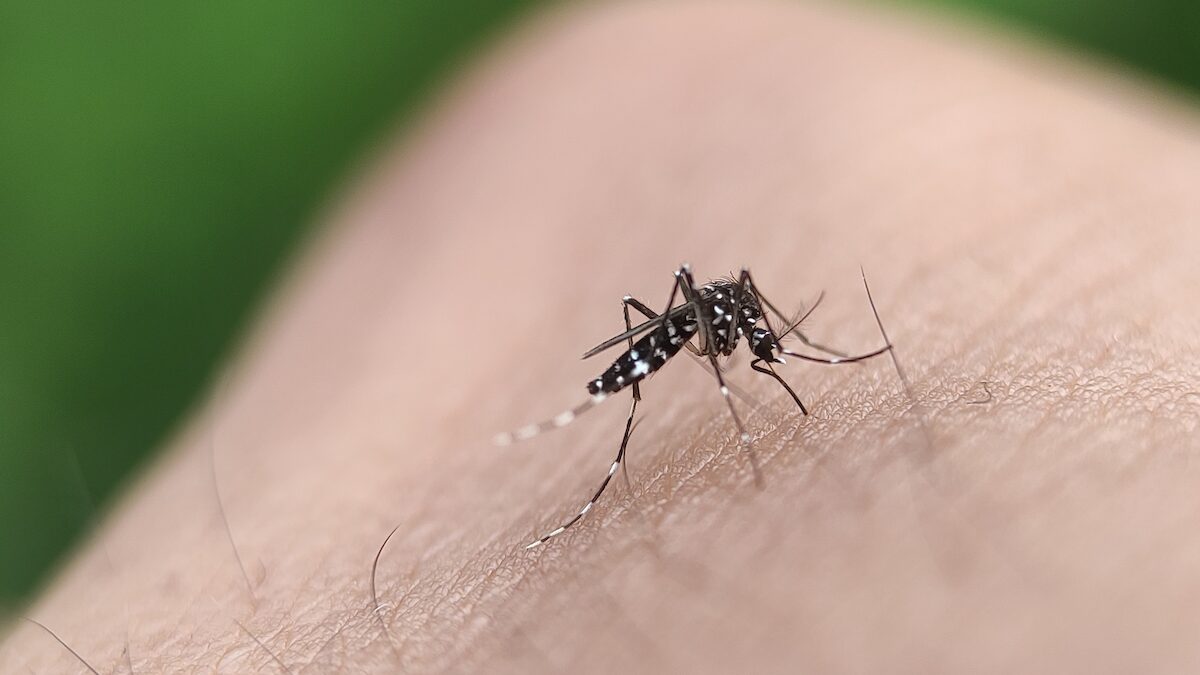
The latest bulletin from Public Health France, published on July 29, 2026, confirms that an arbovirus transmitted by the tiger mosquito is circulating locally in the south of France. In its monitoring of the 2026 season (week 30), the agency describes an episode of indigenous transmission in Occitania: this is the first case of chikungunya contracted there this year in mainland France.
According to Public Health France, “This is the first detection of the circulation of the chikungunya virus in mainland France, in 2026“. The case was reported in the Tarn department, in the commune of Saint-Amans-Soult, where a person developed the first symptoms on July 9, 2026. Between May 1 and July 26, the agency also recorded 87 “imported” cases of chikungunya, 261 of dengue fever and 9 of Zika.
First indigenous case of chikungunya 2026 in Tarn: what we know
The Public Health France table indicates that this episode of chikungunya concerns a single case at
Saint-Amans-Soultwith the start of signs set for July 9, 2026, and that it is not yet closed. In Occitania, two episodes of dengue fever are also underway, in Carmaux in the
Tarn and in Sète in Hérault, described as “unrelated” cases.
As of July 27, 2026, Public Health France records three episodes of indigenous transmission by Aedes albopictus in mainland France, all in Occitania: one episode of chikungunya in Tarn and two of dengue fever. Last year, more than 800 indigenous cases of chikungunya and 62 indigenous cases of “West Nile” fever had already been recorded in mainland France.
Chikungunya, tiger mosquito and climate: a seasonal risk in Occitania
Aedes albopictus, the famous “tiger mosquito“, is now established in 83 departments of metropolitan France and remains active from May to November, recalls Public Health France. This mosquito can transmit three major viruses, dengue, chikungunya and Zika, all of which are subject to reinforced surveillance between May 1 and November 30, in conjunction with the National Reference Center for Arboviruses.
Specialists believe that the current indigenous cases can be explained by earlier, more frequent and more intense heatwaves in Europe. A study published in 2025 in the journal Lancet Planetary Health warns that dengue and chikungunya could become endemic, with outbreaks separated by just a year, “probably due to changing climatic conditions” and “reinforced by the frequency of human movement.”
Chikungunya: sometimes disabling symptoms
Chikungunya generally manifests itself as brutal feveroften accompanied by severe joint painsometimes disabling, as well as a
conjunctivitisofskin rashesand sometimes
headache or nausea. Although rarely fatal, the disease can cause persistent fatigue lasting several weeks or even months.
A case is said to be “indigenous” when the sick person
did not travel in the 15 days before symptoms appeared in an area where the virus is actively circulating. This means that transmission took place locally, via a mosquito carrying the virus.
Good reflexes to slow the spread
Preventive actions were immediately taken in Prades-le-Lez. They include entomological investigationsof the targeted mosquito control operationsthere actively searching for other cases
and the raising awareness among health professionals about reporting. The local residents concerned are informed in advance and invited to collaborate with the teams on the ground.
Health authorities recommend protect yourself from mosquito bites : repellents, long clothing, mosquito nets for babies and bedridden people. But above all, everyone can act by limiting the places where they lay their eggs:
- Eliminate stagnant water (saucers, gutters, cans)
- Change plant water at least once a week
- Cover water tanks And
maintain your garden (clearing, collection of plant waste)
Dengue fever, sometimes nicknamed “tropical flu”, can cause high fever, headaches and, more rarely, serious forms. In May, the Ministry of Health sent caregivers a “call for increased vigilance” regarding these arboviruses, while the surveillance organized by Public Health France follows a “One Health” approach and provides for “Safety of elements and products of the human body” for donations, while recommending limiting
stagnant water and protect yourself from
mosquito bites.