
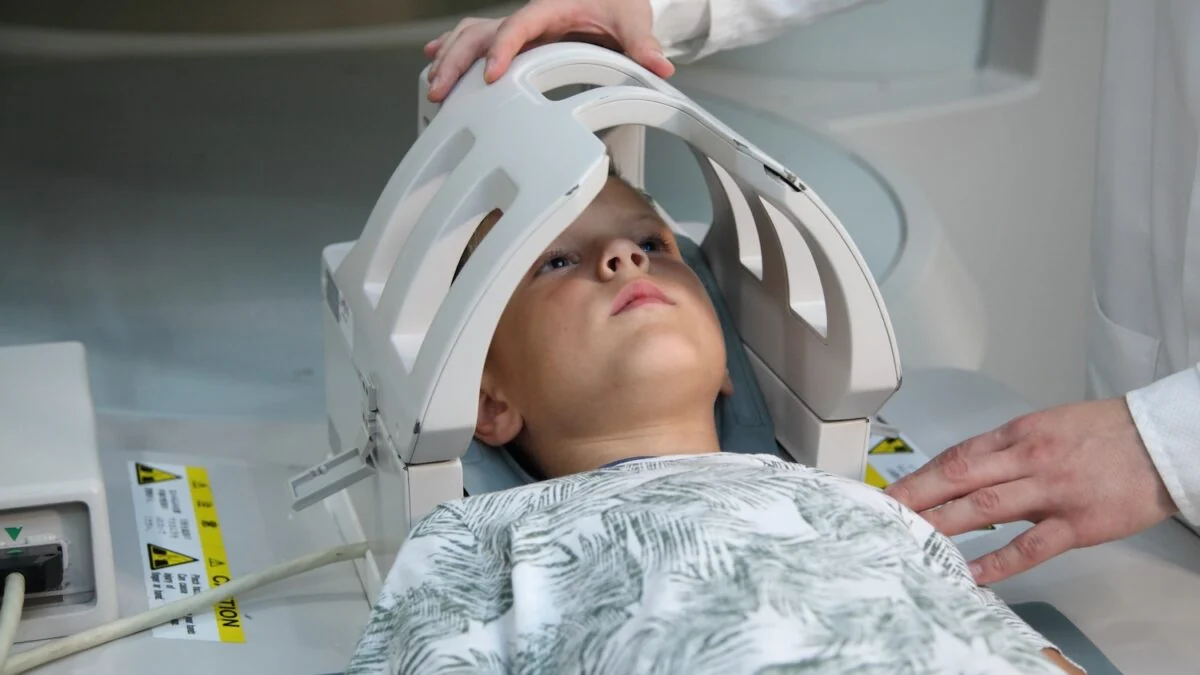
In a pediatric oncology meeting, the question quickly comes up: should we treat harder to reduce the risk of relapse, or reduce it when possible to preserve learning and quality of life? For certain childhood brain tumors, this benefit-risk balance is particularly delicate.
An international team led by the Dana-Farber Cancer Institute is today presenting a lead: an artificial intelligence model called MANTIS. It could help to better estimate the risk specific to each tumorparticularly for pediatric medulloblastoma and ependymoma. But the useful answer is clear from now on: it is not a tool ready to decide on treatments, nor an invitation to reduce doses outside of validated protocols.
What would this AI do more than traditional classification?
In a press release published on November 3, 2026, Dana-Farber describes MANTIS, for Methylation profiling and Artificial Neural networks for Time-dependent Individualized Survival predictions. The model is based on DNA methylation data, already used in certain specialized centers to help diagnose central nervous system tumors.
The idea is not just to place children in large risk groups. MANTIS seeks to predict the evolution of survival over time based on tumor-specific biology. The study published in Nature Genetics describes a development and validation of the model based on methylation data concerning 2,786 patientsassociated in particular with information on copy number variations and clinical monitoring.
Volker Hovestadt, computational biologist at Dana-Farber and lead author of the study, summarizes the issue: “For children with brain tumors, this could help us better match the intensity of treatment to the biology of the disease and ultimately reduce long-term side effects for some patients.”.
This is a potential step forward, but its limit changes everything for families: this is a development and validation study on existing data. It has not yet demonstrated that the use of MANTIS in a medical decision improves survival, reduces after-effects or transforms daily care.
Less strong radiotherapy for certain children: why so much caution?
The most concrete result concerns medium-risk medulloblastoma. The researchers adapted MANTIS to estimate the likely effect of different doses of craniospinal irradiation. Based on the reported evidence, the model identified approximately 60% of children of this group as potential candidates for less intensive irradiation.
In the data analyzed, this reduced dose was associated with better cognitive outcomes, with no significant survival disadvantage detected in this subgroup. The stakes are high: radiotherapy may be essential for controlling the disease, but it can also have a lasting impact on the cognitive functions of a brain that is still developing. True Medical also details the possible after-effects of childhood cancer treatments.
“An exciting aspect of this work lies in the demonstration of the ability of artificial intelligence to learn from molecular tests already used in patient care.explains Sabina Stefan, postdoctoral researcher at the Dana-Farber Cancer Institute and first author of the study. “Further clinical studies would allow this approach to contribute to more personalized therapeutic decisions, not only for pediatric brain tumors, but also potentially for many other cancers.”.
However, this should not be read as a general recommendation to reduce the dose. This caution is all the more necessary since the ACNS0331 trial, published in 2021, showed that reducing the dose of craniospinal irradiation in the youngest children with average-risk medulloblastoma gave overall lower survival results, even if it was accompanied by better neurocognitive results. The possible interest of MANTIS would therefore be to better select children in whom de-escalation could be studiedand not to generalize this de-escalation.
What does this change today for families in France?
In France, brain tumors are the most common solid tumors in children, with around 500 new cases per year in those under 18, according to the National Cancer Institute. They constitute the second cause of pediatric cancer after leukemia. In this context, any tool capable of better distinguishing risks logically attracts the attention of specialized teams.
But the French transposition takes time. DNA methylation examinations should not be presented as systematic everywhere: they are available in certain specialized centers, according to local organizations. And no French recommendation currently validates MANTIS for choosing a dose of radiotherapy or modifying a protocol.
For a family, the proper use of this information is therefore not to request a reduction in treatment. It is rather to understand why doctors talk about molecular subgroups, risk of relapse and long-term after-effects. In the years to come, this type of AI could enrich discussions in specialized meetings; for the moment, decisions remain supervised by pediatric oncology teams and clinical trials.