
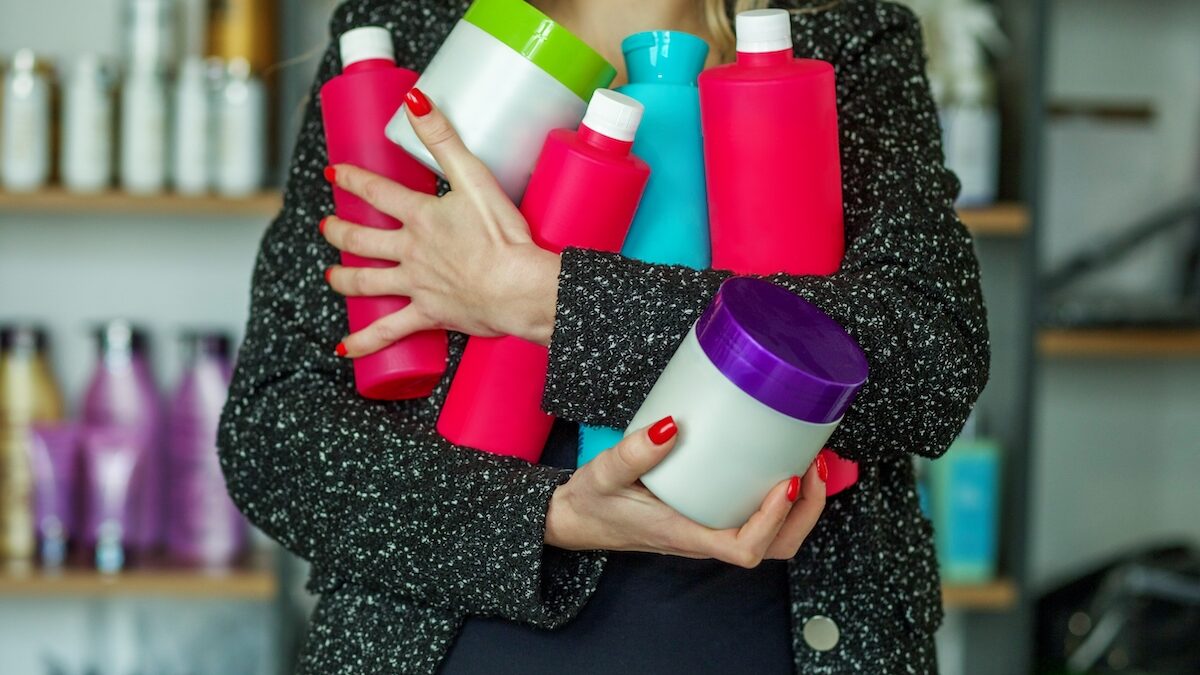
Some actions seem trivial: applying a cream, putting on makeup or using a scented shower gel. However, behind these well-established routines there are sometimes hidden chemical substances capable of accumulating in the body. A recent study carried out by Inserm highlights a phenomenon that is as surprising as it is encouraging: reducing the use of certain cosmetics would allow the body to eliminate several pollutants from its daily life more quickly.
Why cosmetics expose people to chemical pollutants
In many hygiene and beauty products, certain substances are used to improve the texture, extend shelf life or even provide a pleasant scent. Among them are compounds capable of interacting with the hormonal system: endocrine disruptors.
These substances don’t just stay on the surface of the skin. They can pass through it, enter the bloodstream and, ultimately, accumulate in the body. This is particularly the case of bisphenol A, already widely criticized in food plastics, but which is also found indirectly in certain everyday uses.
To better understand the real impact of these exposures, the researchers conducted a concrete experiment on around a hundred students. For five days, their habits were voluntarily modified. The number of products used on a daily basis has been reduced, from around twelve to seven. At the same time, their usual cosmetics – soaps, shampoos, toothpastes, creams or deodorants – have been replaced by alternatives without parabens or phthalates.
Visible effects in just a few days
The results are particularly striking in their speed. In just five days, tests revealed a marked drop in the levels of several chemicals in the body.
Researcher Claire Philippat, who led the study, explains: “For bisphenol A and methylparaben, there is a reduction of between 20 and 40%. And for certain glycol metabolites, the reduction reaches up to 60%.”
In other words, without radical lifestyle changes, but simply by reducing and adapting products, exposure can drop significantly in a few days.
She also highlights a key point: “This highlights a real individual lever to reduce our personal exposure to these chemical compounds. And these are compounds that are not stored in fat, which explains why we achieve such a drop in just five days.”
A simple but powerful everyday lever
What emerges from this study is the central role of repeated habits. It is not only the quantities used that raise questions, but also the frequency of exposure. Every daily action, repeated day after day, contributes to the accumulation of these substances.
Conversely, reducing the number of products, favoring simpler formulations or taking breaks from certain routines can have a rapid and measurable effect.
Without advocating a total abandonment of cosmetics, this work invites us to adopt a more conscious approach. Because sometimes, lightening your routine is already enough to lighten the chemical load on your body.