
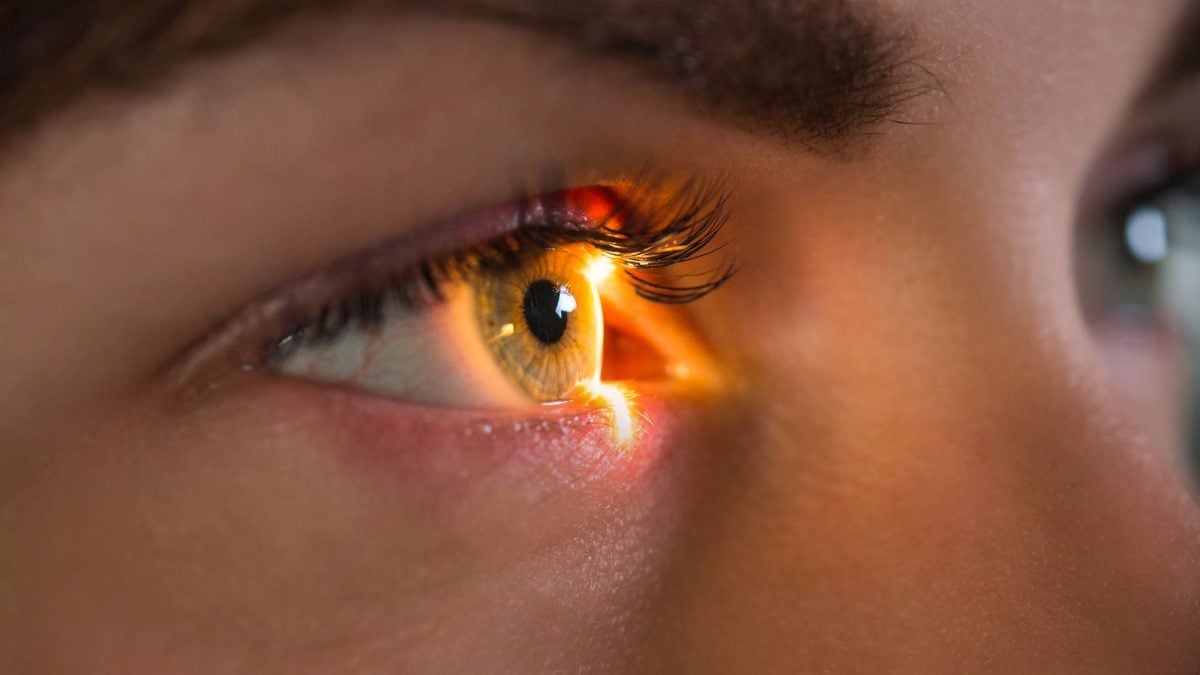
Researchers from the Chinese Academy of Sciences and Mental Health Center have just published a study linking eye movements and the possibility of adding this sign to the diagnosis of schizophrenia.
What is schizophrenia?
Schizophrenia is a serious psychotic disorder that has different symptoms such as hallucinations, delusions, disorganized discourse and bizarre behaviors. These events of schizophrenia are associated with altered neurotransmitters systems. The patients therefore have structural and functional anomalies at the cerebral level, and more precisely within the Cortico-Sous-Cortico-Cerébellable Circuit, according to the authors.
Vision, an essential phenomenon to human beings
In humans, seeing is one of the most important sensitive functions. Visual fixation allows us to collect information and help decision -making. During this phenomenon, micro-saccades and macro-saccades occur spontaneously. In addition, these eye movements are sensitive to the alterations of the Cortico-sous-Cortico-Céretbelillant Circuit.
Eye jerks in the heart of screening
Based on this observation, the researchers wanted to establish a link between these visual jerks and the presence of schizophrenia. They analyzed for 60 seconds the fixing jerks recorded in 140 patients who presented an episode of schizophrenia but have never been treated.
In parallel, a group of 160 healthy subjects was a control group. All volunteers were subject to ten ten separate attempts at six seconds.
Patients with schizophrenia have different eye movements
Results: Scientists have found that patients with schizophrenia presented significantly more vertical ocular jerk and a greater vertical deviation from horizontal ocular saccades.
In addition, the jerks were as longer with faster advanced speeds and larger amplitudes in patients than in witnesses.
For experts, this sign is associated with lower cognitive performance, in particular attention, vigilance deficits. By developing a learning model from these criteria, it was possible to detect patients with a specific 85 %result. Eye movements would therefore be, according to these Chinese researchers, an easily accessible complementary biomarker to complete a diagnosis of schizophrenia.