
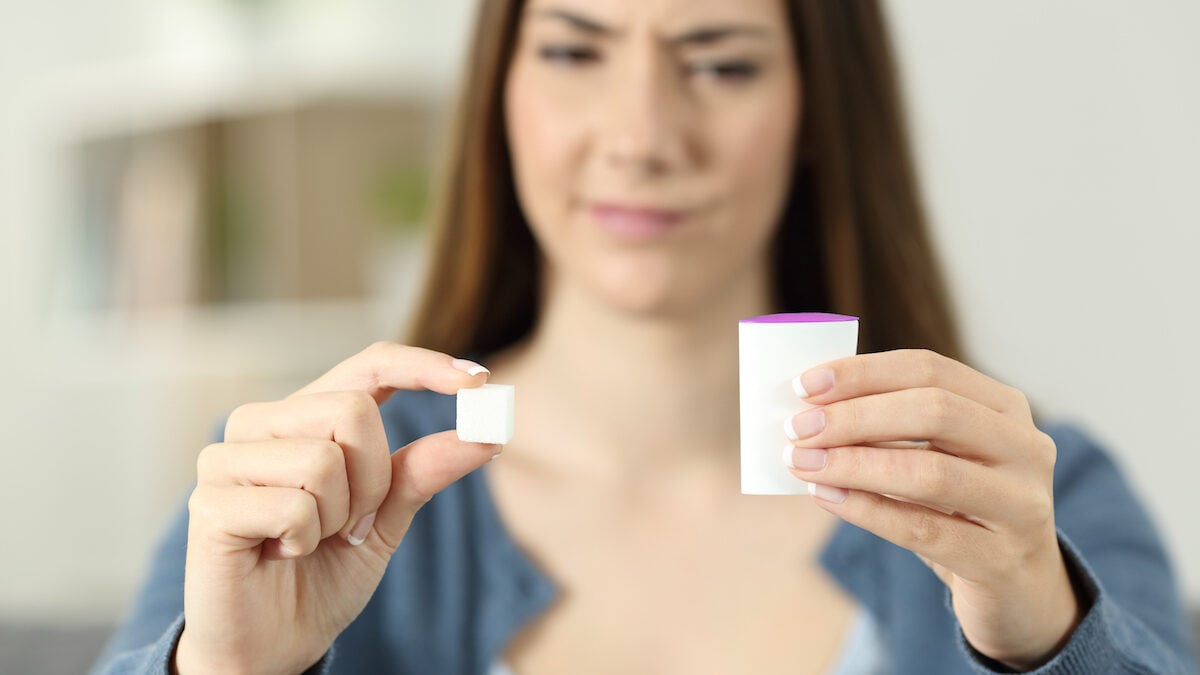
A sweetener widely used in lighter drinks and foods, success, could compromise the effects of immunotherapy, according to an American study conducted on mouse and extended to patients with cancer. These results, published in Discovery Cancerraise concerns for patients treated against certain cancers and pave the way for new clinical trials.
Sucralose, an omnipresent sweetener in the face of immunotherapy
Millions of people consume success every day, an artificial sweetener (E955) present in sugar-free sodas, light yogurts or chewing gums. Its popularity is based on its ability to bring a sweet tasteless taste. In parallel, immunotherapy has established itself as a medical revolution to treat several types of cancer, from melanoma to lung cancer.
But a team of researchers from the University of Pittsburgh and UPMC Hillman Cancer Center highlighted a possible worrying side effect. According to their work, regular consumption of success could interfere with the action of immune cells mobilized by immunotherapy. As the oncologist Diwakar Davar points out: “Our results are particularly relevant for patients treated with immunotherapy for melanoma or other cancers“.
A study on the mouse reveals a disturbing brake on treatment
Scientists have tested the effects of success on mice with tumors and treated by immunotherapy. The results are clear: animals exposed to success have shown a much less effective response to treatment.
This phenomenon would be linked to the availability of a key amino acid, arginine. Normally, arginine allows T cells to multiply and attack tumor cells. But in the presence of success, its action is strongly reduced, which compromises the immune response.
Abby Overacre, the first author of the study, insists on prudence: “We do not suggest that someone should radically change their diet yet. But our results indicate that it is worth examining more closely the potential effects of successive consumption in people receiving immunotherapy“.
The first tests in humans confirm a deleterious effect
To verify whether these observations could concern humans, the researchers analyzed the eating habits of 132 patients with advanced melanoma or lung cancer non-small cells, treated by anti-PD1 alone (therapeutic class of widely used immunotherapy) or in combination with chemotherapy. Patients have fulfilled detailed questionnaires on their coffee consumption, Light sodas containing artificial sweeteners.
According to Diwakar Davar: “We have found that success was harmful to the effectiveness of immunotherapy for various types of cancer, stages and treatment methods. These observations open the way to the design of prebiotics, such as targeted nutritional supplementation for patients consuming large doses of success“.
Towards targeted supplements for certain patients
Researchers hope to launch a clinical trial to determine whether citrulline supplementation-which increases arginine levels more effectively than arginine itself-can influence the intestinal microbiome and improve the immune response. They also plan to explore the impact of other sugar substitutes, such as aspartame, saccharin, xylitol and stevia, on the effectiveness of immunotherapy.
Abby Overacre finally highlights the importance of adapting recommendations to the realities of patients: “It is easy to say ‘stop drinking soda light’, but when patients are treated for cancer, they already face a lot, and ask them to radically modify their diet may not be realistic. We have to meet the patients where they are. This is why it is so exciting that supplementation in arginine can be a simple approach to thwart the negative effects of success on immunotherapy“.