
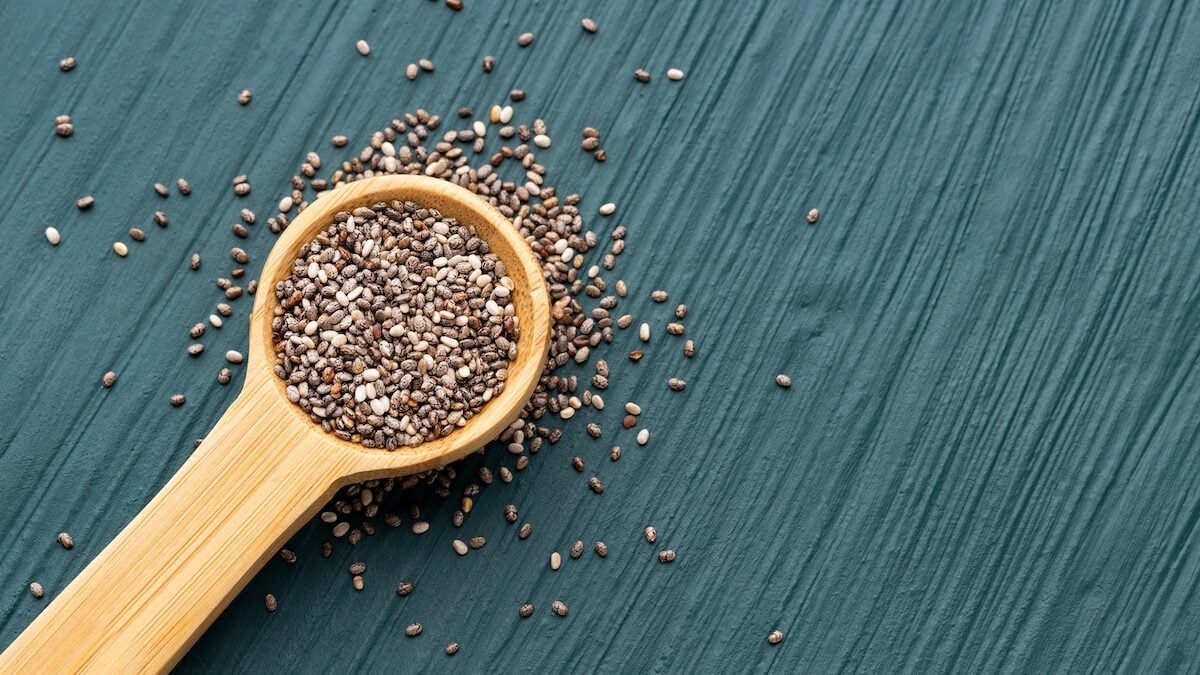
Chia seeds have become essential in healthy kitchens. But behind their reputation for supper, they hide an unsuspected risk when they are swallowed in the wrong way. A visceral surgeon tells how a simple gesture almost cost one of his patients.
The case of a patient who has come close to the worst
Dr. Alexandre Mensier, specialist in visceral and digestive surgery, warns: consumed dry, chia seeds can be transformed into a real cap in the esophagus. He thus evokes the case of a patient who has “almost die because of chia seeds“.
This patient had swallowed a large amount of dry seeds before chaining with a large glass of water. In contact with humidity, they inflated and formed a gelatinous block. “In reality, this patient used to eat chia seeds a little every day“, Specifies the doctor.”Except that this time, he had eaten in large quantities, and especially the seeds were dry“.
Quickly, man felt chest pain before being led to emergencies. Doctors managed to remove the obstruction, but the accident could have been fatal. The surgeon recalls that “These seeds can absorb up to 27 times their weight in water“.
How to consume Chia seeds without risk?
Specialists recommend never swallowing dry or barely humidified seeds. Forget the famous “tadpole water” which circulates on social networks. Better to let them soak for several hours in yogurt, milk or a vegetable drink before consuming them.
Well prepared, they are real health allies. Rich in fiber (34.4 g per 100 g), they promote transit and prevent constipation. They also contain calcium, magnesium and potassium in quantities higher than those of milk, as well as essential omega-3. Ten grams per day are enough to cover the needs in alpha-linolenic acid.
Another asset, their complete protein content (16.5 g per 100 g), with the nine essential amino acids. As the nutritionist Raphaël Gruman reminds us: “Few plant ingredients bring together these 9 amino acids. Chia seed proteins are self-sufficient, no need to associate them with another cereal“.