
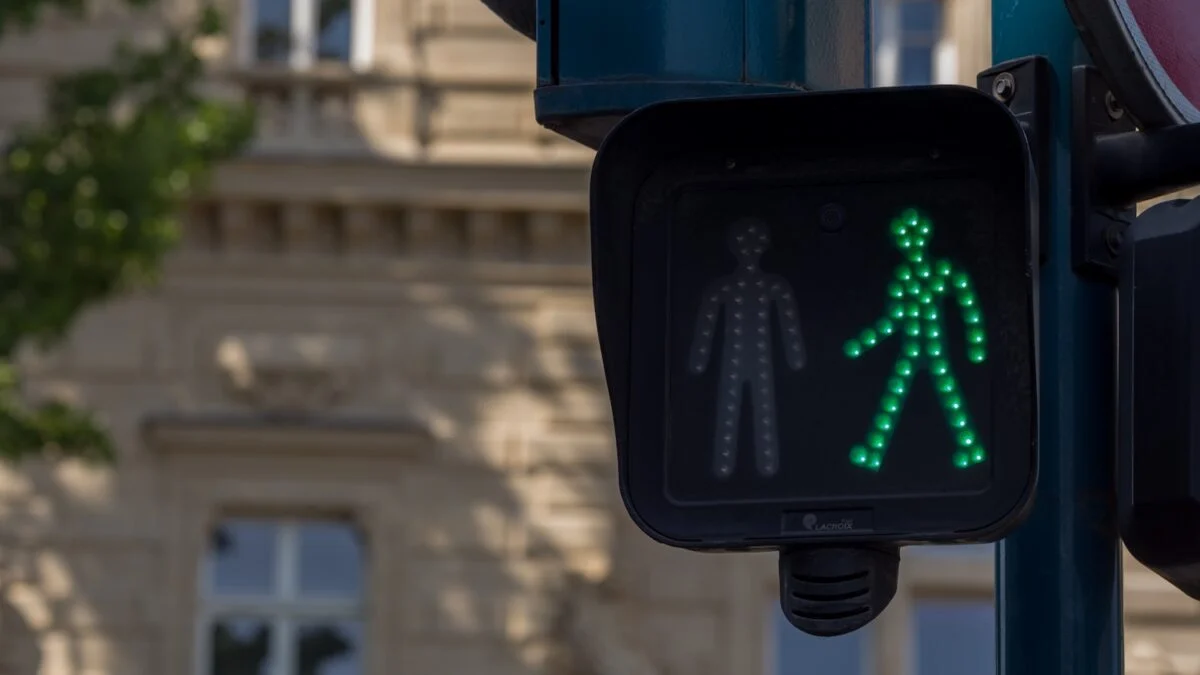
Known scene: at the pedestrian crossing, a car stops, the other user raises his hand to say thank you. In traffic that is often experienced as a great source of stress, this optional gesture stands out. In France, Decree No. 2010‑1390 of November 12, 2010 already requires motorists to let pedestrians pass; for psychology, this extra thank you says a lot about the person giving it.
People who thank the cars that let them pass, both behind the wheel and on foot, present a clear profile according to psychologists. This reflex mainly combines gratitude and empathy, with a little patience and attention to the environment. Work from Harvard University and the University of Kentucky on gratitude shows how a simple wave can lighten the mood in traffic.
A thank you to cars that goes beyond the Highway Code
The Highway Code already regulates these situations: since Decree No. 2010‑1390 of November 12, 2010, a driver must stop when a pedestrian enters or clearly shows that he wants to cross. Thanking a car for letting you pass is therefore not recognizing a favor but offering an extra courtesy, which signals that you see the other person as a person and not as a simple obstacle.
Giving a sign of thanks while driving often reflects a more communicative, patient and positive driving attitude. For psychologists, this gesture is not only polite: it also demonstrates attention to other users and a desire to promote smoother and more harmonious traffic, including in sometimes stressful or tense situations.
Personality Traits Related to Thanking Cars
In the language of psychology, this reflex is mainly linked to two dimensions of the Big Five model: agreeableness and conscientiousness. Clinical psychologist Jennifer C. Veilleux, cited by Top Santé, associates thanking the cars that let you pass with a cooperative, kind and reliable temperament. These people easily put themselves in the other’s shoes and seek to maintain a harmonious atmosphere, even when in a hurry.
According to several studies in psychology, people who spontaneously thank other road users often tend to show more patience, empathy and optimism on a daily basis. This behavior is reminiscent of pedestrians who give thanks with a smile or a nod when someone gives them way. Gratitude is also associated with better emotional well-being: researchers from theHarvard University have shown that it promotes positive emotions and helps to better cope with difficulties, thus helping to make daily journeys more pleasant.
Gratitude while driving, peaceful climate and limits of this “test”
Research from the University of Kentucky shows that gratitude reduces aggression, even in tense contexts. Transposed to the street, thanking the cars that let you pass can therefore reduce general tension and create a snowball effect. Psychologists, including Jennifer C. Veilleux, point out, however, that a single gesture does not define a personality.