
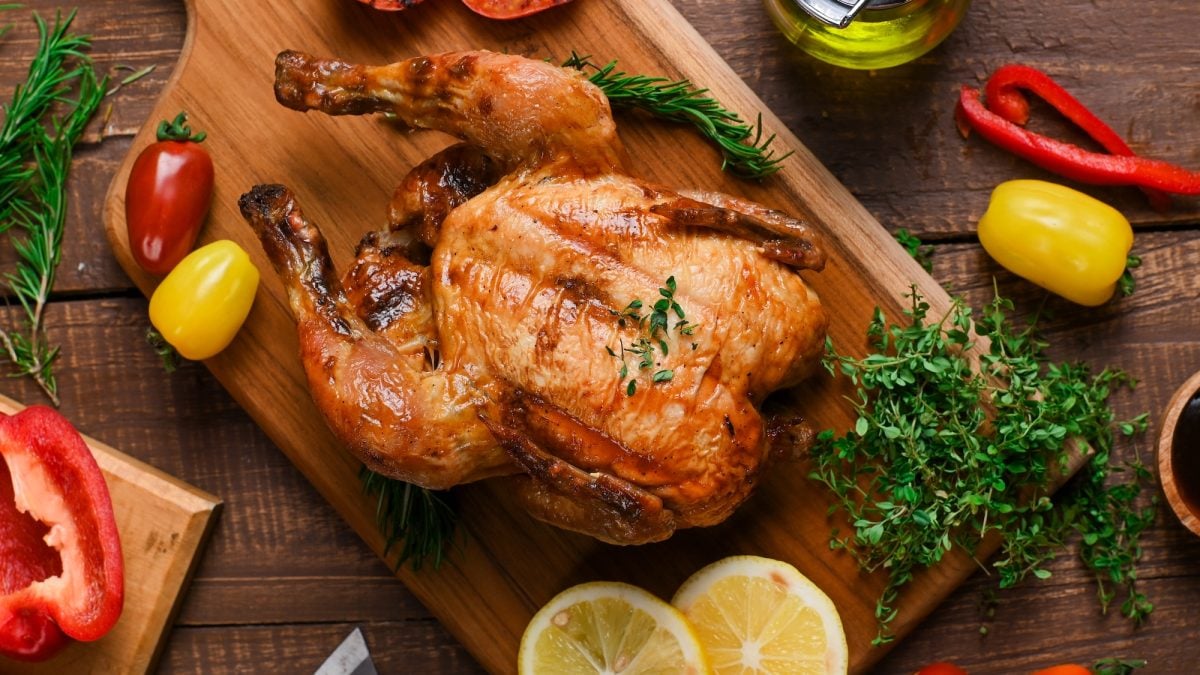
Who has never bitten into the crispy skin of a still-smoking roast chicken, with a little feeling of guilt? Behind this guilty pleasure lies a question that many ask themselves at the table: is eating chicken skin bad for your health? According to researchers at Harvard University of Public Health, this tasty part actually contains unsaturated fatty acids, so-called “beneficial” fats, also present in foods like olive oil or avocado. But before rejoicing, it’s better to keep a cool head. Questioned on the subject, dietitian-nutritionist Alexandra Murcier tempers enthusiasm. “Chicken skin is the part that contains the most fat in poultry, so it is not the most nutritionally interesting.“, she warns.
Specific conditions to respect so as not to harm your health
While chicken skin is not poisonous in itself, it all depends on the context in which it is consumed. Caloric intake increases quickly depending on cooking. “Depending on how the chicken is cooked, the calorie intake can further increase, especially if butter is added, for example.“, explains Alexandra Murcier. Result: an apparently balanced piece of poultry can turn into a calorie bomb.
The specialist is clear: it is entirely possible to eat chicken skin from time to time, but not every day. “Ocan consume the skin, but occasionally“, she specifies. In other words, there is no need to systematically remove it, but it is better to avoid making it a Sunday ritual.
So it’s all a question of balance. And balance begins on the plate.
What support should be favored to limit excesses?
The trap, according to the dietician, does not only come from the skin, but also from what accompanies it. And this is where the mistakes accumulate: fries, chips, sauces or even breaded foods, all of which considerably weighs down the meal. Alexandra Murcier recommends instead opting for simple, minimally processed foods, which counterbalance the fat intake of the main dish.
Here is what she advises:
- A fresh green salad or raw vegetables;
- Roasted or steamed vegetables;
- A plain starchy food (rice, quinoa, unfried potatoes).
It warns in particular of false good choices. “We do not choose chips, which are very processed and very salty products, as an alternative to fries, nor breaded foods, which again contain fat and which do not provide us with anything very interesting nutritionally.“, she recalls.
In short, pleasure can remain on the menu, provided you do not turn it into a habit.