
New biotherapies, more personalized treatments, hope of spacing out injections: atopic dermatitis is entering a new era. Without talking about cure, specialists are now discussing strategies capable of lastingly improving the daily lives of the most severely affected patients.
When eczema extends far beyond the skin
For those who do not suffer from it, eczema is often seen as just another dermatological condition. An uncomfortable illness, certainly, but rarely considered serious.
However, the reality experienced by patients is very different.
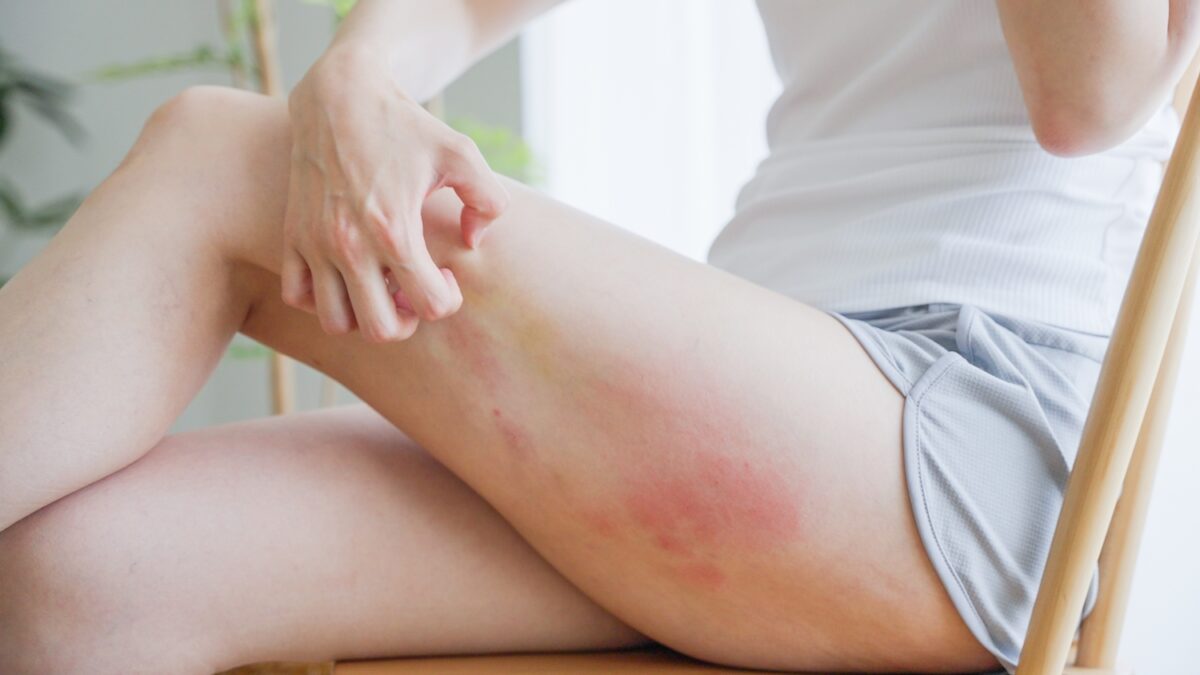
When atopic dermatitis becomes moderate or severe, itching can punctuate the days and especially the nights. Sleep becomes fragmented. Concentration decreases. Anxiety sets in sometimes. The loved ones themselves find themselves drawn into this spiral of fatigue and worry.
This chronic inflammatory disease, which affects nearly 2.5 million people in France, results from a complex disruption of the immune system associated with an alteration of the skin barrier. The skin becomes more vulnerable to external aggressions, promoting inflammation and repeated breakouts.
For a long time, therapeutic options were relatively limited when local treatments were no longer sufficient. But recent years have profoundly changed the landscape.
Immunology, by allowing a better understanding of the biological mechanisms involved in the disease, has opened the way to increasingly targeted treatments. A development that is gradually transforming the daily lives of many patients.
A new generation of treatments that finally targets disease mechanisms
This year marks a new milestone with the arrival of nemolizumab, a biotherapy targeting interleukin 31 (IL-31), a molecule closely involved in the phenomenon of itching.
It thus becomes the fourth biotherapy reimbursed in France in moderate to severe forms of atopic eczema, alongside dupilumab, tralokinumab and lebrikizumab.
Its interest does not necessarily lie in superior effectiveness to treatments already available, but in its different profile, likely to offer an alternative to certain patients.
“If, according to clinical studies, it does not show greater effectiveness than other biotherapies currently available in atopic dermatitis, it does not present the same categories of side effects, such as blepharo-conjunctivitis and head and neck flare-ups, for example. It is therefore an additional addition to the therapeutic arsenal and an interesting alternative in the event of the development of a side effect requiring discontinuation of an anti IL-4/IL-13 or an anti-IL-13 agent. Furthermore, in the event of a good response, it may only be administered every 8 weeks, whereas other biotherapies are administered every 2 to 4 weeks.explains Professor Manuelle Viguier, dermatologist at Reims University Hospital and vice-president of the ATopic Eczema Research Group (GREAT).
This possibility of spacing out injections further may seem trivial. However, it represents an important change for patients who sometimes live with their treatment for years.
At the same time, JAK inhibitors — upadacitinib, abrocitinib and baricitinib — continue to occupy a major place in severe forms thanks to their rapid and marked effectiveness.
Another novelty attracts the attention of specialists: the arrival of delgocitinib in topical form in chronic hand eczema. An additional option for patients who have failed treatment with topical corticosteroids or when they can no longer be used.
However, research is not slowing down. Several molecules are currently in development, including antibodies targeting OX40/OX40L as well as a new generation of long-acting anti-IL-13 antibodies.
The goal is no longer just to control the disease. It is also to gradually reduce the therapeutic constraint.
Researchers are particularly awaiting the results of the French MADULO study, carried out by the GREAT-FRADEN network, which is evaluating a strategy for progressively spacing dupilumab injections in patients responding well to treatment.
The ambition is clear: maintain efficiency while reducing the burden represented by long-term care.
French recommendations to better personalize care
This increase in therapeutic options is good news for patients. But it also raises an essential question: how can we help doctors choose the most appropriate treatment for each situation?
This is precisely the objective of the new French recommendations published by the Research Group on ATopic Eczema (GREAT) and the Evidence Center of the French Society of Dermatology.
The result of a systematic analysis of recent scientific literature, they propose an updated therapeutic algorithm integrating the most recent treatments and taking into account the specificities of the French healthcare system.
Beyond a simple technical document, these recommendations demonstrate a more profound evolution of care. For a long time, patients with severe eczema have shared the feeling of having to learn to live with their disease rather than being able to truly control it.
Today, the outlook is changing. Dermatologists now have a growing range of solutions allowing them to better adapt treatments to the profile of each patient, their symptoms, their history and their expectations.
This more personalized medicine does not make the disease disappear. But it opens up new perspectives for millions of people whose daily lives remain marked by itching, unpredictable flare-ups and the often underestimated psychological consequences of eczema.