
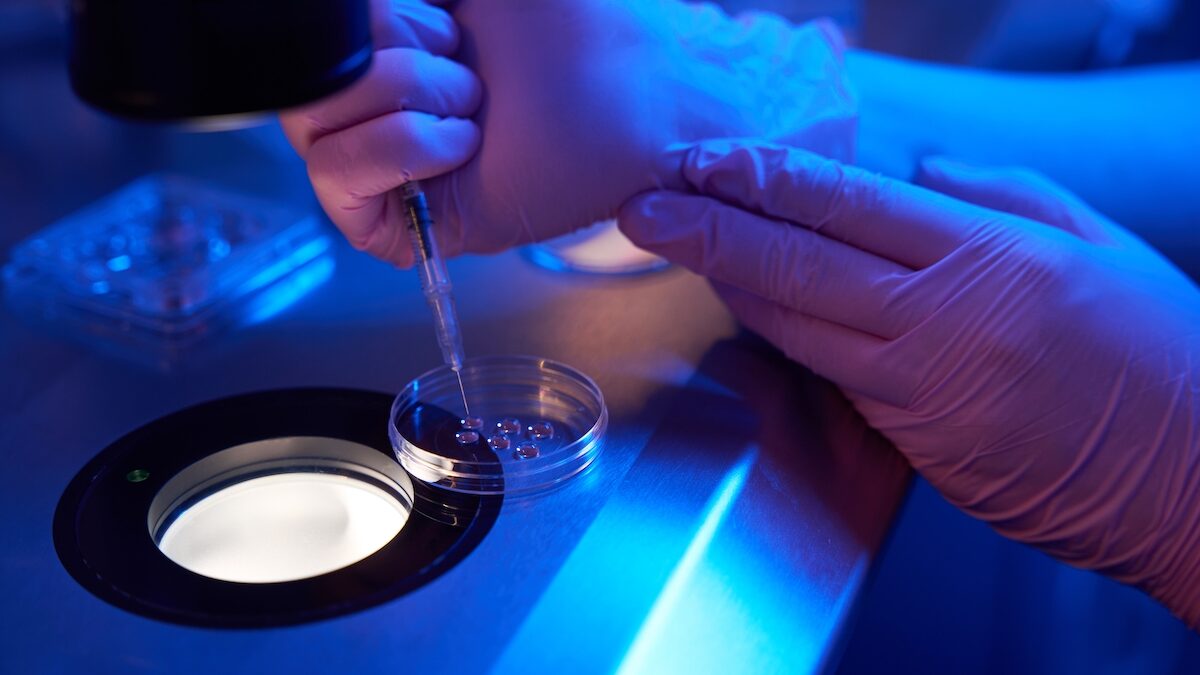
Between endless delays, lack of structures and pressure of the biological clock, more and more French women are beginning a complex journey to preserve their oocytes. Some persevere, others give up, exhausted by a saturated system.
“I felt out of date”: delays that discourage patients
Lucile was 35 years old when she decided to take steps to preserve her eggs. Like many women, this resident of Nice simply wanted to give herself the possibility of becoming a mother later. But very quickly, she came up against a brutal reality: waiting.
“I was offered a meeting in ten months, then elsewhere in a year”she says in the columns of Le Parisien. Faced with these delays, the young woman ended up abandoning the project. “I felt stale“, she whispers.
Since 2021, the law allows all women aged 29 to 37 to have their eggs frozen for free, even without a medical reason. A major societal advance, designed to enable women to better reconcile personal life, career and motherhood. But on the ground, the structures are struggling to keep up.
In Île-de-France, some patients wait up to two years before a first consultation. On social networks, several testimonies denounce an “obstacle course”. Specialized centers, mainly public, are overwhelmed by demands.
Exploding demand, saturated centers
The phenomenon has taken on an unexpected scale. In just a few years, requests for egg freezing have increased tenfold. However, only 47 centers are currently authorized to perform these procedures in France.
For Professor Samir Hamamah, president of the French Federation for the Study of Reproduction, the observation is clear: the system is undersized. “Each year, around 200,000 French women could benefit from this possibility. In 2025, only 5,000 to 6,000 freezings were carried out“, he explains to Le Parisien.
The specialist must soon submit several recommendations to the Ministry of Health. Among the options envisaged: allowing the 105 medically assisted procreation (PMA) centers in the territory to practice oocyte preservation in order to reduce queues.
In some hospitals, saturation is already visible even in the laboratories. At Montpellier University Hospital, the storage tanks are overflowing. Thousands of oocytes are stored there, sometimes until patients are 45 years old. Medical teams had to recruit and reorganize services to absorb the influx of requests.
Between relief and mental fatigue, women ready to persevere
Despite the obstacles, many women continue their journey, convinced of the importance of having this choice.
In Paris, Léa, 30, waited two years before her first egg retrieval at Cochin hospital. “I don’t know if I want kids yet, but I don’t want to have regrets“, she explains. Only four oocytes were able to be preserved during this first attempt, far from the ten generally recommended. A second puncture is already planned… probably in 2027.
Same determination for Camille, 32 years old. After several years of procedures between Angers and Paris, her first puncture ultimately did not allow any viable oocytes to be preserved. “At the time, I said to myself: all that for that“, she confides. However, she plans to return to her next appointment, scheduled in several months. “It’s more mentally tiring than physically.”summarizes the young woman.
For many thirty-somethings, egg preservation represents above all a way of regaining some control over their future. Being single for longer, studying longer, building professional stability: so many realities that are pushing back the age of having a first child and reinforcing the need for accessible fertility solutions.
It now remains to be seen whether the French health system will be able to adapt to this new societal demand which has become, for some women, a real race against time.