
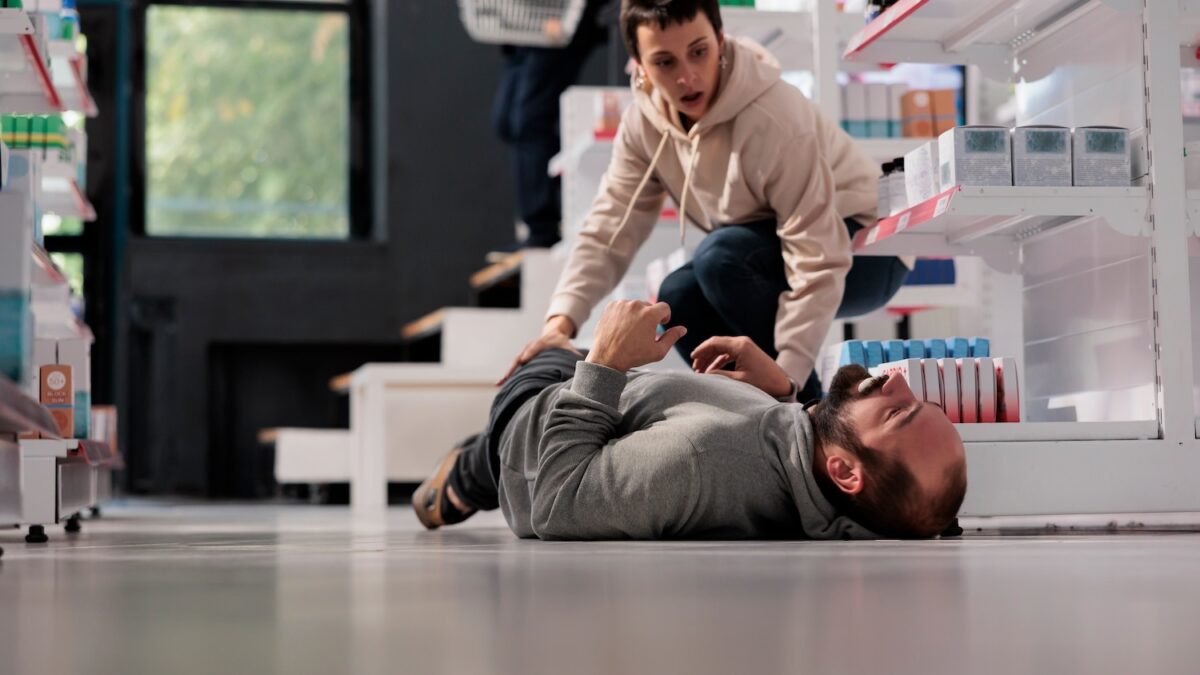
A person falls, stiffens, convulses, no longer responds: the first reflex must be simple. We should not try to “stop” the crisis, but protect the person while it is happening. The recommendations of the French League against Epilepsy and Health Insurance are in the same direction: secure the space, monitor the duration, do not put anything in the mouth and call for help in certain situations.
A convulsive attack is impressive, but the witness mainly has a protective role. If you want to delve deeper into the possible signs, our article also helps to recognize the manifestations of an epileptic seizure.
“The right reflex is to clear the space around the person, not to fight against their movements. We protect, we observe, we time” explains Dr. Gérald Kierzek.
Mistake #1: immobilizing the person or moving them for no reason
When someone is convulsing, you may be tempted to hold them down or pin their arms and legs. However, this is an error: convulsive movements should not be prevented. This can encourage injury, without stopping the attack.
The useful action consists of moving dangerous objects away, moving furniture aside if possible, protecting the head with clothing or a cushion, loosening a collar, removing glasses if this can be done without forcing. You should also avoid crowds: one or two calm people are generally enough.
“Only move the person if there is immediate danger, for example a road, stairs or water source. Otherwise, secure around them” recalls Dr. Gérald Kierzek.
This logic is in line with the official instructions: protect without constraining. If an individual protocol is known, for example at school or in a structure welcoming an epileptic person, it must of course be followed.
Mistake #2: putting an object in your mouth or giving something to drink
This is one of the most persistent myths: you should slide an object between your teeth to prevent the person from “swallowing their tongue”. In reality, nothing should be put into the mouth : neither finger, nor spoon, nor cloth. The risk is to cause injury, serious bite or obstruction.
You should also not give anything to drink, eat or take medication by mouth during the attack, nor until the person has regained a normal state of alertness. To better deconstruct these dangerous reflexes, you can read our file on preconceived ideas about epilepsy.
“During the crisis, the mouth is not an area where we intervene. We do not give anything, we do not put anything, we wait for recovery before any drink” insists Dr Gérald Kierzek.
After the seizures stop, the person may be confused, drowsy, or disoriented. You need to stay with her, talk to her calmly and explain to her what happened. If she lies down and breathes, Safety side position helps keep airways clearespecially in case of saliva or vomiting.
Mistake #3: forgetting to time and delaying the call for help
In emotion, we often forget the time. However, duration is essential information. The French League Against Epilepsy indicates that most seizures last less than five minutes; beyond five minutes, you must contact center 15. Health Insurance also recommends calling 15 or 112 if the attack repeats without returning to normal, or if the person remains unconscious for more than ten minutes.
Calling for help is also necessary in the event of a first known seizure, injury, seizure in water, pregnancy, diabetes, vomiting, difficulty resuming normal breathing or prolonged confusion. In France, depending on the situation, you can contact the 15, 18 or 112.
“From the start, look at the time. If the crisis persists, repeats itself or if recovery is not clear, we call for help” advises Dr. Gérald Kierzek.
Finally, you should keep in mind that discomfort with a fall or abnormal movements is not always epilepsy. The witness does not have to make a diagnosis: his priority is to check that the person is breathing, that they are not injured and that they are recovering. For a practical reminder, also find the right reflexes to adopt when faced with an epileptic attack.