
Have you ever felt that famous feeling of fatigue after breakfast or lunch? Itchy eyes, falling concentration, and this irrepressible desire for sugar or coffee… This very common phenomenon is often explained by a blood sugar peak, that is to say a rapid rise in blood sugar levels after a meal.
Why blood sugar spikes appear after meals?
When you eat foods rich in carbohydrates, such as white bread, pasta, white rice or sugary products, they are transformed into glucose and pass into the blood. In response, the pancreas secretes insulin to allow this sugar to enter the cells.
But when this rise is too rapid, the body overreacts. Blood sugar then drops just as suddenly. This is called the yo-yo effect. This variation explains the sudden fatigue, irritability and food cravings that often occur in the hours following a meal. Fortunately, it is possible to take simple action to limit these variations.
The glycemic index: a key indicator
To assess the impact of a food on blood sugar, we use the glycemic index, or GI. It classifies foods according to their ability to increase blood sugar levels. We speak of low GI below 55, moderate between 55 and 70, and high above 70.
High GI foods cause rapid rises in blood sugar, followed by equally rapid drops. Conversely, low GI foods allow a more gradual diffusion of glucose into the blood, which helps maintain more stable energy. Even without being diabetic, many people are affected by these variations, especially in cases of stress, lack of sleep, sedentary lifestyle or when meals are low in fiber.
What foods should you choose for a low glycemic index on a daily basis?
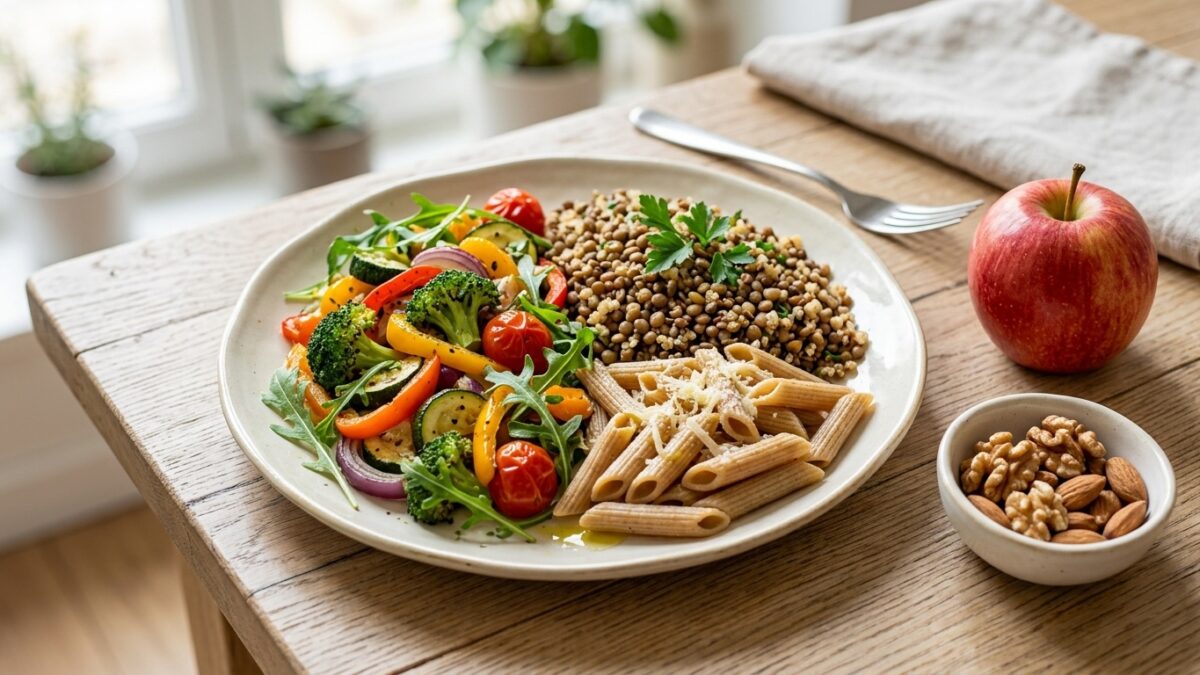
To limit blood sugar peaks, it is recommended to favor foods with a low glycemic index. Vegetables and legumes make a great base because they are high in fiber and slow the absorption of sugar. Foods such as zucchini, broccoli, raw carrots, eggplant, lentils, chickpeas and even dried beans help you feel satisfied for a long time without causing fatigue.
As for starchy foods, it is better to turn to wholemeal versions such as wholemeal rice, wholemeal pasta, ideally cooked al dente, quinoa, bulgur or even wholemeal or rye bread. Their impact on blood sugar is more moderate than that of refined products. For sweets, it is better to favor whole fruits, which contain fiber, rather than fruit juices or processed products such as biscuits and pastries.
Create a plate with a low glycemic index without changing everything
You can simply compose your plate with half vegetables, a quarter proteins and a quarter starchy foods with a low glycemic index. Adding a drizzle of olive oil, a few walnuts or almonds also provides good quality fats, which further slow down the absorption of sugar. For dessert, a whole fruit, such as an apple or a citrus fruit, is a good substitute for juice.
At breakfast, replacing white bread and fruit juice with wholemeal bread or oatmeal, accompanied by natural yogurt and whole fruit, is already enough to limit a blood sugar peak in the morning. As a snack, a pear combined with a handful of oilseeds is much better than a sugary drink.
These first reflexes around low GI foods then form part of a more global balance, which also includes physical activity, sleep and stress management.