
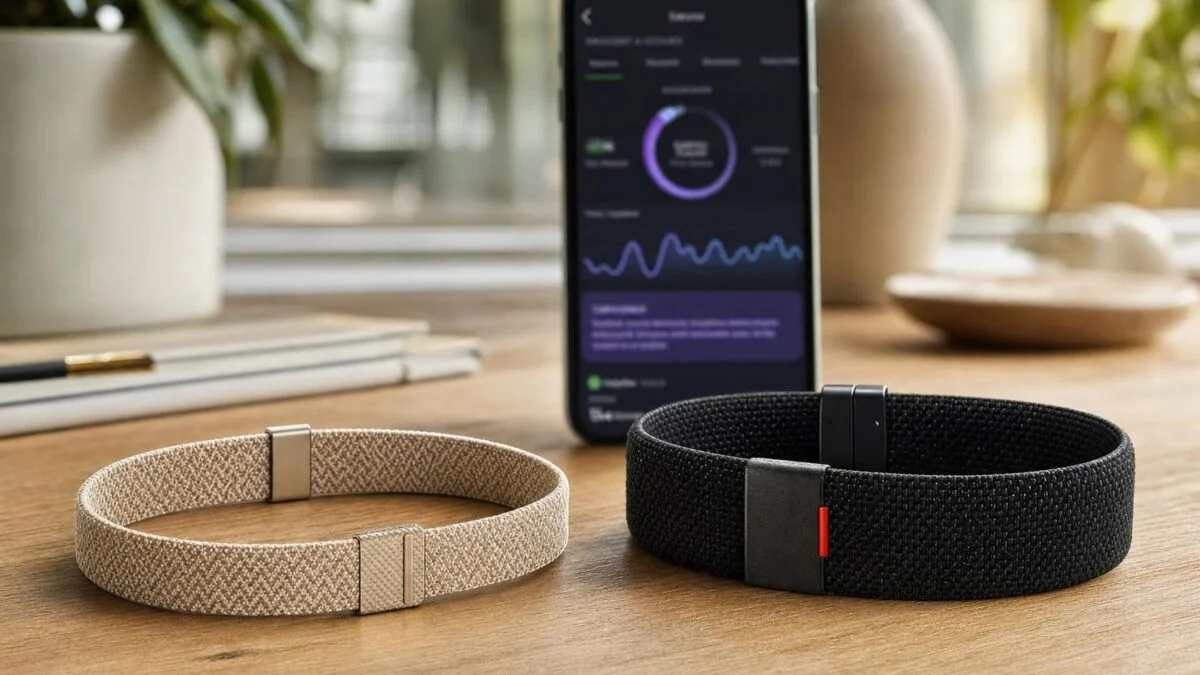
Since 2026, a new screenless bracelet sold for around $100 has shaken up the world of connected sports tracking. Faced with Whoop, a pioneer of discreet banners and already with more than 2.5 million subscribers for a valuation of more than 10 billion dollars, or a little more than 9 billion euros, Google arrives with a simple weapon: a 24-hour tracker, light, boosted with AI, designed for the general public.
This bracelet is the Fitbit AirGoogle’s first screenless model to target the same terrain as
Whoop. Sold for 100 dollars (around 92 euros) or 99.99 euros in France, it breaks the economic model of its rival: you pay for the hardware once, the basic data remains free, the subscription is only a bonus for the AI.
Fitbit Air vs Whoop: design, sensors and autonomy
Google delivers Fitbit Air with a Velcro fabric strap, ultra thin and light: only 12 g for 19 mm wide, 5 ATM waterproof. Several Bloomberg and ZDNET testers say they forget it on the wrist, where the more massive Whoop clasp remains difficult to handle and goes less well under a dress sleeve.
Despite its discreet format, the Google bracelet includes optical cardio, accelerometer, gyroscope, SpO2, temperature sensor and vibration motor for the alarm. It does not have GPS and relies on the smartphone, like Whoop. In terms of endurance, the ZDNET and Frandroid tests show between one week and nine days of autonomy, while Whoop is around two weeks with an external rechargeable battery on the wrist.
Google Health and the AI Health Coach versus Whoop software
The app Google Healthwhich replaces Fitbit, organizes the data into four clear tabs – day, fitness, sleep, health – and delivers free sleep score, cardio load, daily fitness score, heart rate, SpO2 or temperature. No paywall or advertising. Conversely, the bracelet Whoop remains unusable without a subscription, with plans that start at 200 dollars per year (around 184 euros) and go up to a so-called medical grade level at 360 dollars, or nearly 331 euros.
The paid level Google Health Premium gives access to the AI coach Health Coach for around 10 dollars per month (8.99 euros), with three months free with the bracelet. This chatbot builds training plans, comments on sleep, records meals and sessions from texts, photos or screenshots. Bloomberg notes that he seems more natural than Whoop’s assistant, even if he sometimes invents sessions. Google explains to ZDNET that it transforms each error identified into an internal test to gradually make the tool more reliable.
For whom does the Fitbit Air become more interesting than Whoop?
In view of the Frandroid, Bloomberg and ZDNET tests, the Fitbit Air is mainly aimed at the average practitioner: someone who wants to sleep better, track their activity, monitor their diet and benefit from 24-hour monitoring without screens or imposed subscriptions.
Whoop remains more suitable for athletes who exploit its endurance battery and detailed indicators such as Strain or Whoop Age.