
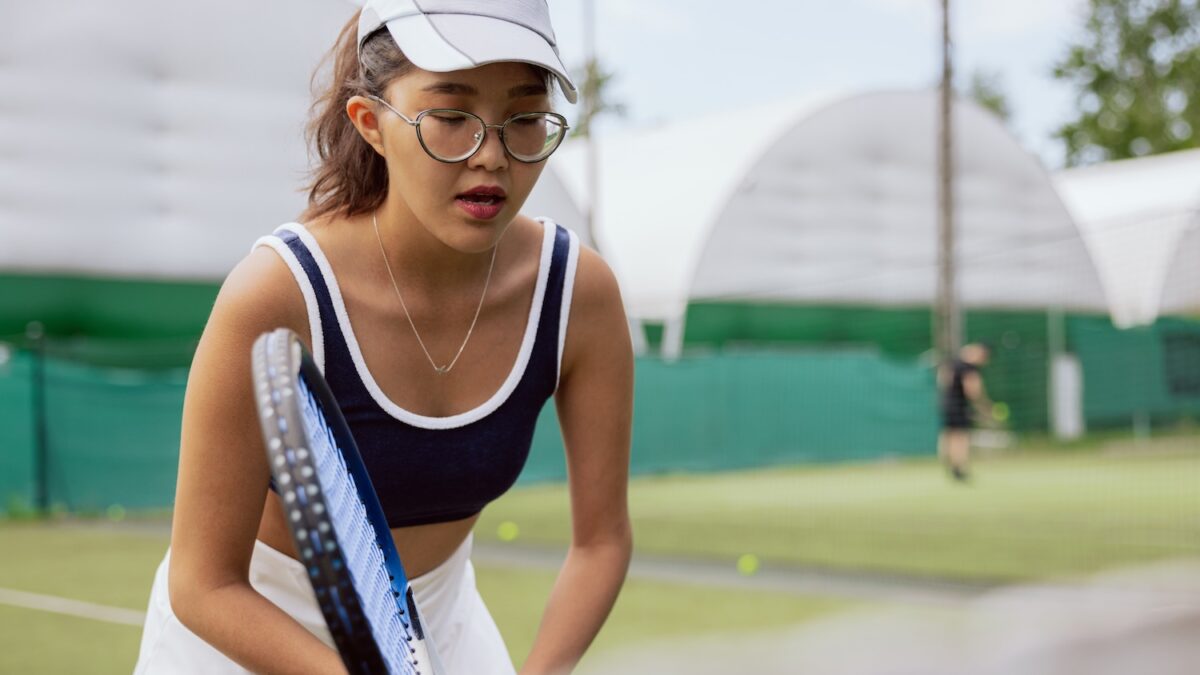
Football, tennis, handball, badminton… Not all disciplines require the eyes in the same way. Atol opticians remind us of the importance of regular visual inspection and glasses adapted to the practice, comfort and risks of each sport.
Repeated blunders on the pitch? Also think about the view
At the start of the school year, families think about shoes, jerseys and protections. But glasses are sometimes forgotten when preparing sports equipment.
However, a correction that is no longer suitable can complicate certain actions: following a ball, anticipating its trajectory or spotting an opponent in your field of vision. In a child, these difficulties can be misinterpreted as a lack of desire or confidence.
According to INSEE data cited by Atol, nearly two thirds of middle school students were registered in a sports association or club in 2020. For this practice to remain synonymous with pleasure, the conditions must be adapted.
A drop in involvement or repeated clumsiness obviously does not mean that a vision problem is involved. But if they are accompanied by difficulty distinguishing objects or following their movements, a visual check can be useful.
Tennis, football, handball: why all glasses are not equal
A pair designed for everyday use is not necessarily suitable for the terrain. Depending on the sport, the glasses must resist impacts, stay in place and maintain a sufficiently wide field of vision.
In handball, glasses with rigid temples are prohibited: the authorized models must in particular have resistant lenses, flexible components and appropriate support. The French Badminton Federation also strongly recommends protective glasses, particularly during doubles matches, where the risk of impact with a shuttlecock or racket is present.
Outdoors, another criterion counts: protection against ultraviolet rays. Brightness must also be taken into account to maintain good visual comfort.
The objective is twofold: to allow the athlete to see correctly and to limit the risk of injury, for him and for other players.
Sport is also an ally of visual health
Physical activity doesn’t just benefit your muscles and heart. It contributes to general health, in particular by helping to prevent certain cardiovascular risk factors that can affect the eyes.
Racquet sports particularly require accommodation, that is to say the ability of the eye to focus, but also peripheral vision, tracking moving objects and coordination between the eyes and the body.
These abilities are essential for anticipating the trajectory of a ball or reacting quickly to a move. However, they do not exempt you from regular vision checks or from wearing appropriate vision correction.
Good reflexes before returning to sport
Before joining a club or returning to sport, a few precautions can help limit discomfort and better protect the eyes.
- Check your visual correction : a check ensures that it remains adapted to the needs of the athlete;
- Choose a mount adapted to the discipline : stability, comfort, resistance and field of vision must be taken into account;
- Do not neglect eye protection : the risks of shock vary depending on the sport and may justify specific equipment;
- Take outdoor practice into account : Protection against ultraviolet rays is essential.
“At the start of the school year, we encourage families to consider vision as an integral part of sports equipment. Like a good helmet or a suitable pair of shoes, optimal optical equipment fully participates in sports practice in order to fight against dropping out of sport.”explains Ted Carret, optician and Atol administrator responsible for visual health, in the brand’s press release.
The optician can support families in choosing equipment compatible with the correction and the constraints of the discipline. Because seeing well is not always enough: you still need to be able to move freely, stay protected and enjoy playing.